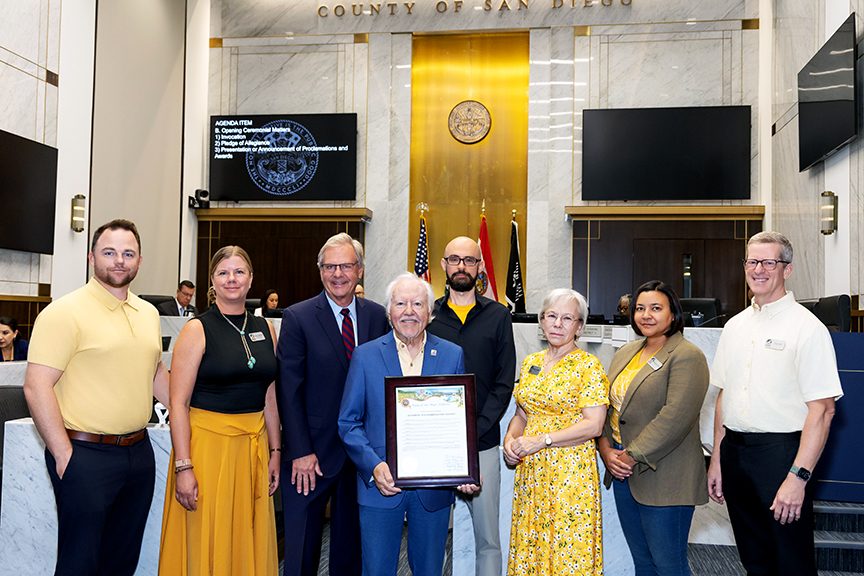
I and members of the Anza-Borrego Foundation board and staff receive proclamation from County Board of Supervisors August 18. Except for Supervisor Desmond (3rd from left), each of us wore something yellow to show visual allegiance with the many GPP opponents also wearing yellow. Easier to see who’s on what side that way.
I did some public speaking last week, which, as you might assume, is not typical. I was due to attend the August 18 meeting of the San Diego County Board of Supervisors to join three other reps of organizations to make a presentation opposing the local utility’s proposal to put a high-voltage Powerlink through Anza-Borrego Desert State Park and other natural areas in the county. (The supervisors are more significant here than in many other areas, particularly in the East, because most of the county is unincorporated, including Fallbrook. The “local” government is the county.)
It was a surprise to learn one of the supervisors was sponsoring a proclamation honoring Anza-Borrego Foundation to be presented at the same meeting. As president of the ABF board, I was to attend and respond to the proclamation, joined by several other board members. Whole thing was to take about five minutes.
(This is long, I know. I hope that at times it verges on interesting.)
I dressed a little more formally than I usually do. Sport coat, “formal shoes.” I hadn’t found the shoes I wanted to wear, but I did find my Navy uniform shoes. Black and shiny (and old). I put them in the car, intending to put them on when I arrived. I was wearing beat-up slippers for the drive. After arriving, I put the left shoe on and then, as I was tying the right shoe, I noticed it was sticking to the pavement and leaving marks. In less than a minute, the sole on that shoe disintegrated.
Thank goodness, I keep the shoes I wear for my volunteer shifts at REINS in the car. The 40+-year-old brown Timberland hiking shoes would not have been my choice, but they were the only choice then. You can get a view of my shoes at right. Thankfully, they were rarely visible. When I mentioned what happened to my fellow board members in attendance, one said the hiking shoes better conveyed our nature conservancy identity. 🙂
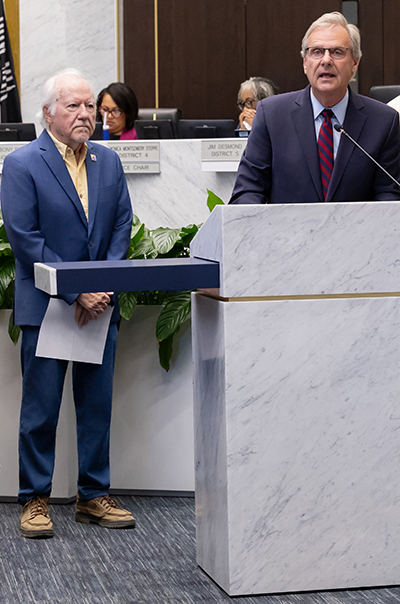
The proclamation session went well and was earlier than we had been told. This video on YouTube is 5:33. Supervisor Desmond speaks for about 2:30 and then it’s my turn for the remainder.
We had been told our later presentation to the board opposing the Golden Pacific Powerlink would be sometime 10 am-noon. We sat through the agenda, waiting for our item #25. Generally, for each item, there is sometimes a speaker, then discussion among the supervisors, and then public comment. Public comments are limited by time (usually two minutes), not number. They can be made in person or on the phone.
There are evidently people who come to these meetings regularly to make public statements. They don’t always talk about the substance. Sometimes, it’s just to complain about things. One young woman, with a shock of purple hair out the side of an otherwise shaved head, who gave her name as “allegedly,” which was also on her teeshirt, commented on every agenda item. Not about the topic, but about how much she found the board to be irresponsible, ineffectual, and/or corrupt. There were also a lot of people, relatively, criticizing the board for not opposing vaccination requirements.
Noon came and went. Then item 24 came. A proposal to end contracts that permitted ICE and Customs and Border Patrol agents to conduct firearm training at SD County gun ranges. Gee no controversy there. Tons of comments. They eventually voted 3-2 to end the contracts. But now it was 1:55. The chair called a recess for lunch with the meeting to resume at 2:45.
Our presentation took a little over 10 minutes. At link below, scroll below the screen and select topic 25. Our turn starts with a brief introduction at 5:08:51. My portion starts shortly thereafter (5:09:30) and lasts about three minutes.
When it ended, the clerk said there were 400+ people who wanted to comment, 404 in opposition to GPP. Twenty-something were to comment in person. I stayed for the in-person comments, limited to one minute each, but by then it was 4 pm. I left.
I had put my dog outdoors at 7 am, believing I would be home early afternoon. I didn’t get home until 5:30. Forty-two miles trip in 90 minutes. Baxter was excited to see me. 🙂
I was pooped, despite sitting 95 percent of the time. It was an early bedtime.
First let me share a bit of sight and sound from June’s NASCAR San Diego Weekend. This post has a lot of info about the event and my participation in it, but this is what the VROOM! title is all about. Up your volume!
(The Navy and NASCAR announced August 24 that NASCAR races will return to NAS North Island in 2027. July 30-August 1.)
June 19-21 was a distinctive summer weekend this year in San Diego. Yes, it was sunny with high temps in the low-to-mid 70s, so that was not so unusual.
But think of these terms and concepts being linked: San Diego and NASCAR, professional speed racing on an active military base. On that mid-June weekend, NASCAR held races in San Diego for the first time and those races took place on Naval Air Station, North Island. No other active US military base had ever hosted such activity.
Earlier this year, I saw that Sports San Diego, the non-profit that offers support to entities interested in holding sports events in this area, was seeking volunteers for NASCAR San Diego Weekend. Hey, that’s what I do. I applied. I was accepted.
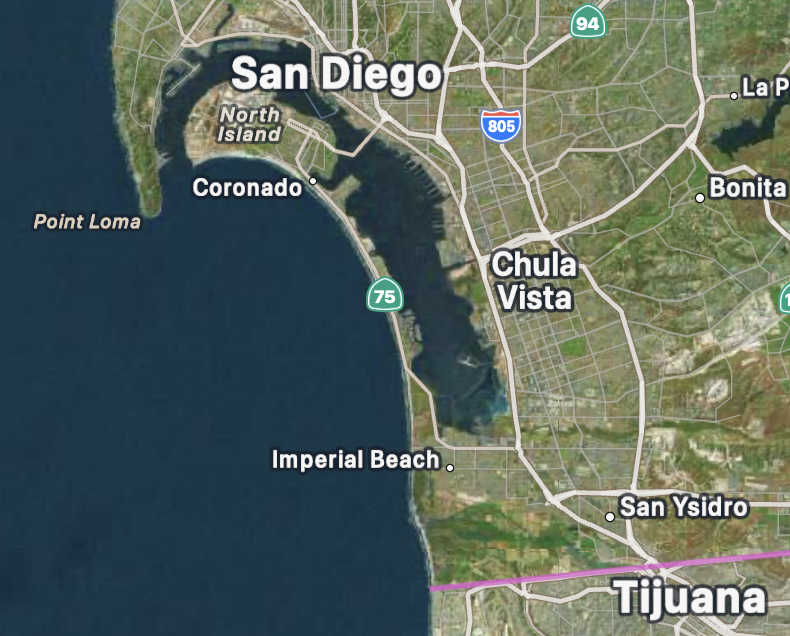
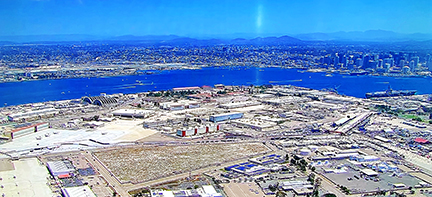
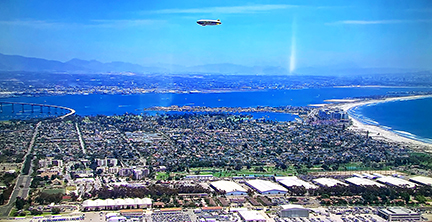
NAS North Island is the northern end of the peninsula that creates the western edge of San Diego harbor. Just south of the air station is the city of Coronado, and the connection to the south is known as the Silver Strand. This likely explains it better than my words.
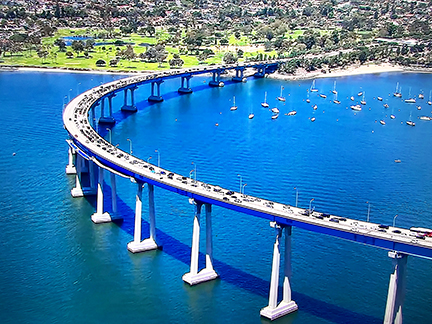
Access to Coronado and North Island is pretty much focused on the iconic San Diego-Coronado Bridge. Again, a picture communicates this better than words.
This is a screenshot from news coverage of the event and shows the amount of traffic waiting to enter Coronado on Sunday morning, day of the weekend’s main event. There is no charge to use the bridge, so this backup wasn’t because of toll booths. The relatively short route to the air station, however, goes through residential neighborhoods and features several traffic lights.
To avoid such traffic, I got a motel room for Thursday-Sunday in San Ysidro, just north of the border with Mexico, but a location that would allow me a straight shot up the Silver Strand. The exit off the 5 to the motel was 1B, less than a mile from the border.
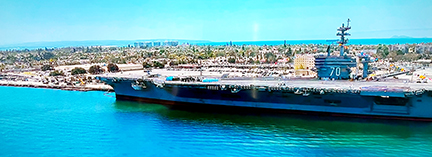
On Thursday, June 18, I attended a briefing on NAS North Island and learned I was assigned to “Guest Services,” though the specific tasks were not then described. I also learned I was assigned to “Carrier East,” the zone adjacent to the berth occupied by USS Carl Vinson (CVN-70).
I also learned that volunteers were expected to park at San Diego State University and take a bus shuttle to the air station. That would, however, negate the whole advantage I had gained by getting the motel room in San Ysidro. And, unlike most of the volunteers, I was already eligible to park on the air station by virtue of being retired Navy.
Thus, early Friday morning I headed out and up the Silver Strand to arrive on base at about 7 am. I parked at the Commissary. I was a little concerned because the stated parking limit there was three hours. Based on the map provided us, I basically wandered over to where I understood volunteers were to check-in. It took me quite a while, but finally located it. The process was much easier on the weekend, as I had credentials for access at a more convenient location. (I received no citation for parking more than three hours at the Commissary on Friday and Saturday. Sunday was even better, as you’ll learn below.)
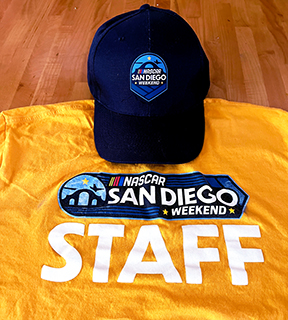
At the check-in, I received credentials, a ball cap, and a teeshirt (shown at right). For whatever reason, we received a new teeshirt each day. The first identified us as “staff,” the second as “volunteer.” I hoped the last one, on Sunday, day of the main attraction, would identify us as “Driver,” but it said “Staff” again. (There was no cost to us for the shirts and cap, or access to the event.)
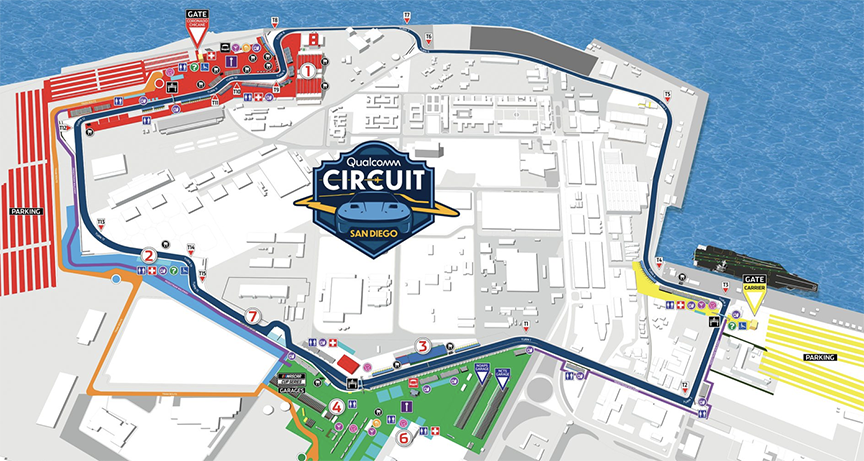
This graphic shows the track layout, with east direction at top. “Carrier East” is on the lower right and it was designated the “yellow” zone.
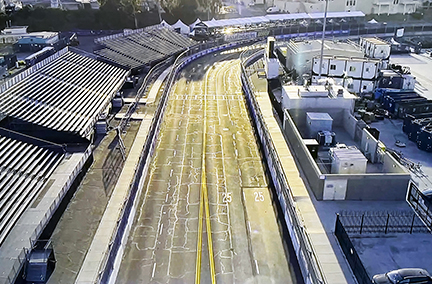
“Carrier East” was adjacent to Turn 3 on the race course, a 90-degree turn to the left. More significant, in terms of “guest services,” was that it was the entry point for all those who arrived at the air station either by walking (from Coronado or by taking the ferry from San Diego) or ride services.
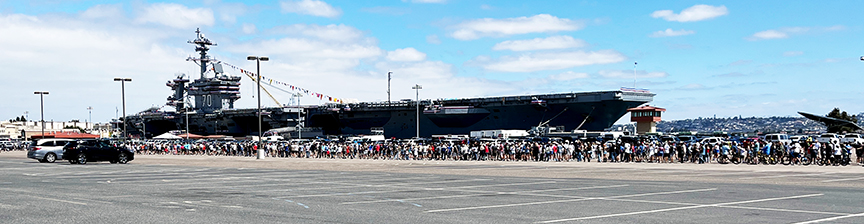
This was the scene Sunday, day of the main race, outside the entrance at Carrier East.
The race weekend attracted a total of 125,000 people over the weekend, several thousand of whom waited in lines like above. Most attendees had tickets that included parking on base, so these patrons had either walked to the base or used ride services.
Weekend attendees were from all 50 states and from 17 foreign countries. Surveys indicated two-thirds of them were attending their first NASCAR event.
Friday featured practice sessions for all three categories of vehicles and the Craftsman Truck Series race beginning in late afternoon. Additional practice sessions on Saturday preceded the O’Reilly Auto Parts Series for the lower-echelon cars, while Sunday featured the main event, the NASCAR Cup Series Anduril 250, starting in early afternoon.
On opening day, I was posted just inside the entrance at Carrier East, welcoming guests, handing out small souvenir packets, and answering questions. Not everyone, shall we say, was happy to learn that access to the main display area and start/finish line was about a mile away from Carrier East and with no option other than to walk.
There were trams connecting the three other main viewing areas — designated green, blue, and red (as shown in the track layout shown above) — but not at Carrier East.
On Saturday, I was moved to the viewing stands alongside the track from Turn 3 to Turn 4, parallel to the Vinson. My view of the O’Reilly AutoParts race is the video at the top of this post.
Approach to Turn 4. I guided people to seats in the bleachers at left.
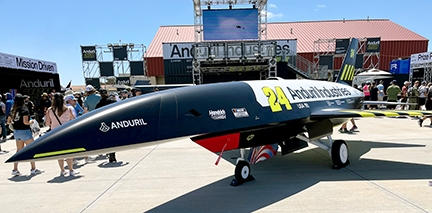
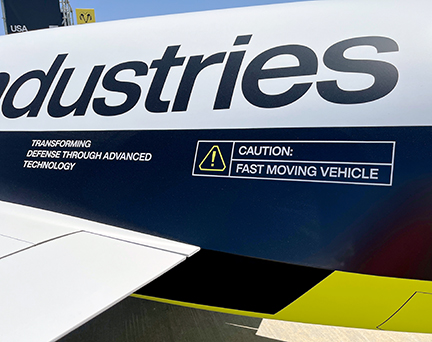
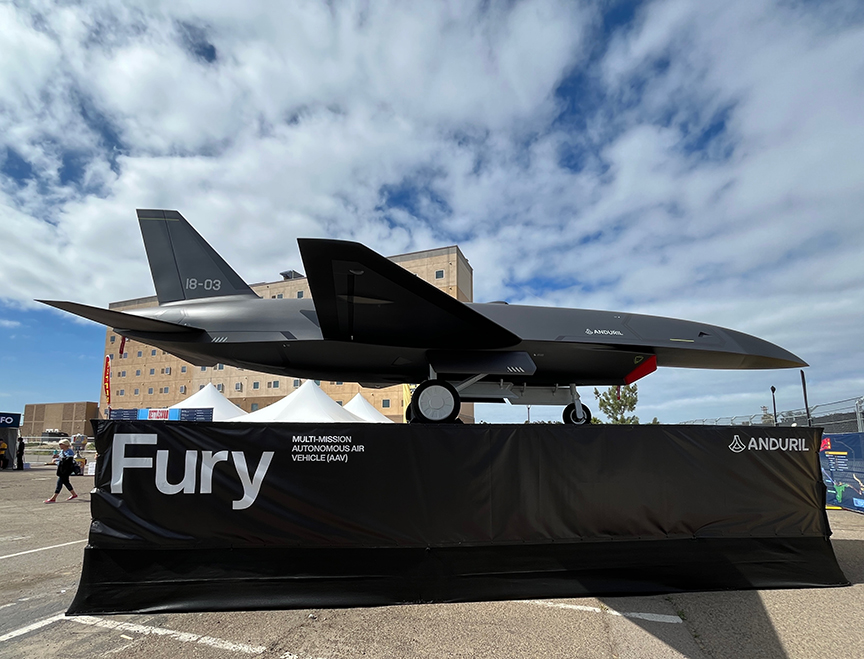
Sunday was the day of the main event — the Anduril 250. (When I first came across the name Anduril, I thought it was the name of a medication. Uh, no. Unless it’s “bad medicine” for some. It’s the name of a major U.S. defense contractor that specializes in the newest sector of weaponry — autonomous systems, e.g., drones, submarines, unmanned aircraft. The name is taken from Lord of the Rings and is the legendary sword of Aragorn. You’ll see some of their products on display in the galleries further below.)
I had planned to repeat my parking on base at the Commissary on Sunday, but with that being the day of the main event, traffic was especially heavy and security was tighter. As I approached the Commissary parking lot, there was now a sentry there who signaled me to stop.
“Where are you going, sir?,” checking my ID. I told him the Commissary and he asked if I worked there. Learning I didn’t, he said I might well be towed if I parked there. “Are you going to NASCAR?,” he asked. I told him yes, and I was a volunteer. He gestured toward the parking lot across the street, intended for those stationed on base, and suggested I park there. Best parking of the weekend, even a shaded spot.
I was at my third posting for the main race, at the stands alongside the track from Turn 2 to Turn 3.
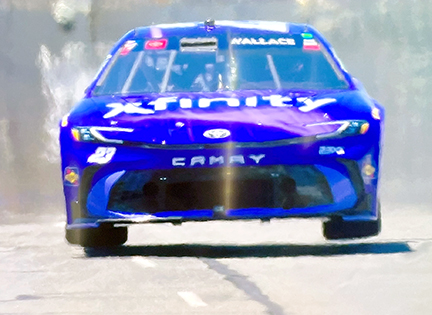
Cars often lifted off the track coming into Turn 2.
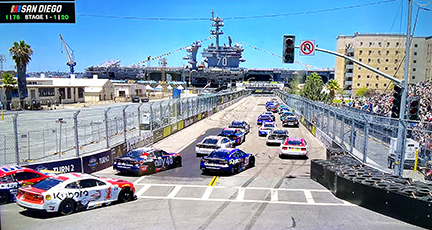
Photo below is looking east, with the 90-degree left Turn 3 ahead.
Viewing stands at right.
Here’s video (0:31 secs) of the top NASCAR entries coming through Turn 2. (Hard to miss the irrelevant “STOP” sign. A reminder of how this track overlay roads that formed the system supporting the base.)
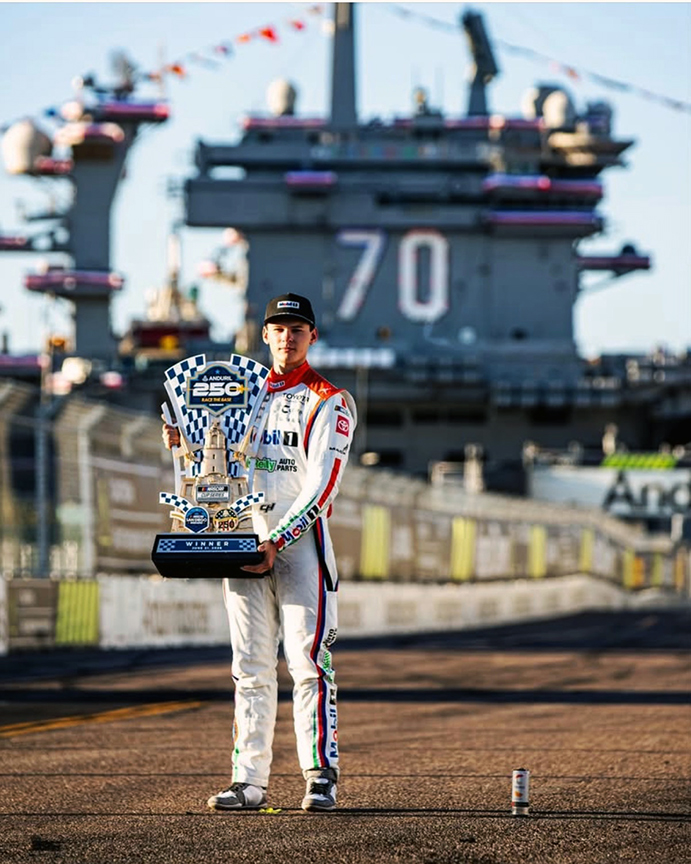
Corey Heim
The race was won by Corey Heim, his first NASCAR Cup victory. He was 10 seconds ahead of Bubba Wallace.
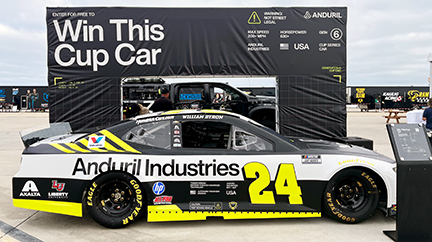
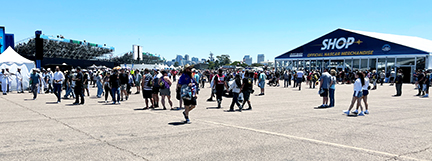
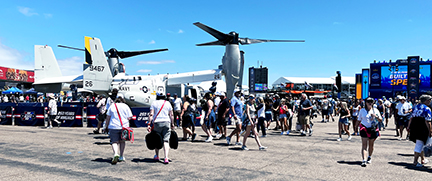
My shifts began at 7 am and ended at 2 pm on Friday and Sunday, noon-7 pm on Saturday. That gave me opportunities to spend a little time viewing the exhibits in the green area near the start/finish line. Below is a gallery of photos of some of those exhibits.
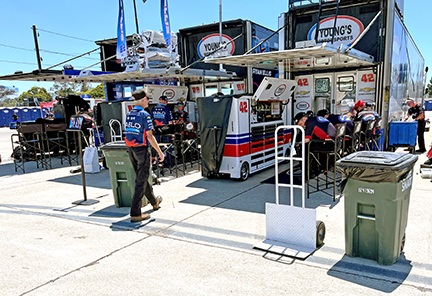
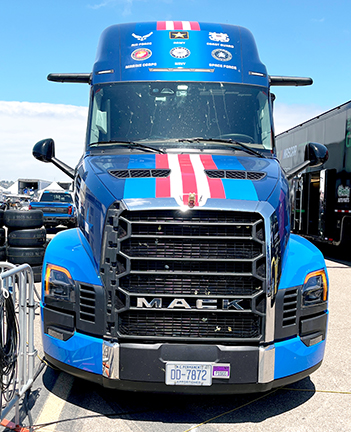
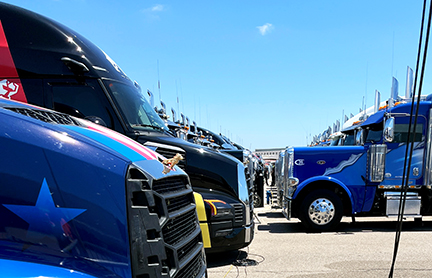
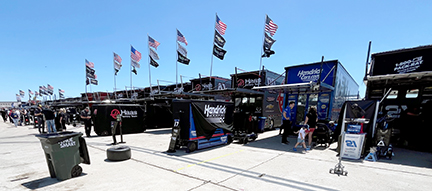
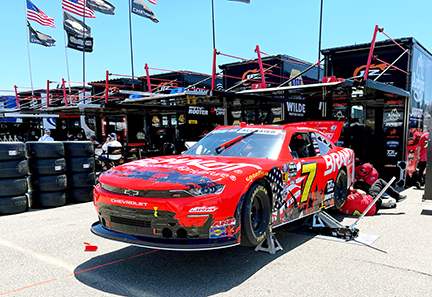
As staff, I also had access to the “garage” area, where I could get a little closer to the race cars and see them in place rather than going by in a blur. Here is a gallery of some of those scenes.
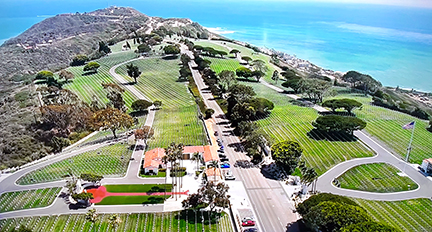
Just to the north of NAS North Island is Point Loma, the location of several Navy commands, including a submarine base at Ballast Point. It is also the location of Fort Rosecrans National Cemetery. I found this a particularly gorgeous view of this amazing facility.
Post-NASCAR Weekend, it’s unclear whether it will be held here again. NASCAR, for many reasons, would like to hold another very popular event, bringing in so many new fans. Not sure about the Navy, or the residents of Coronado.
In addition to the inherent interference with “normal” base and town activities, there were also many logistical failures and shortcomings. Attendees complained about excessively long lines for refreshments, with many locations running out of food and drink long before the long lines were served. At my Saturday location, by mid-afternoon, all the portable toilets were filled, literally, to overflowing. Those who didn’t need to sit could use them, but the stench was really bad. Worse, they were in the same condition the following morning.
The event might end up a one-off, but it was a memorable weekend.
(As reported at top, NASCAR will indeed return to NAS North Island July 30-August 1, 2027. Vroom, vroom!)