Berlin, part VII: Tiergarten District

Monday, 17 June, was our first huge tourism day in Berlin. We went to the Tiergarten District, which includes the famous zoological garden of the same name and many of the major historic sites of the city.

(To give a sense of scale, the Health app on my iPhone recorded me taking 24,839 steps to cover 8.8 miles and 10 floors that day. Personal record in steps/distance.)

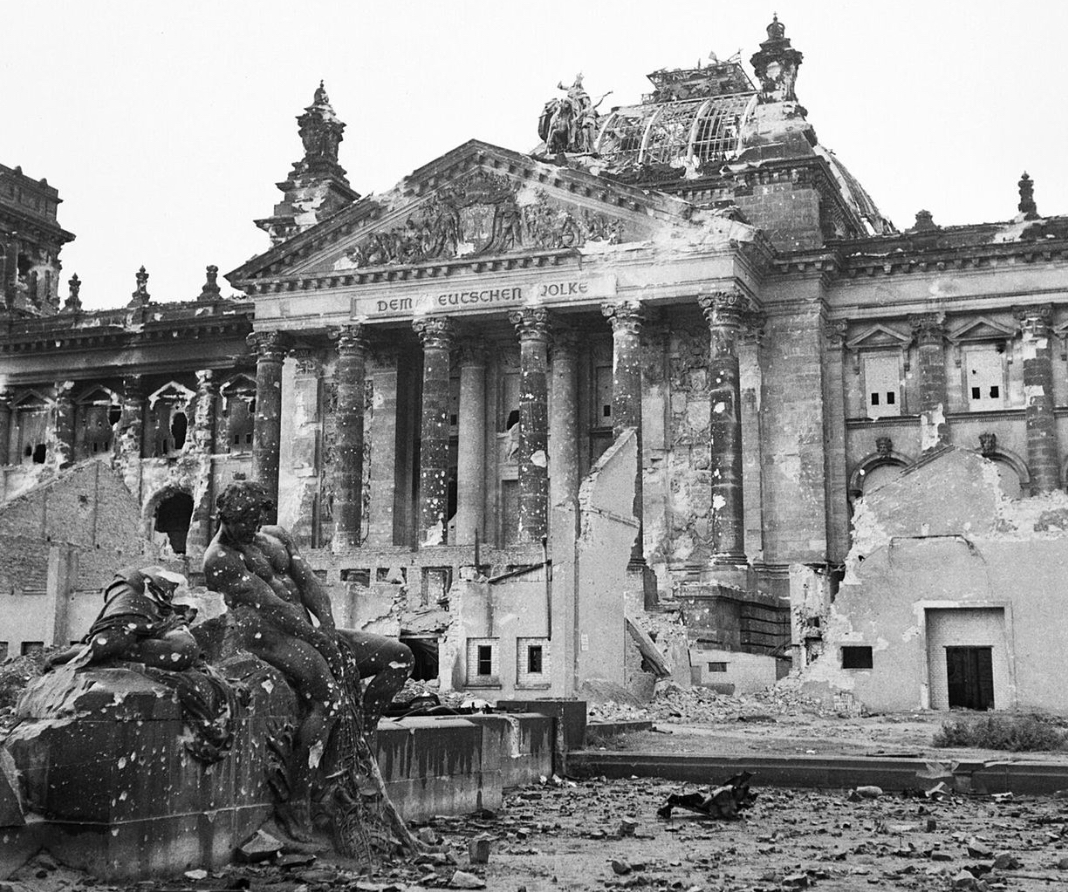
Reichstag in 1945

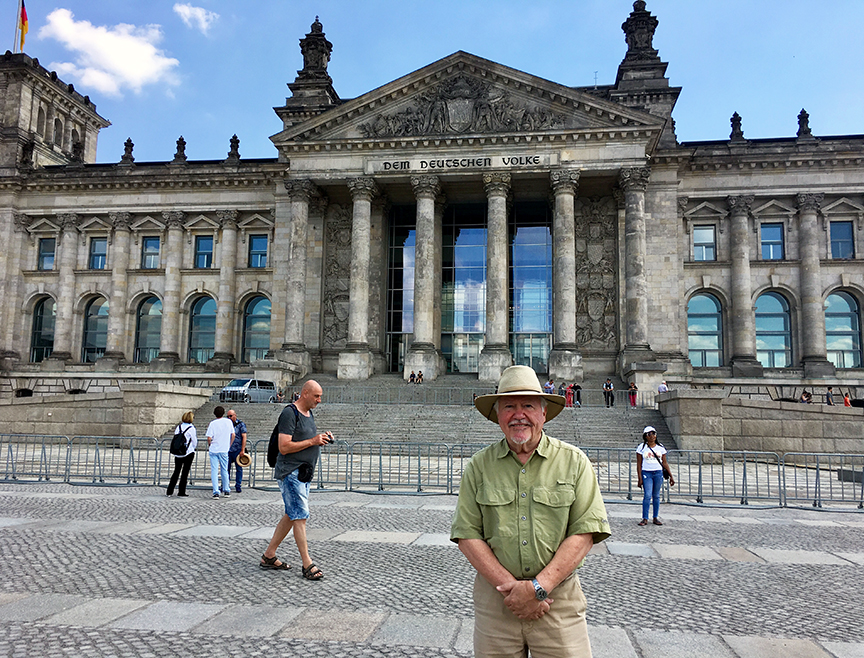
The Reichstag
Our first main stop was the Reichstag, home of the present Bundestag, the German federal parliament. Originally built in 1894 to house the Imperial Diet of the German Empire, the structure was severely damaged in 1933, when it was set on fire in suspicious circumstances. Blaming Communists for the fire, the new Nazi government suspended rights granted the party and arrested members. It was also damaged by Allied bombing of Berlin in WWII.

During the Cold War, the government of West Germany was in Bonn, and the Reichstag went through only a partial restoration. When reunification of German took place in 1990, the official ceremony took place at the Reichstag. It was not until 1999, however, that full restoration of the building was completed. Architect Norman Foster replaced the original cupola with a glass dome that is a particular favorite with tourists.

(Julia and I had intended to visit the dome, but you need to make a reservation and our upcoming week-long trip to Lithuania prevented us from securing one.)

Here’s video (2:01) of the first part of the journey.

Brandenburg Gate
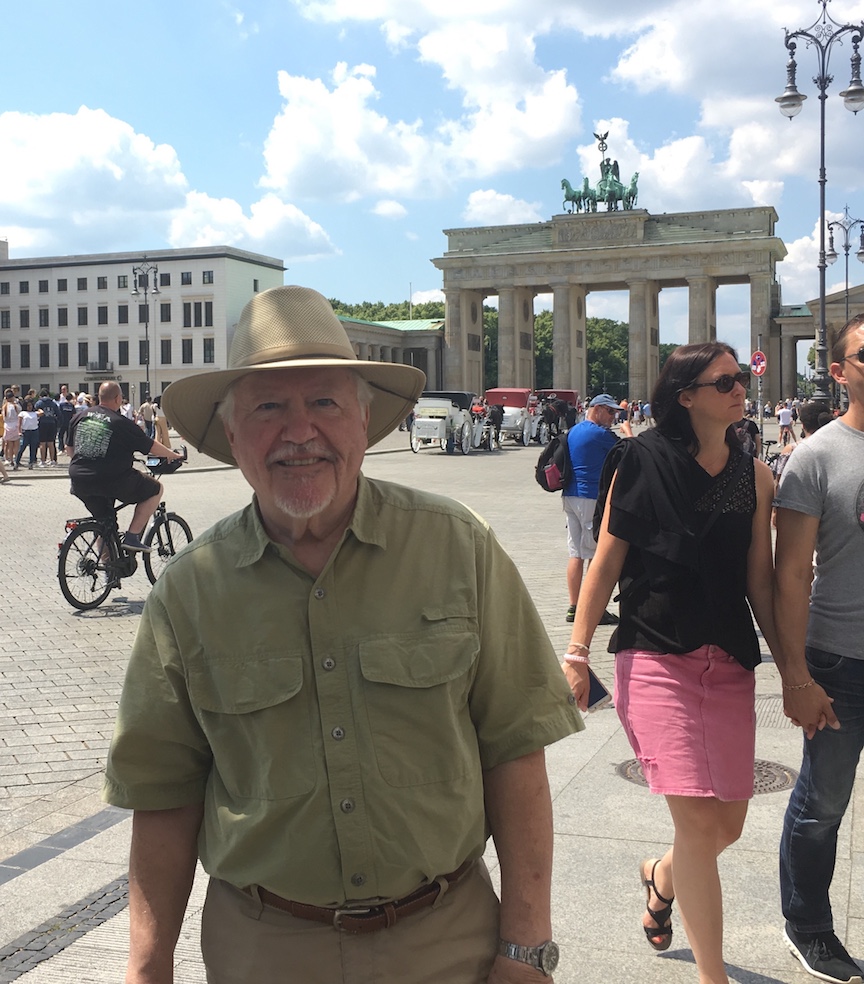
Those of us of a certain age are familiar with the name Brandenburg Gate, as it was a major symbol of the Cold War. It was originally built in 1791 on the order of Prussian King Frederick William II  to celebrate the peaceful resolution of conflict with the Dutch.

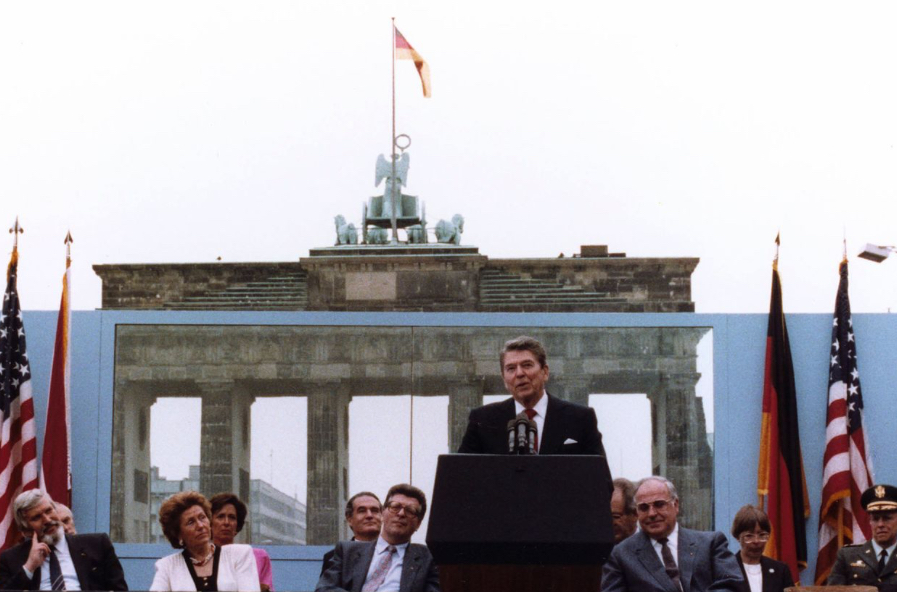
Located just inside what was East Berlin, the gate was closed following the construction of the Berlin Wall. In 1987, U.S. President Ronald Reagan spoke at the gate (photo) and said, “Mr. Gorbachev, open this gate! Mr. Gorbachev, tear down this wall!” The gate was the site of another official event on the day of German reunification. At midnight on 3 October 1990, the West German flag — now the flag of a reunified Germany — was raised over the gate.

There is no vehicle traffic through the gate. The adjacent large square — Pariser Platz — is a cobblestone pedestrian zone. The U.S. Embassy is located on the northern edge of Pariser Platz, next to the gate. And we found a little touch of the U.S. there.

Even in Berlin

The walk also brought us to the site of the “Memorial for the Uprising of 1953,” something I had not been aware of. The memorial is located in the forecourt of a massive building that had been Hermann Goring’s Ministry for Aviation in the Nazi era and is now the German Department of Finance.

For three days in June 1953, tens of thousands of East Germans took to the streets in East Berlin and in other parts of East Germany in protest against the East German regime. Soviet troops and East German police put down the uprising, at a cost of more than 500 persons killed, 1,800 wounded, and 5,000 arrested. 

West Germany established the memorial. The broad avenue through Tiergarten, seen at the beginning of the Reichstag video above, is named “Straße des 17 Juni.”

East Germans had produced an art piece, a mural on the front of the building, entitled “Aufbau der Republik” (Build-up of the Republic). Made of Meissen porcelain tiles and described as an example of “socialist realism,” it depicts happy East Germans toiling in joy in service to the state.

Here is video (2:32) of that area.

Checkpoint Charlie
Another iconic name from post WWII, Checkpoint Charlie was the border crossing point between the Russian and American zones of occupied Berlin immediately after the war and later, following the building of the Berlin Wall, between East and West Germany.

Today, it is a tourist attraction with actors playing the roles of American or Soviet soldiers and shops offering bogus pieces of the Berlin Wall.

Here’s video (1:29).

The Trabant
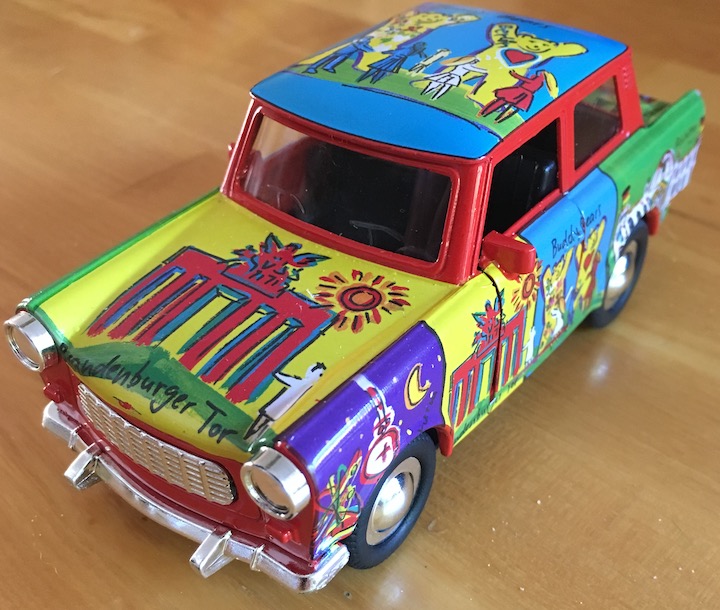
If West Germany has been famous for the high quality of automobiles designed and built there, East Germany was maybe notorious for producing the Trabant, better known by a nickname, the Trabi.

Called “a spark plug with a roof,” the Trabi was built between 1957 and 1990 with few if any significant variations. It was the most common car in East Germany and, as it was produced by a state monopoly, it took 10 years to get one. Most agreed with the description of the cars as “loud, slow, poorly designed, and badly built.”

Trabis are now something of a retro item, used for displays, toys, etc. This is a toy I brought home for my granddaughters.

During our walkabout this day, I came across what I thought might be a Trabi used car lot. Indeed, it was connected to Trabi World, where one could rent a Trabi for a spin around Berlin. Don’t know what provisions were made for possible breakdowns. Here’s video (1:04).

Potsdamer Platz and The Wall
Potsdamer Platz is about a kilometer south of the Brandenburg Gate. The area was pretty much destroyed during WWII and then left desolate by the East Germans, bisected by the Berlin Wall. Since reunification, it has been transformed into a thriving commercial center.

Here’s video (3:19), including panoramic views of the city.

Holocaust Memorial
On a site covering more than 4.5 acres, located between Potsdamer Platz and the Brandenburg Gate, lie 2,711 slabs of concrete of varying height. They constitute the “Memorial to the Murdered Jews of Europe,” also known as the Holocaust Memorial.

Completed in 2005, the memorial’s design has been controversial. There are no plaques, inscriptions, religious symbols, or names. New York architect Peter Eisenman, who designed the memorial, said he wanted visitors to feel the loss and disorientation that Jews felt during the Holocaust. No stone is the exact same size as another, intended to reflect individuality along with sameness. I guess I appreciate representational art more than conceptual art. Personally, I found the memorial lacking . . . what, I’m not quite sure.

Here’s video (1:02).

Soviet War Memorial
Seemingly out of place, there is a large Soviet War Memorial in Tiergarten. It was erected in 1945, only months after Soviet troops took Berlin, using stones from the destroyed Reich Chancellery.

The site is also the burial place of about 2,000 Soviet soldiers, from among an estimated 80,000 killed in the Battle of Berlin. The memorial is still used for commemorative events, including VE (Victory in Europe) Day, 8 May.

Last video (0:56) for today.

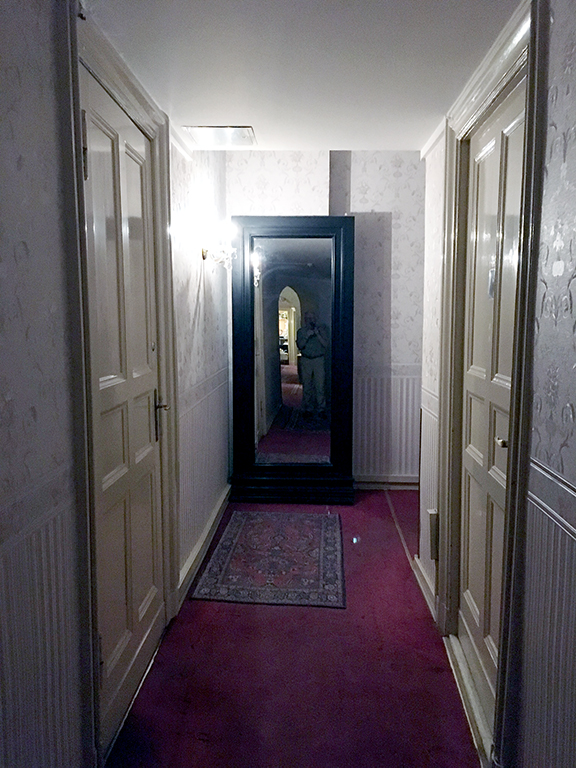
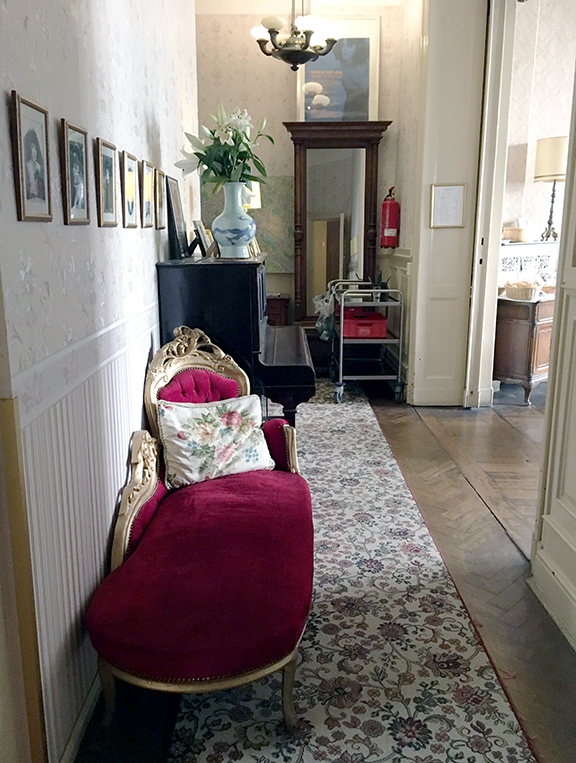
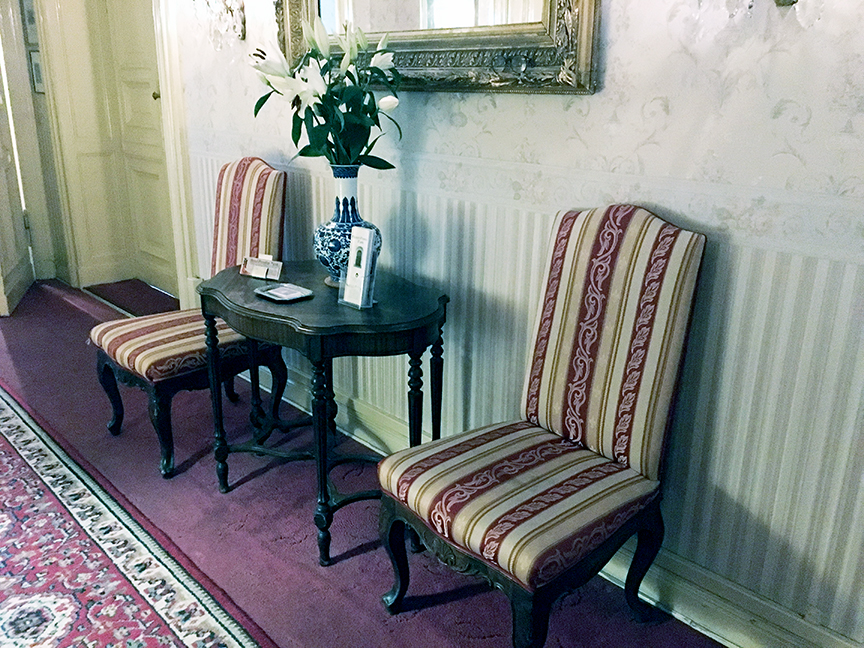
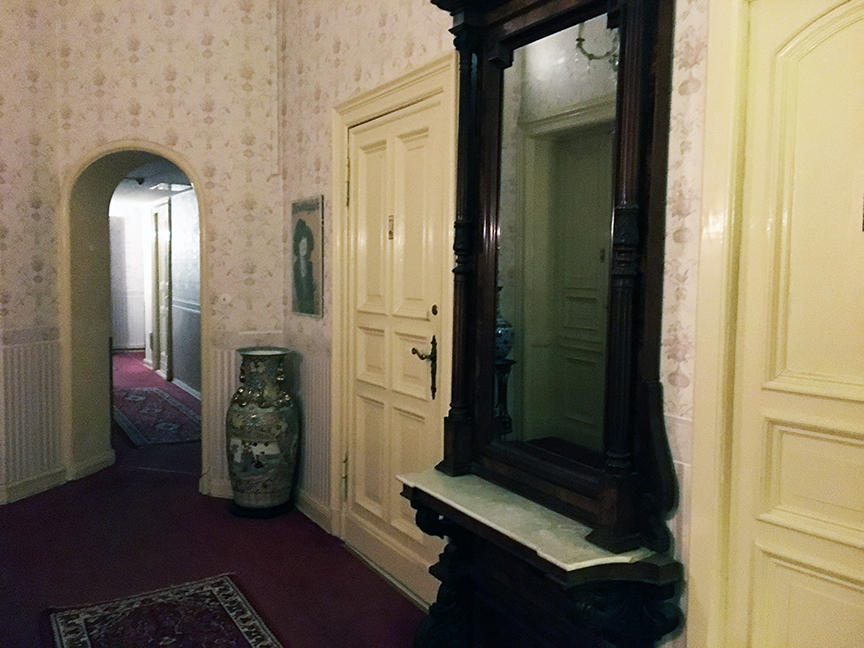
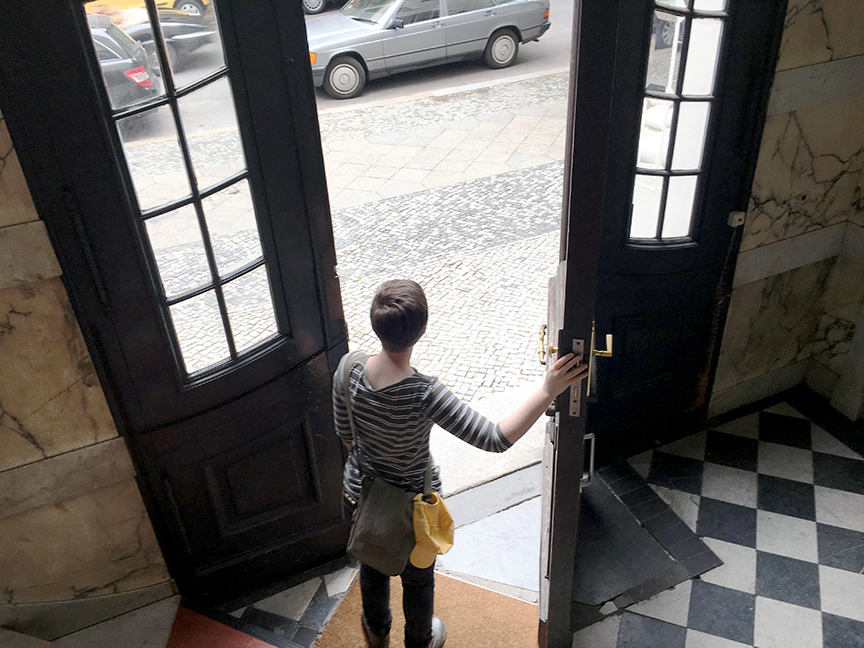
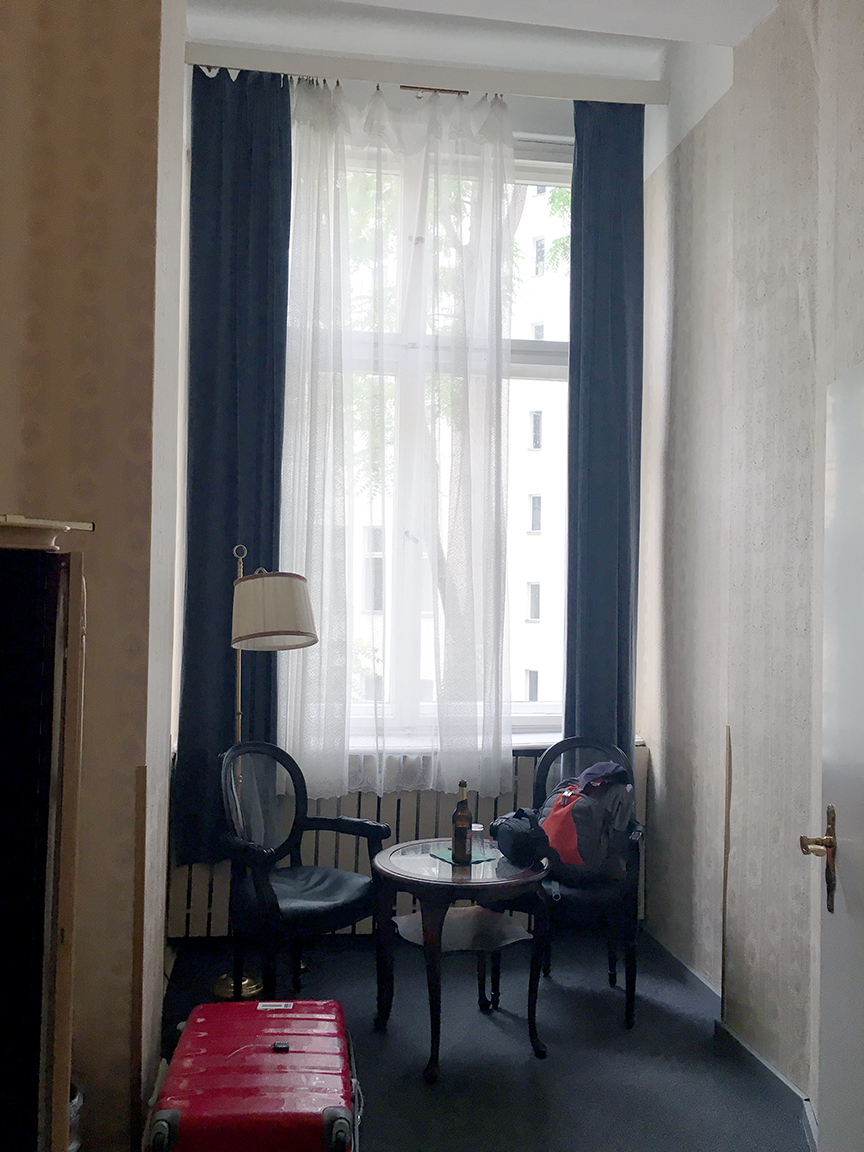
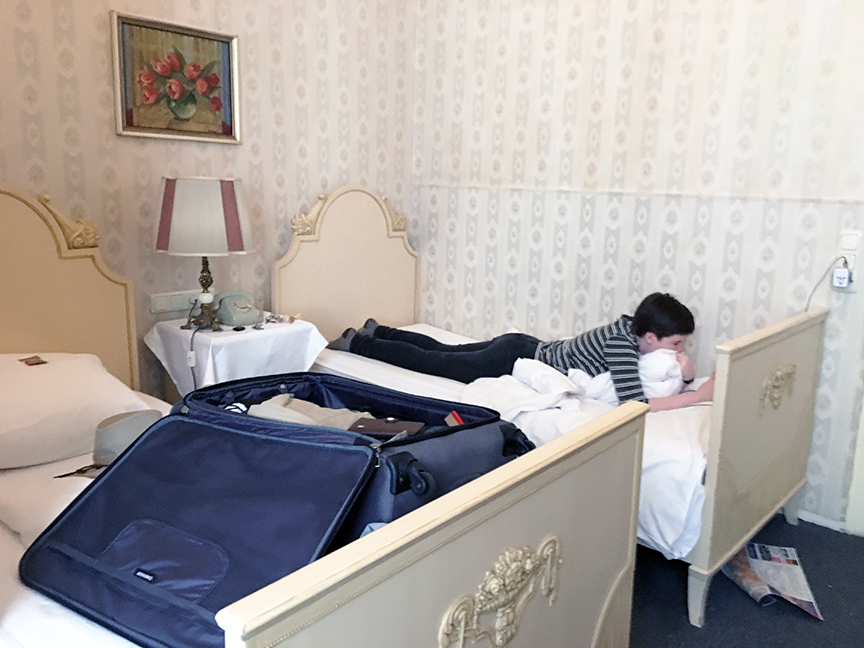
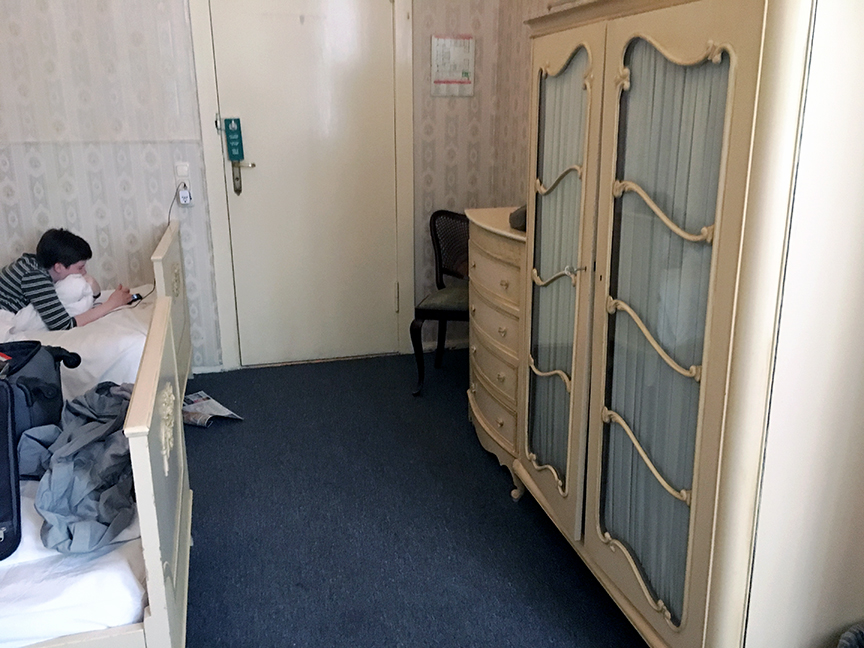
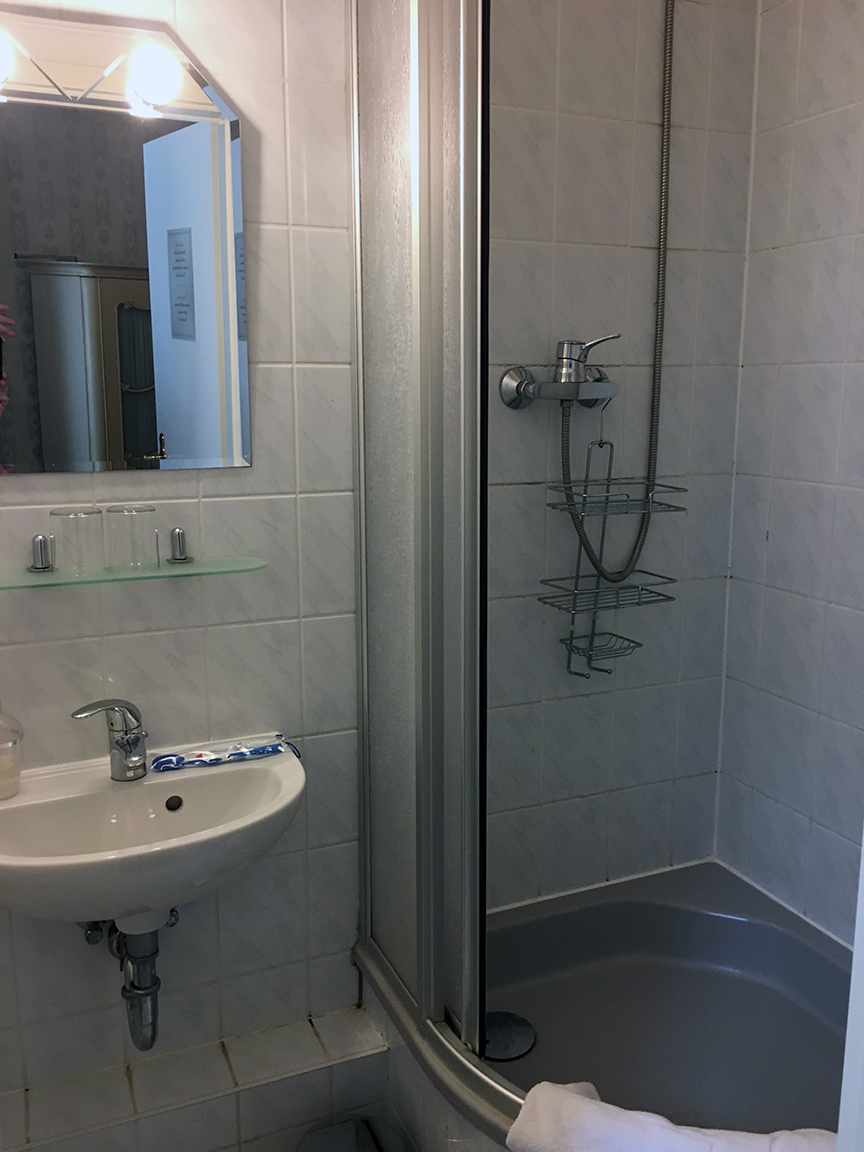
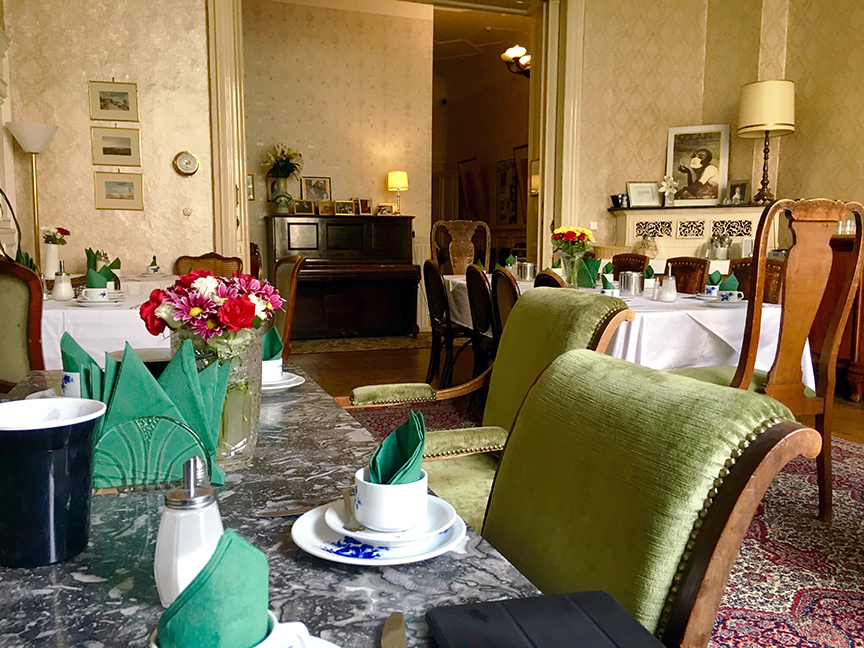
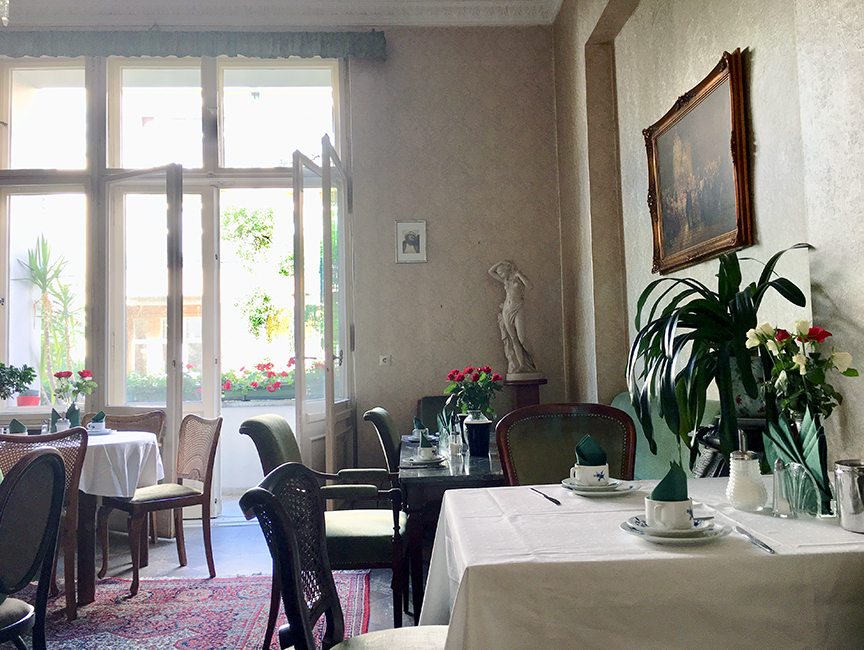
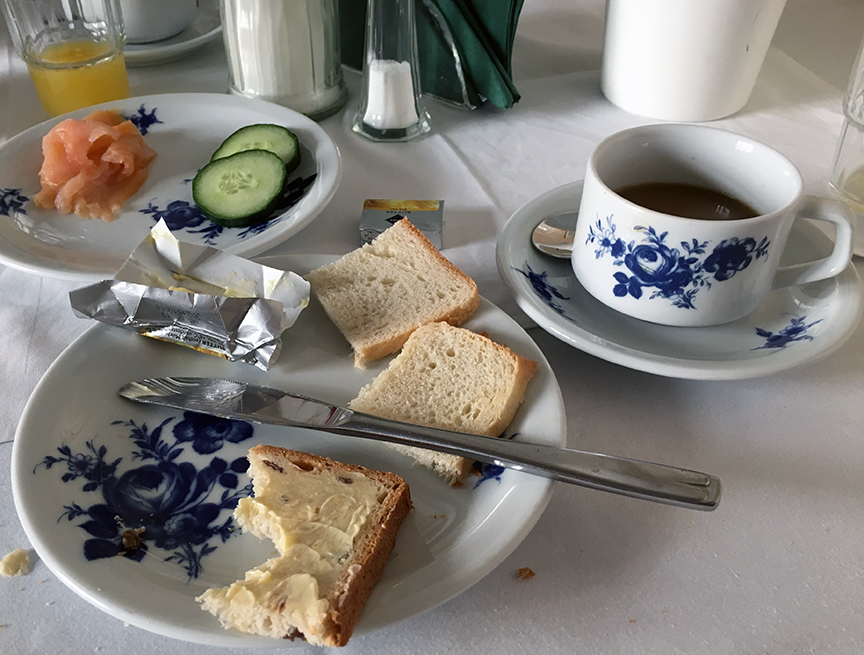
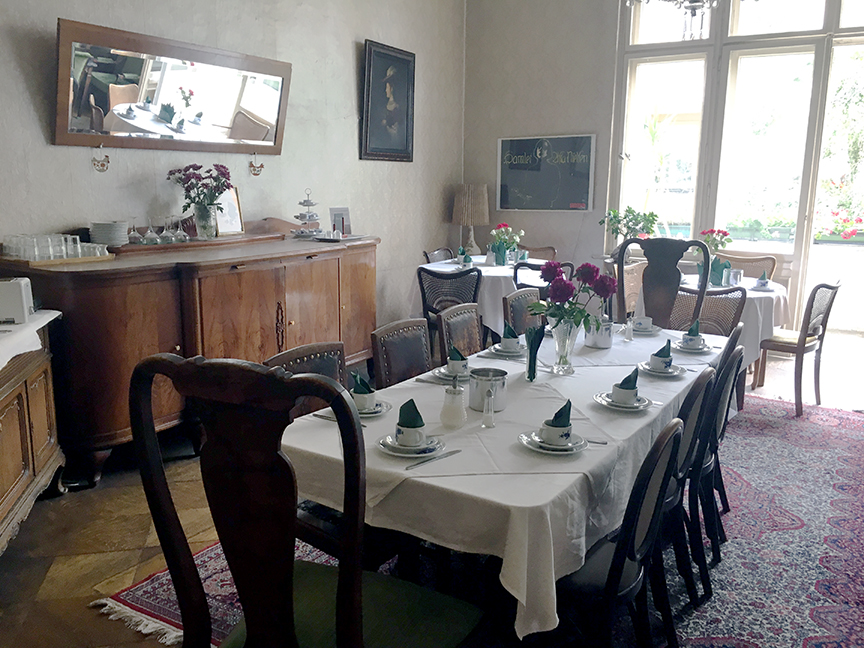
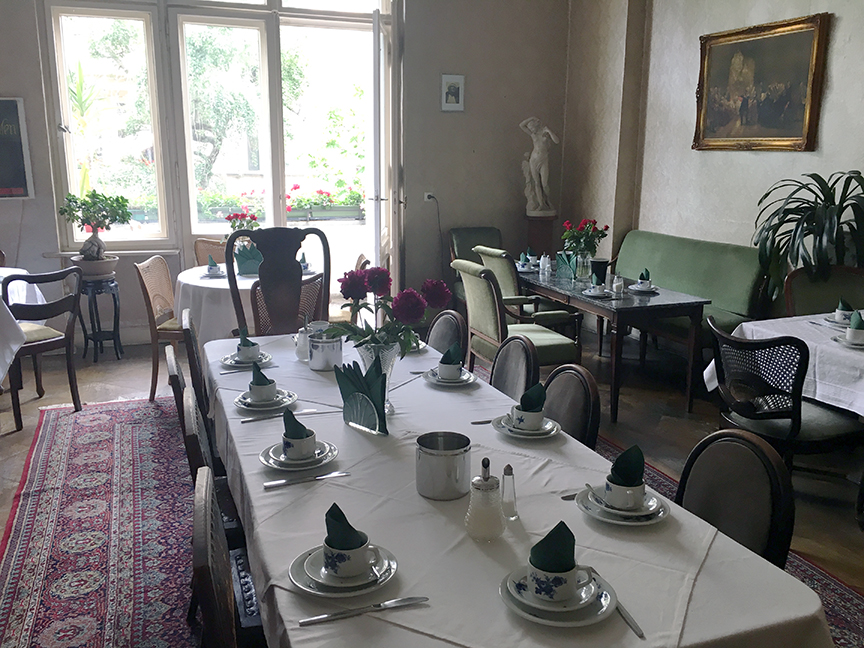
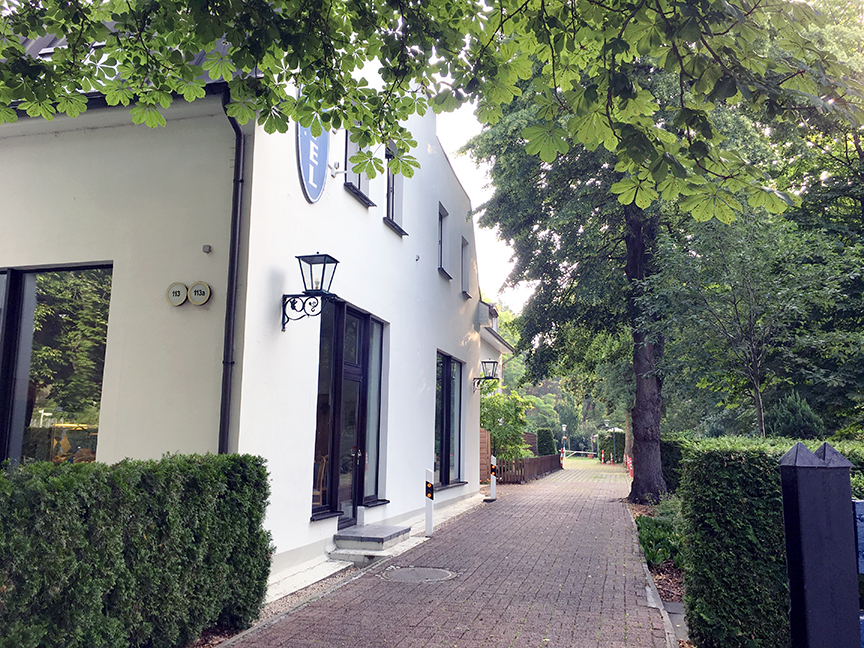
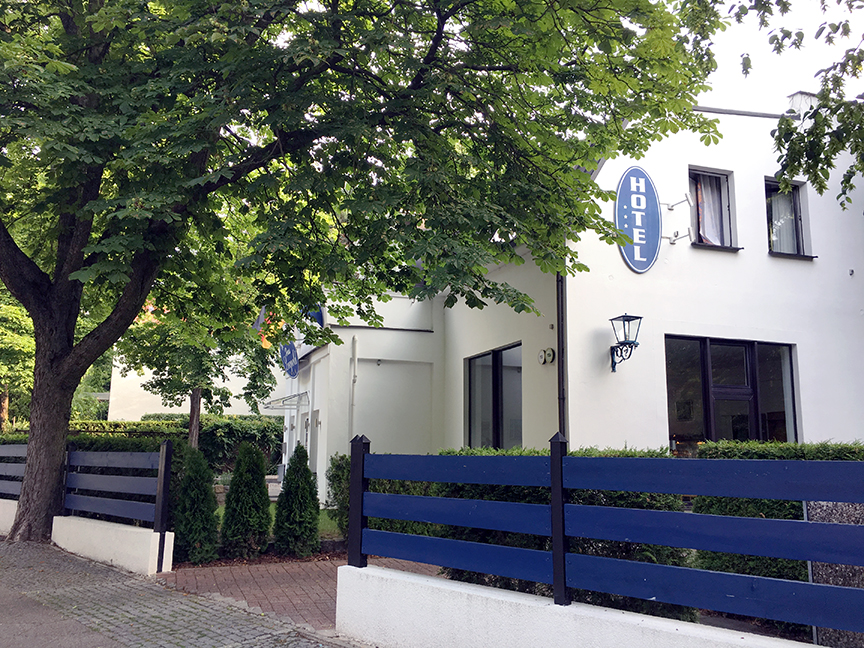
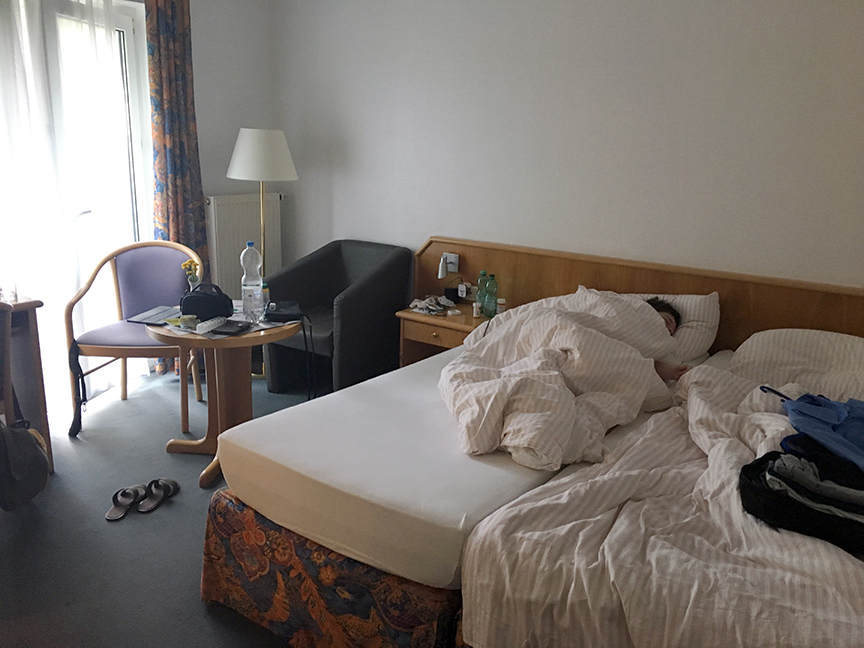
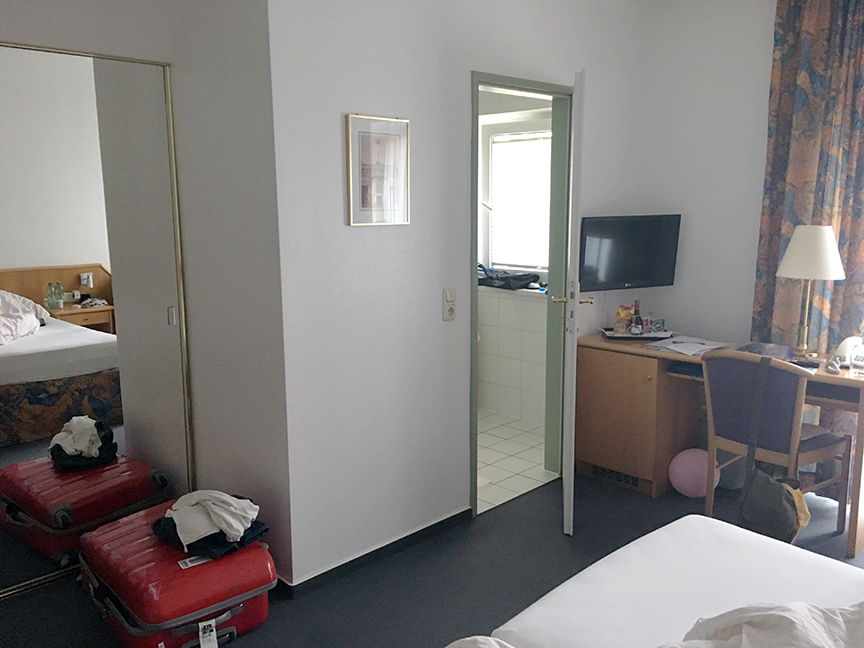
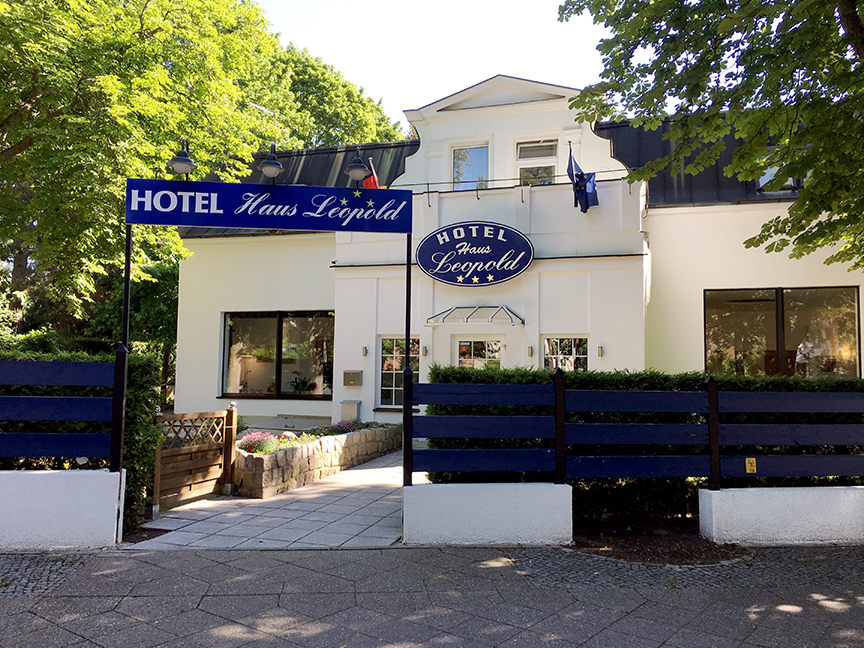
Hotel Haus Leopold


Berlin, part VI: Sacred Heart

On Sunday, 16 June, Julia and I went to church. We walked from the hotel to the Parish Church of the Sacred Heart (Herz-Jesu). It was somewhat close, but that’s not why we went there.

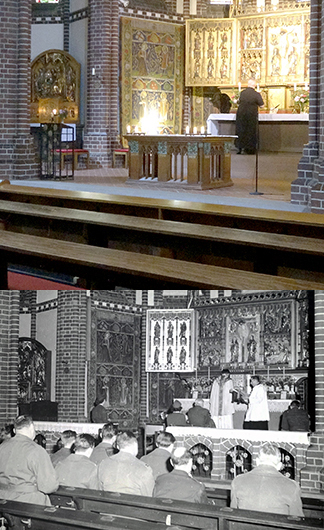
My parents were married on 11 November 1945 in that church. Using photos taken at the wedding, Julia had been able to locate the church because of the distinctive artwork behind the altar. Indeed, she and Sam visited the church on their December 2017 honeymoon.

Below is a combination of a picture from the wedding in 1945 and one taken on our visit. Not a perfect match, but we did a little better in the video.

Here then is a brief (1:26) video taken of the church. We waited to shoot the interior until after Mass and the parishioners had left.

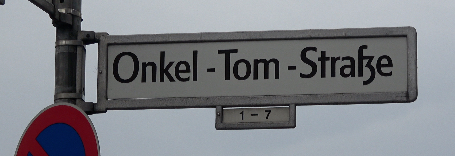
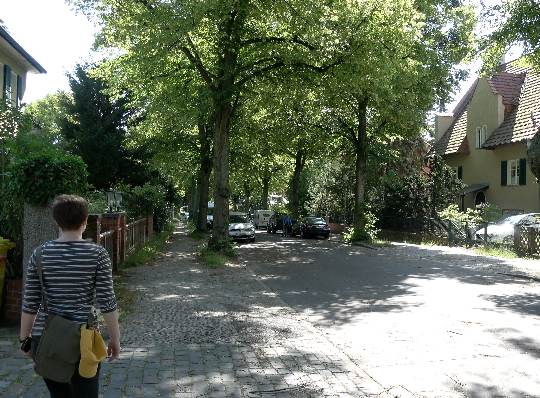
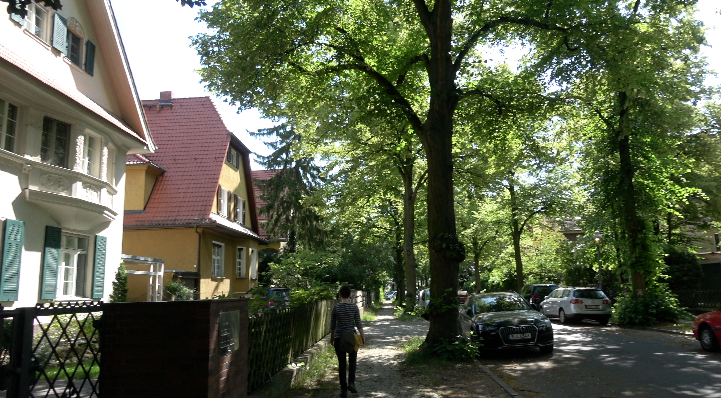
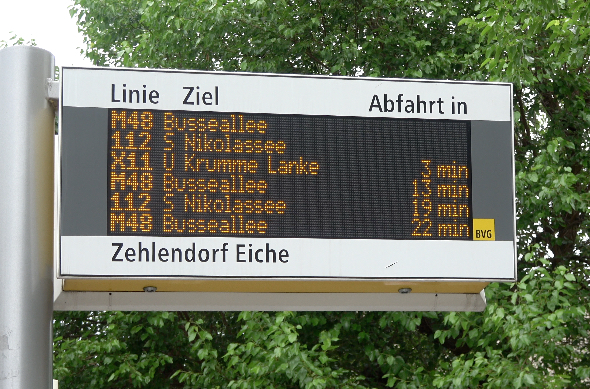
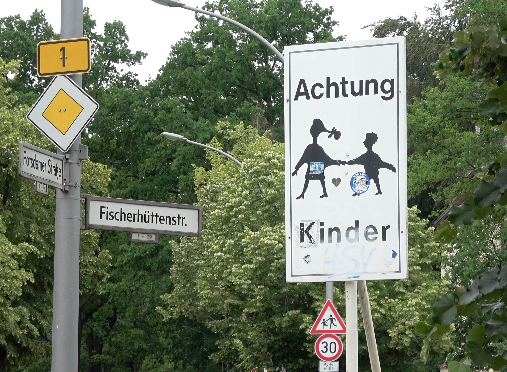
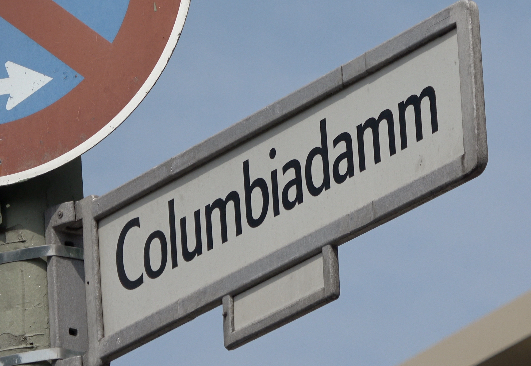
After church, we took the long way back to the hotel so that we could see some more of Zehlendorf. In an earlier post, I mentioned some street names related to the American presence post-WWII. This one was a bit of a puzzle.

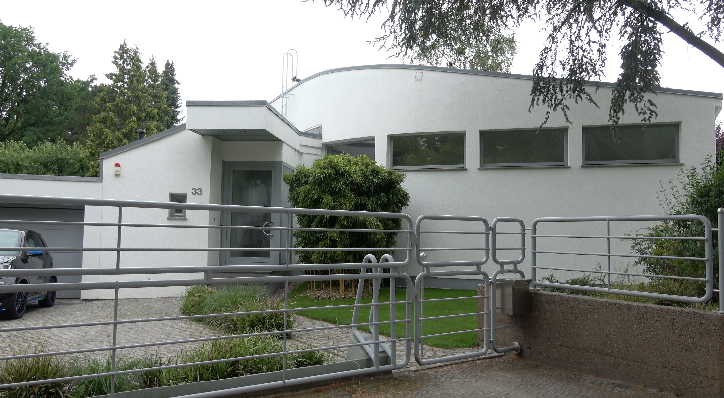
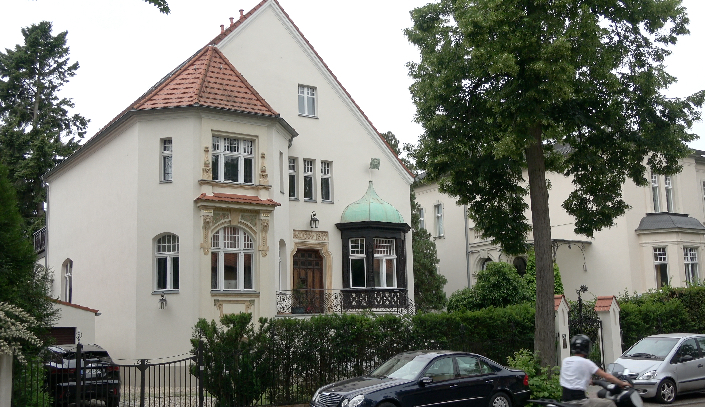
 Here is a gallery of other photos from that walk.
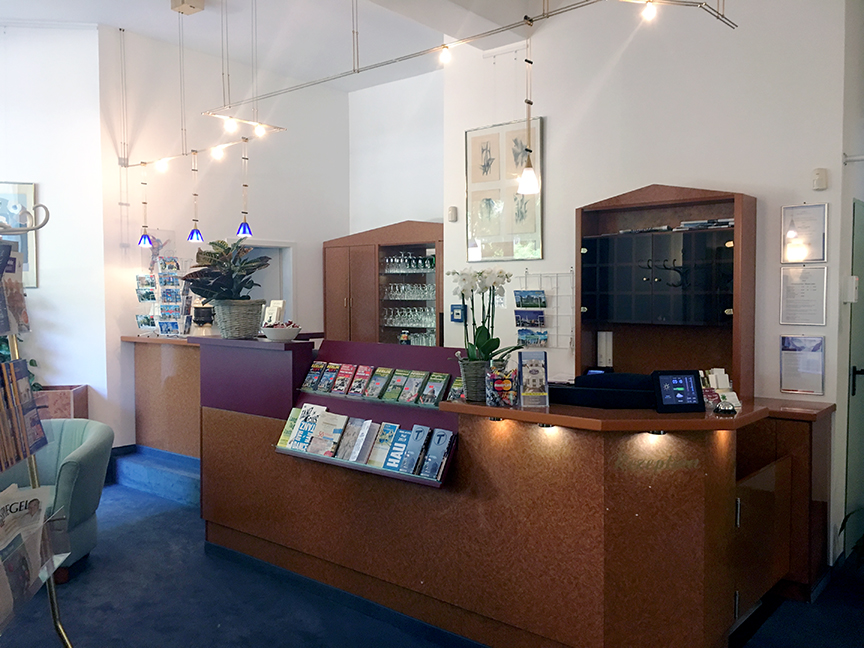
 

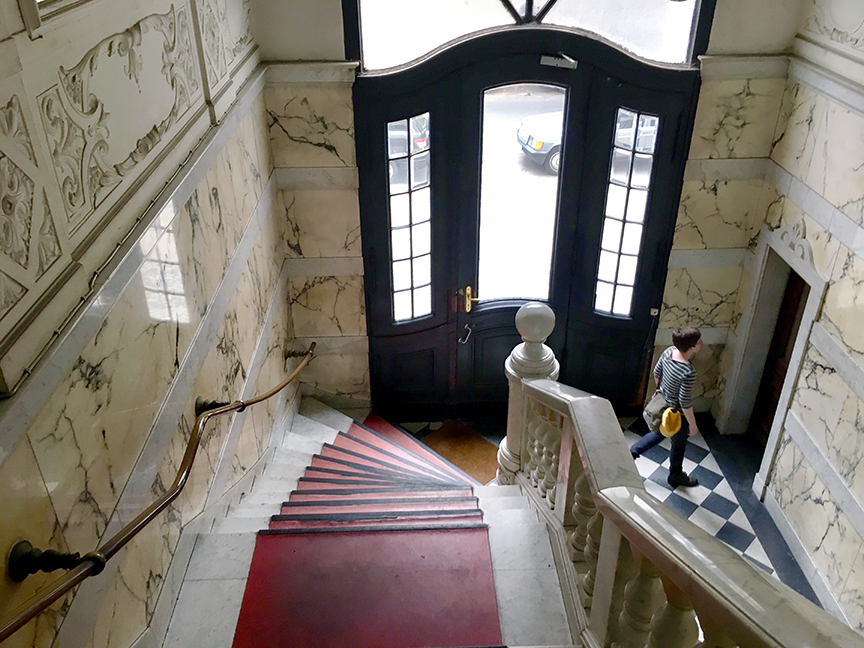
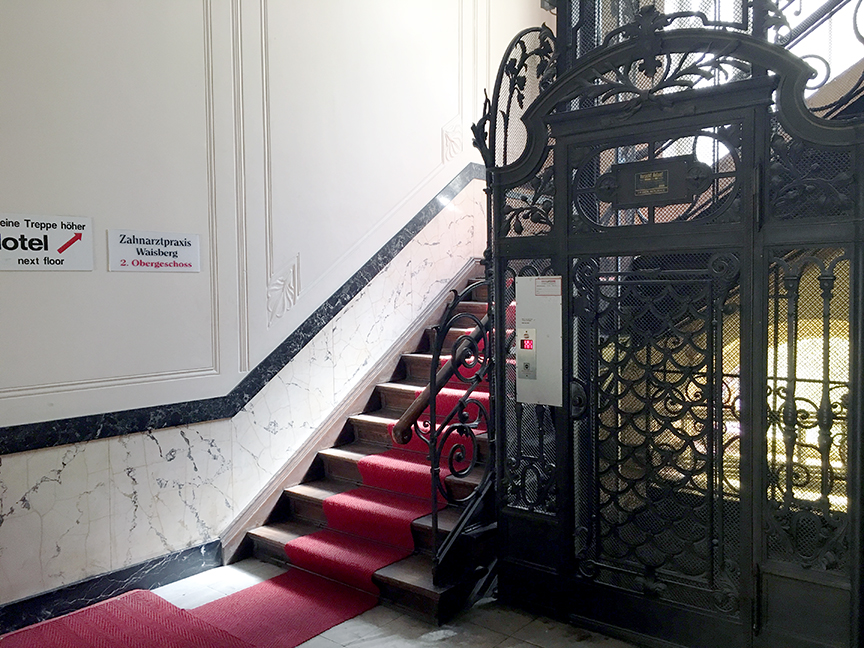
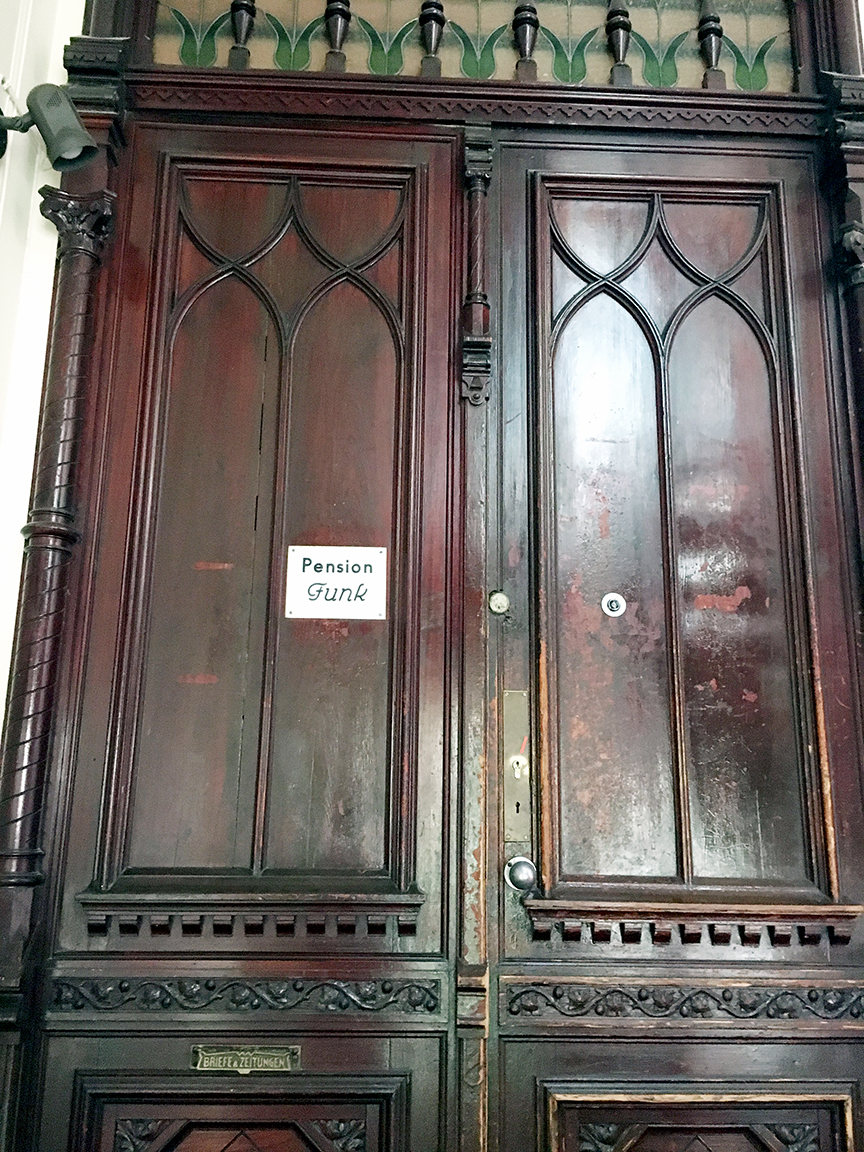
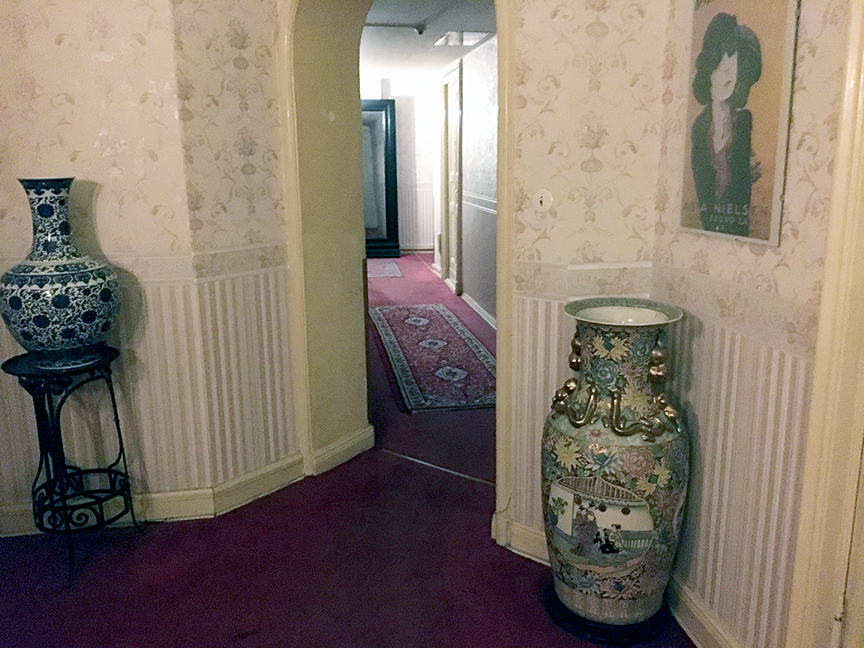
We then changed hotels and took a cab to Charlottenburg, another upscale neighborhood and much more urban. As we planned a few days of serious tourism, we wanted to be closer to the main sights. Our hotel was the Hotel Pension Funk, and it was all that the name implies . . . and more. You’ll get a slight preview in this video (1:43) of the hotel and area around it, but there will be a special post about it later. 
This was also the first day of much walking . . . the first of several days of much walking. On this day, I took 12,128 steps and covered 4.2 miles. The next day, I crushed my previous PR.

Part VII: Tiergarten District


Berlin, part V: Out and about

We left Zehlendorf on Saturday, 15 June, and got a quick, condensed tour of the former U.S. section of occupied Berlin.

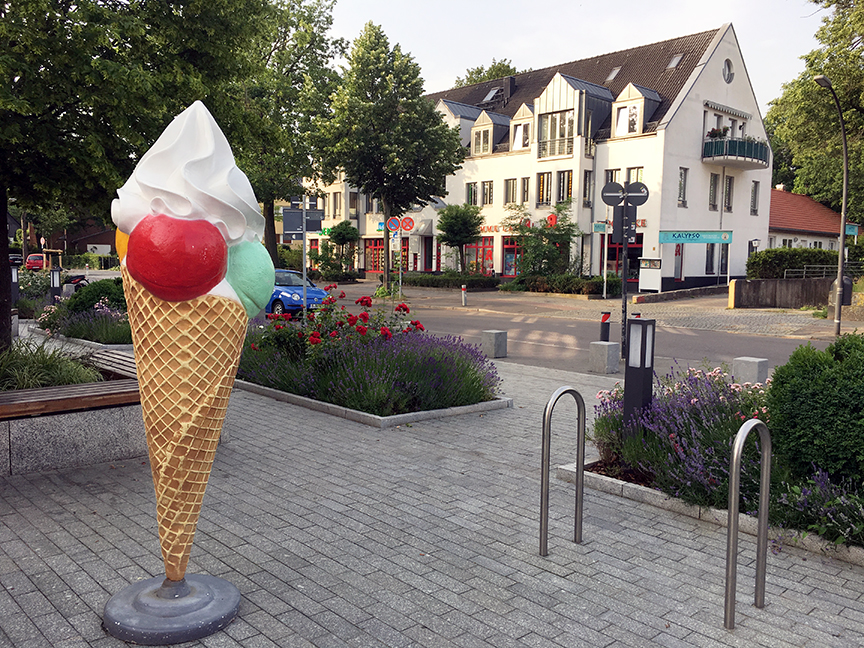
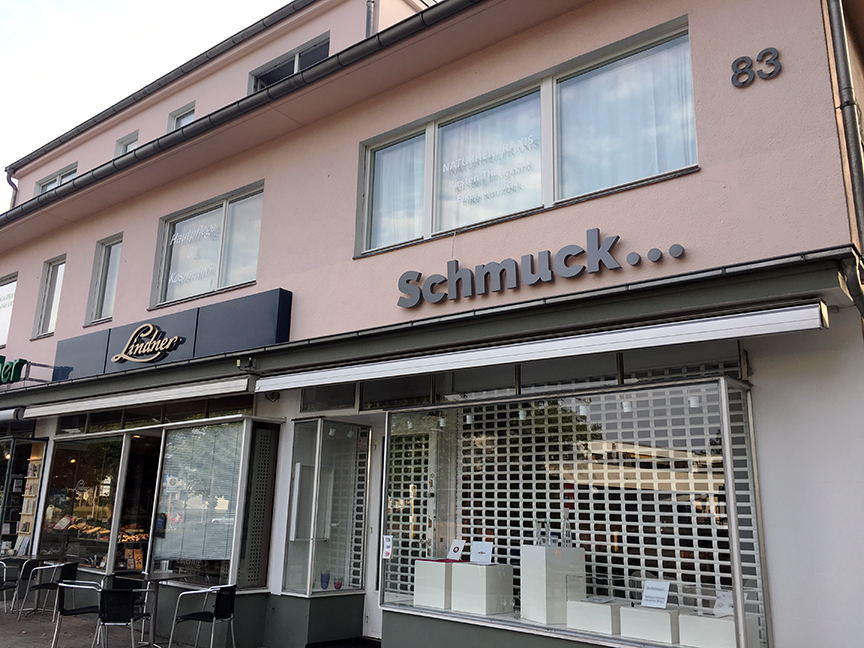
Before we went on the tour, however, I wandered down the street to an ATM to get some euros. Below are a couple of photos from the shopping area maybe a kilometer from the hotel.

The ice cream cone is pretty obvious, but I was a little surprised to see a store called “Schmuck.” I later learned, though, that however Yiddish might translate the word :), it means “jewelry, adornment” in German.

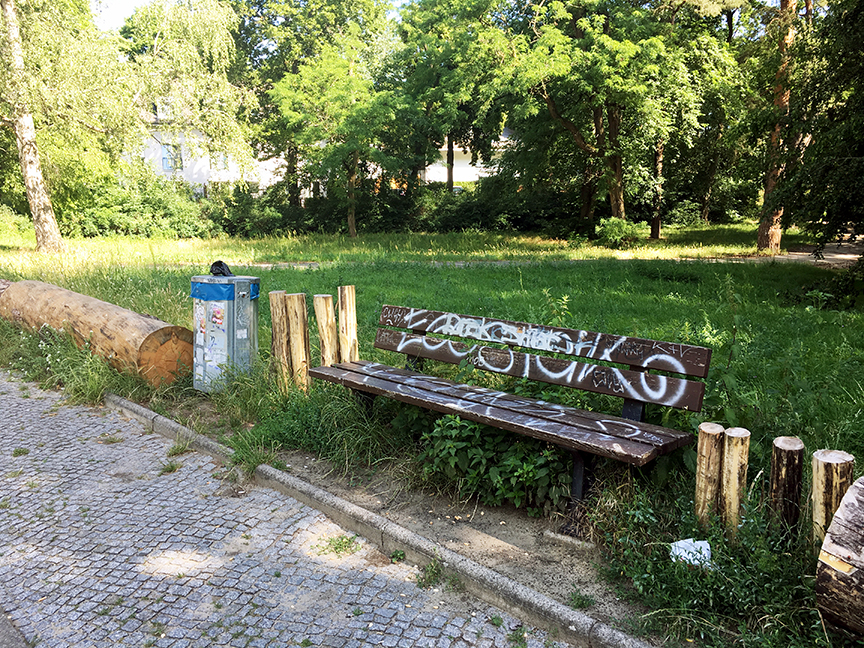
Throughout our visit to Berlin, I was disappointed to see the amount of “tagging.” Maybe not as much as in 1970s New York City, but a lot. Graffiti is technically illegal in Germany, but perhaps “street art” is forgiven. Whatever, I’m generally not a fan. Here’s a scene from my walk.

We met up with Christoph Krajewski, a friend of Isabel’s and a professional guide. He was kind enough to give us the tour free of charge. Chris had been born in Berlin in 1943, so he certainly had the local background and was very informative. We were also joined by Heiko Suhr, military historian, who is working on a book and documentary about Wilhelm Canaris.

As it was the American sector, some of the streets bear American names, presented in German style, such as the signage below. (One of my alma maters.)

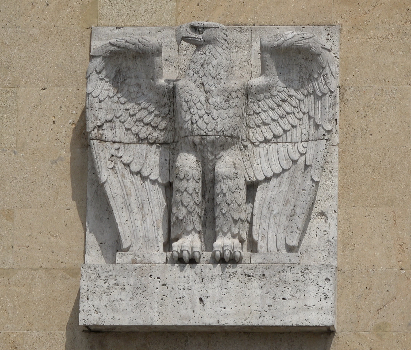
Germany and the U.S. share the eagle as a national symbol. This representation was quite common in the area we toured.


The tour was conducted mostly by car, with few stops. We had a lot to cover. Some of the video below was shot from the moving car. Following the tour, we met Michael Günther at the Alliiertenmuseum (Allied Museum), which offers WWII historical items from American, English, and French forces. Michael interviewed me on camera for possible use in the documentary. 

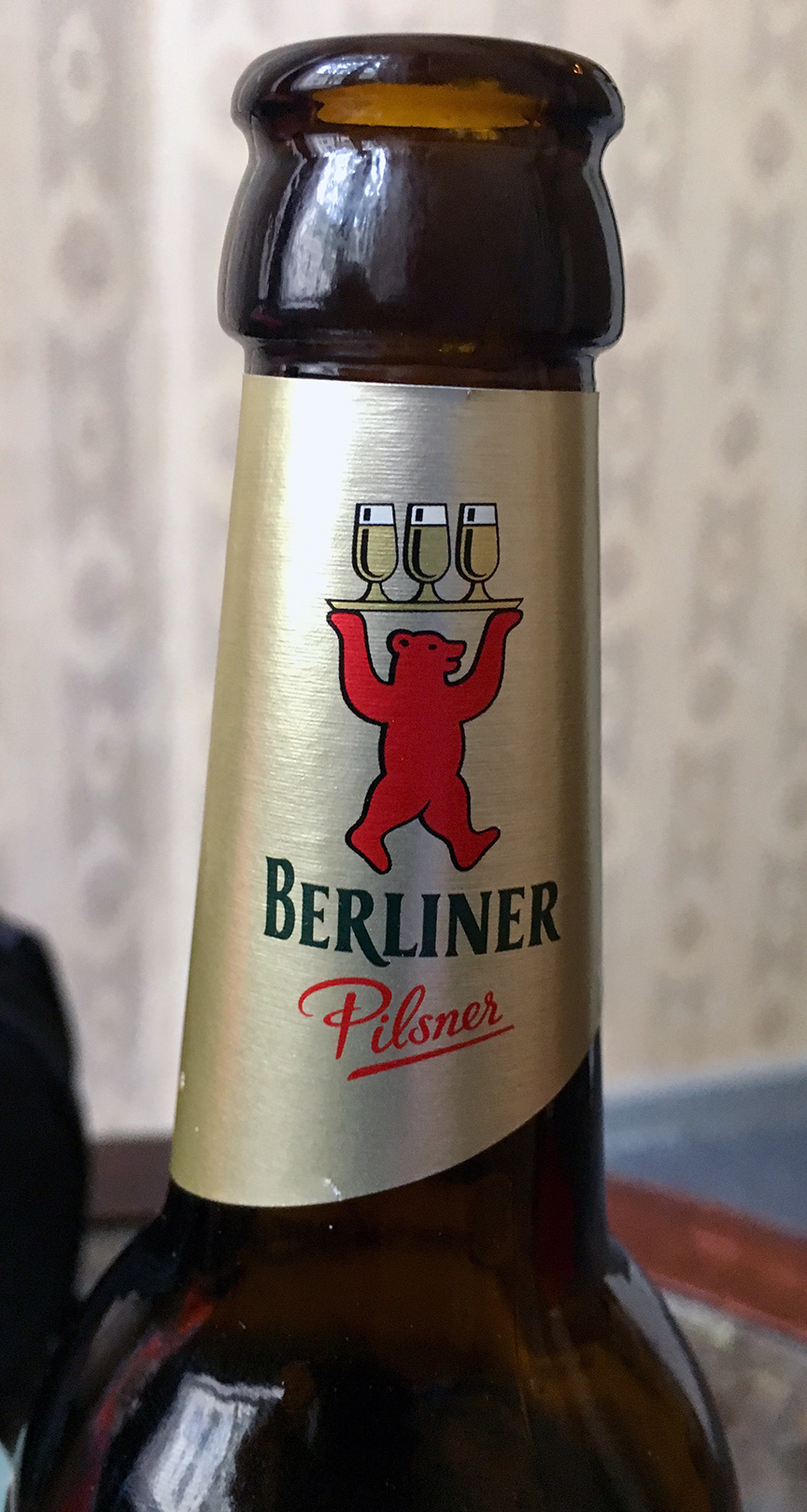
The video (2:09) ends with one of the first “buddy bears” I saw in Berlin. A standing bear has been part of the Berlin identity for centuries. (You’ll see it on the picture of the city hall in 1963, and on bottles of Berliner pilsner.) In 2001, two art students did a street art project, designing and building a bear with a friendly mien. Now they are almost ubiquitous, with different colors and designs to convey a message. Okay, this is street art I like. You’ll see more buddy bears in other videos, too. (I was very disappointed at not being able to find an option that one could inflate to real buddy bear size.)

Part VI: Sacred Heart


Berlin, part IV: Wannsee

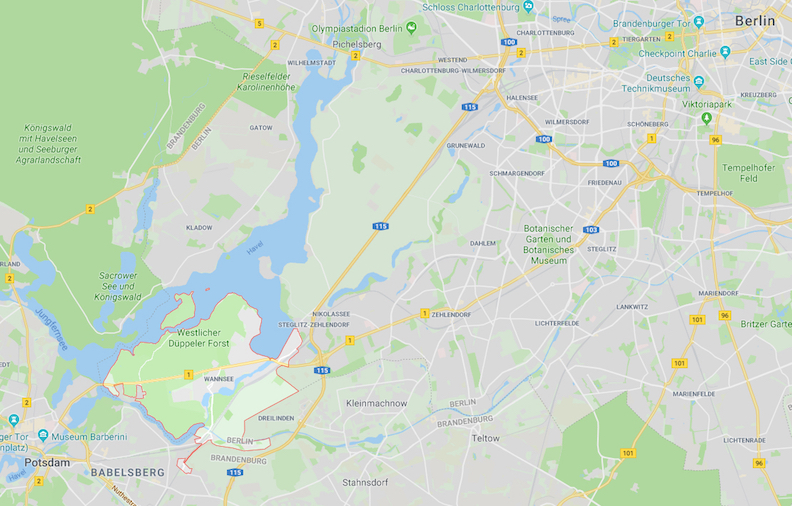
Wannsee is in the southwestern Berlin borough of Steglitz-Zehlendorf. Two lakes, the larger Großer Wannsee and the Kleiner Wannsee, are located on the River Havel. The area provides much scenic and recreational opportunities . . . and some history.

After visiting the former home of the Canaris family on June 14, the extended Canaris family invited Julia and me to join them on a boat tour of Wannsee. Prussian royalty of the late 18th century built “palaces” along the lakes, and on ‘Peacock Island.’ Those have been joined since by the homes or vacation homes of many of Germany’s notables. In this video (4:10), you’ll see homes and other buildings from a wide range of eras and in many different styles.

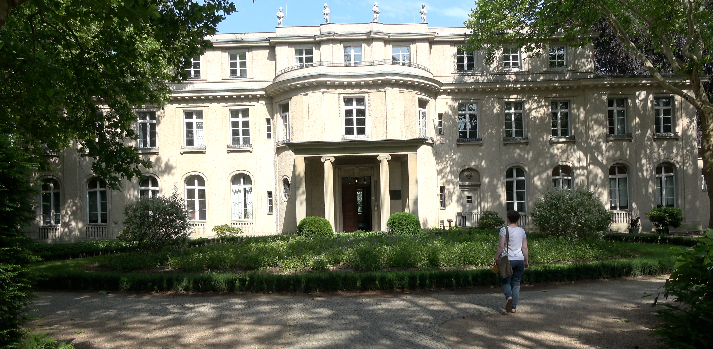
The ‘Wannsee House’
There is one particular villa of special note. It had been built in 1914-15 by a merchant and factory owner. The original owner sold it in 1923 to a firm owned by the industrialist Friedrich Minoux, an early ally of Adolf Hitler. Minoux sold the villa in 1940 to a foundation established by SS Obergrüppenfuhrer Reinhard Heydrich to build or acquire vacation resorts for the SS Security Service (SD).

On January 20, 1942, Heydrich and 14 other members of the SS hierarchy or senior government officials met at the villa to begin discussion of how to ensure that the elements of the German regime could bring about “the final solution of the Jewish question,” the systematic extermination of European Jews. The ‘Wannsee Conference’ lasted 90 minutes.

The building served as a school from 1952 until 1982, when it became a memorial. In 1992, on the 50th anniversary of the Wannsee Conference, the building was designated an official museum and educational center related to the Holocaust.

Michael Günther took Julia and me on a walking tour of the building the day after our boat tour of Wannsee. You’ll see segments of both days in this short (2:20) video.

‘Bridge of spies’
The Gleinicke Bridge crosses the Havel River in Wannsee, connecting Berlin with Potsdam. After WWII, the border between West Berlin and East Germany ran down the middle of the river, with Potsdam in East Germany. In 1952, East German officials closed the bridge to West Berliners. Following construction of the Berlin Wall in 1961, the bridge was closed to East Germans as well.

With such restricted access, the bridge became the site of several exchanges of captured spies during the Cold War. Reporters began to refer to it as the “bridge of spies.” (An American movie of the same name was released in 2015.) The first exchange was in 1962, when Americans released convicted Soviet spy Rudolf Abel and received captured U-2 pilot Gary Powers in return. In 1985, 23 captured American agents were exchanged for one Polish and three Soviet agents. In 1986, human rights campaigner and Soviet political prisoner Natan Sharansky was among those exchanged. 

One day after the Berlin Wall opened in 1989, all Germans were able to walk across the bridge. Border fortifications and barricades were removed upon the reunification of Germany in 1990.

One feature of the bridge that points to its former status as a border point is the color of its paint. As you’ll see in this brief (1:01) video, the shades of green on each half of the bridge are different.

Part V: Out and about


Berlin, part III: Visiting the Canaris home

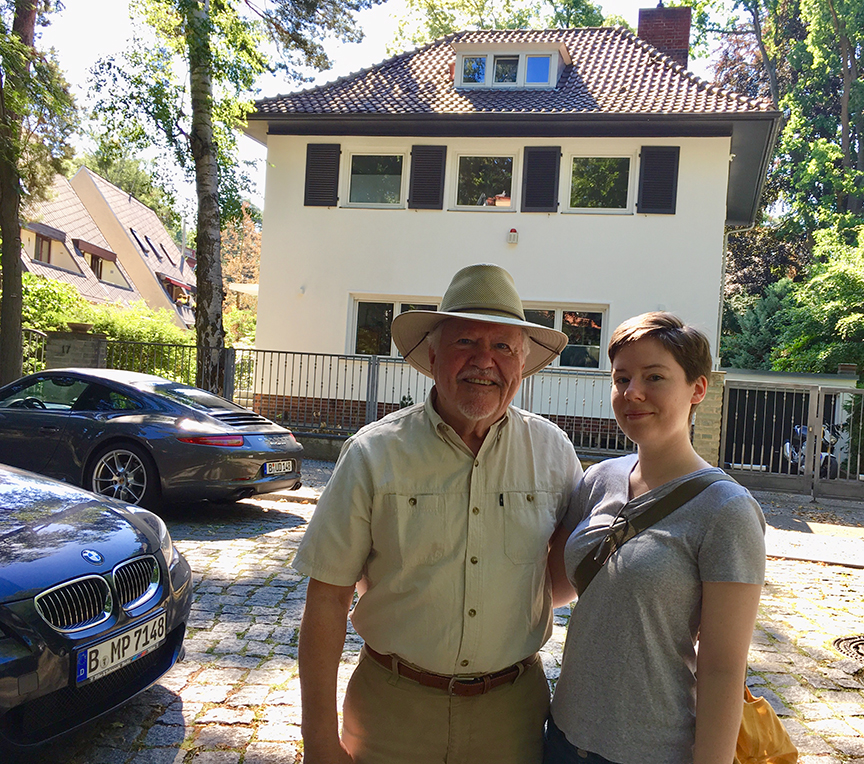
Julia and me in front of the former Canaris home. Like the touch of the Porsche and BMW.

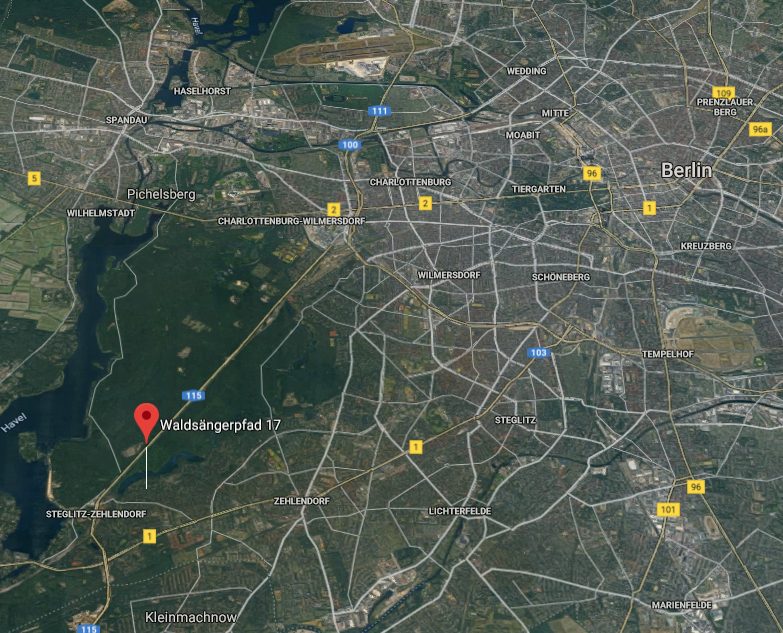
Admiral Canaris, his wife, and two daughters had lived at Waldsangerpfad 17, also in Zehlendorf and southwest of the center of Berlin. (UPDATE: A little more research reveals that the address of the house when the Canarises lived there was Betazeile 17.)

By the time my parents lived in the house — beginning November 1945, six months after the end of the war — no one from the Canaris family lived there. Based on mounting evidence that he had been working against Hitler, Wilhelm Canaris had been dismissed and the Abwehr disestablished in early 1944. After Canaris’s personal diary, containing additional evidence of his opposition, was presented to Hitler, Canaris was arrested, convicted by an SS summary court, and sentenced to death. He was executed on 9 April 1945.

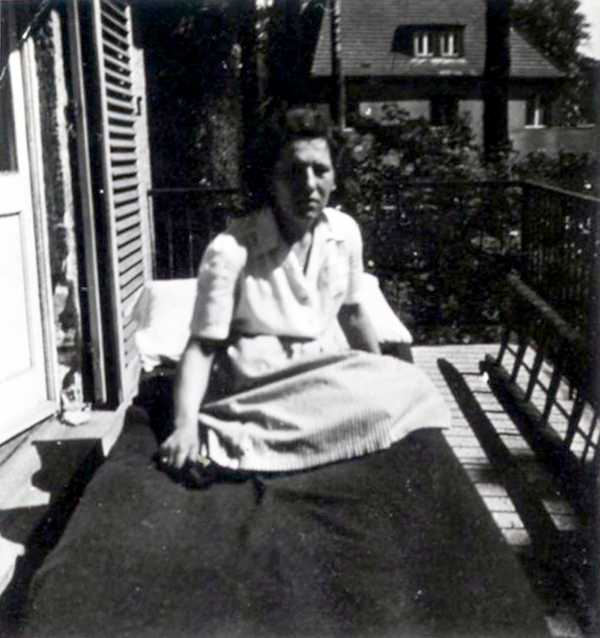
While my parents lived in the house, my mother became pregnant with me. This is a picture of my mother, in spring 1946, sitting on a cot out on the second-floor rear deck of the house. She told me later that she was suffering from morning sickness at the time. Sure looks it.

 On 14 June 2019, Julia and I joined members of the extended Canaris family on a visit to the Canaris home. The neighborhood is quite nice, featuring generally large homes, expansive yards, and cobbled roads. (I’m not sure I’d enjoy driving on the cobbled surfaces, but they lend a certain style and do tend to slow drivers down.)

(Julia and Sam had previously visited the house in December 2017, when they went to Paris and Berlin for their honeymoon. She had tracked it down using WWII-era photos as reference.)

Isabel had made arrangements beforehand, of course, with the current occupants of the house, who were very gracious in inviting us onto the grounds. We spent 15-20 minutes in the back yard, which contained wonderful plants and landscaping. I believe the current owners learned about the home’s history only a short time before the visit (it was 72+ years ago) and of its importance to me personally only during our visit.

Here’s a brief (1:16) video from the visit.

Part IV: Wannsee


Berlin, part II: Meeting the Canaris family

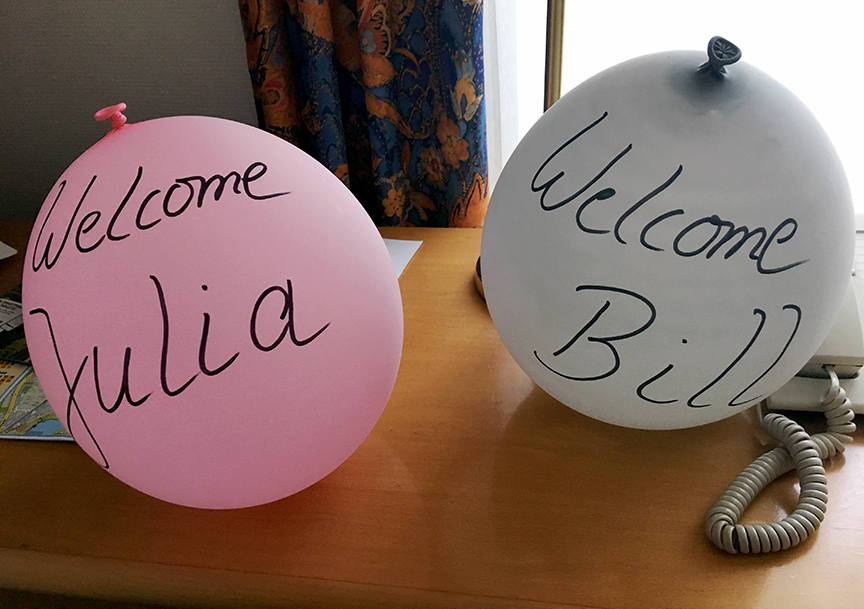
We were met at Tegel Airport at about 10:30 am June 13 by Isabel Traenckner-Probst and her daughter, Eva. As we emerged from customs, we saw two tall women waving balloons and heard them yell our names.

Isabel drove us to the hotel she had so kindly arranged for us, but our rooms were not ready and would not be for several hours. Recognizing we had taken a redeye, Isabel, again kindly, made her home available to us for naps. Isabel and her family, also including husband, Reiner, and son, Lars, live in one of what the locals call “American homes,” apartments originally built to house American service members and their families.

(Isabel is a great-great-grandniece of Wilhelm Canaris, German admiral and head of the Abwehr, Germany’s military intelligence agency, and she was our principal contact with the extended family. [More about the Admiral later.] My parents had lived in the Canaris house 1945-46, returned to the U.S. with two of his personal photo albums, and we were in Berlin to mark the return of those albums and other material to the Canaris family.)

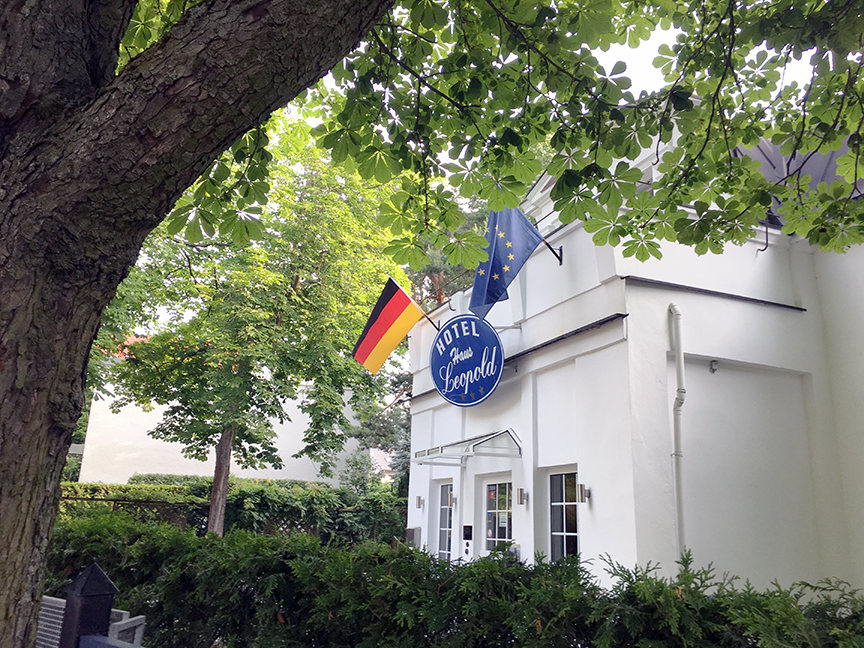
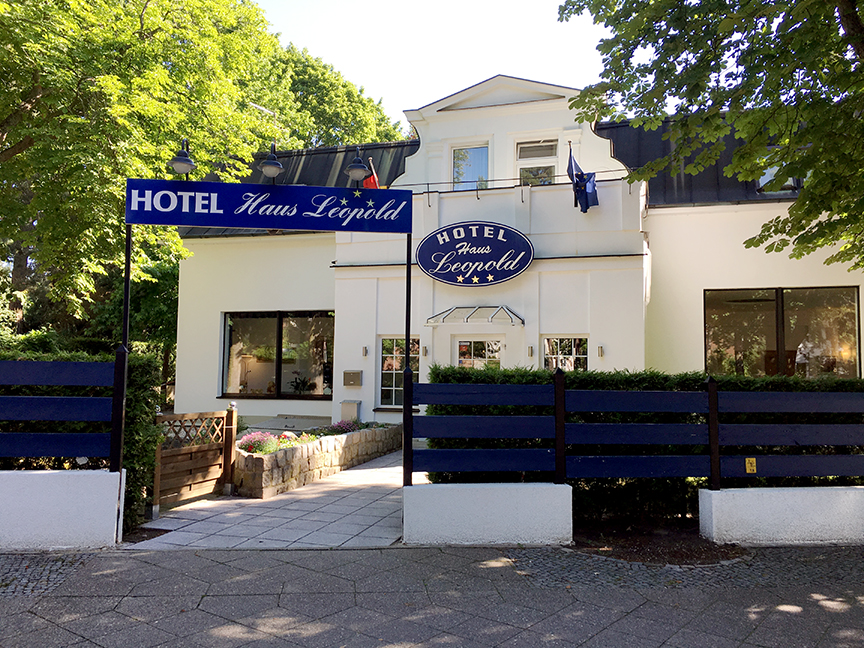
After we grabbed a few hours sleep, Isabel drove us to the Hotel Haus Leopold, a favorite of her and her family, located in an upscale neighborhood of Berlin, Zehlendorf. 

We came to realize that Zehlendorf was the area where my parents were married in November 1945, and where they lived after that. Most American forces lived and worked in this section of Berlin during the occupation and for many years thereafter.

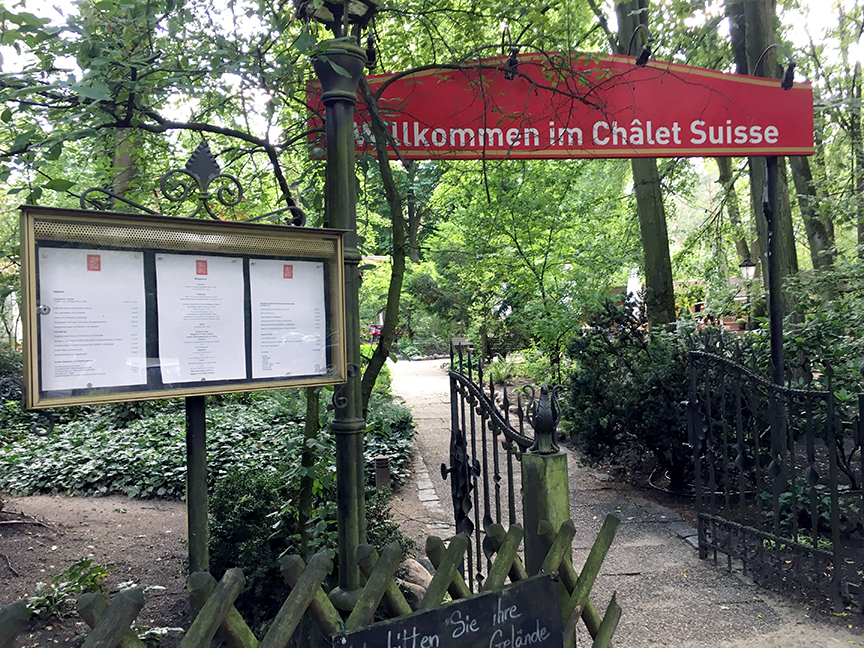
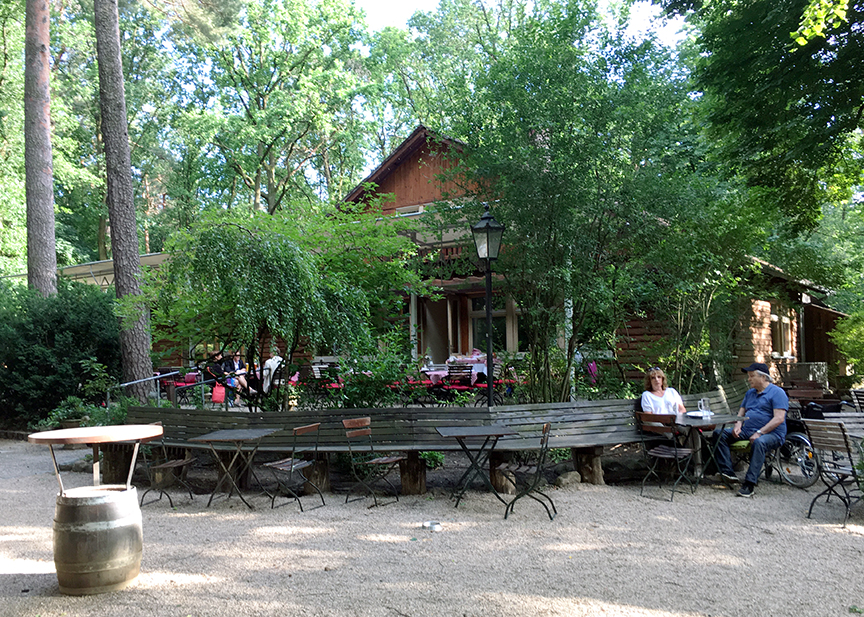
That evening, we met other members of the Canaris family at a reception held at Chalet Suisse, located in a forest setting, Grunevald, in Zehlendorf. Below are scenes from Chalet Suisse.

I was surprised to learn that there were several members of the family meeting each other for the first time. Then again, as I learned more, it was not so surprising. The Canarises, while well-established in the first half of the 20th century and before, had been very much disrupted by the war and different elements of the family dispersed near its end and afterward to other parts of Europe and beyond. Many had traveled far for this night and they had a lot of catching up to do.

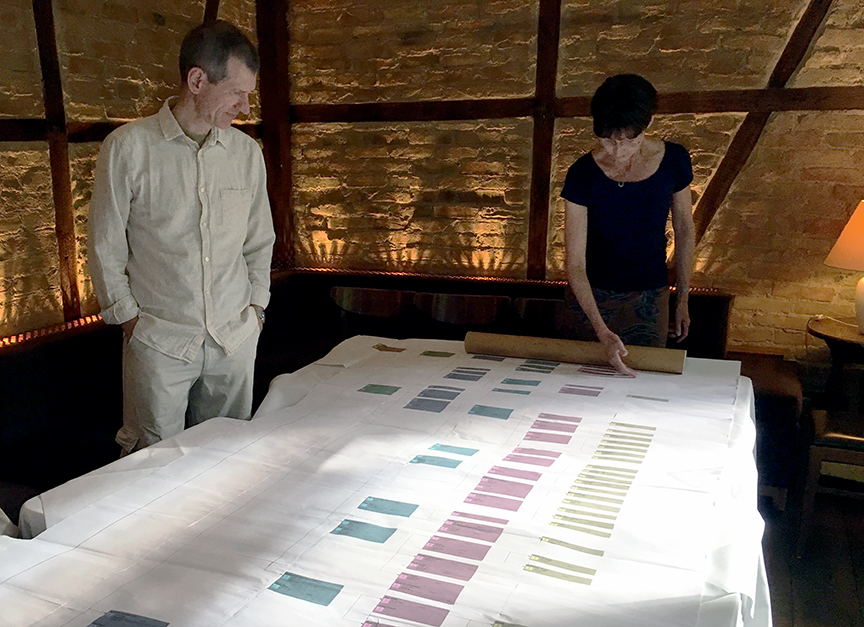
Isabel was also trying to develop a family tree and had brought her intial draft, sketched out on attached sheets of paper perhaps 5 ft X 12 ft in size. Family members added to the names listed there. At one point, Isabel apologized to Julia and me for everyone speaking in German. I said, “No need to speak English.” And a young woman, who was writing on the family tree, looked over at me and, with a smile, said “But we all could.”

Reiner and Isabel lay out family tree.

At dinner, I sat alongside my first personal contact with the Canaris family, Patricia Highfill, another great-great-grandniece. (Her picture appeared in the Christmas letter post, as I had delivered the albums and other material to her in the fall at her home in Palm Desert, Calif. She then brought them to her family’s home in Switzerland and they were conveyed to Berlin.) She urged me to try a meal with one of her favorites, rösti. I would describe rösti as high-end “hash browns.” When Julia told Eva our version of “rösti” was a popular breakfast side in the U.S., she was surprised.

I also met at dinner Michael Günther, a TV documentary producer, who is heading up production of a documentary on Admiral Canaris. Julia and I would become friends with Michael and his wife, Cornelia (Connie). More on them later, too.

Back to the hotel around 11, we rested for a big day ahead.

Part III: Visiting the Canaris home

Berlin, part I: Getting there

As stated in the 2018 Christmas post, daughter Julia and I planned to visit Berlin this year. Last month, I and Julia traveled separately to Boston, arriving on June 11, and then jointly the next day to Berlin on Aer Lingus, arriving on June 13.

It was the first time I had flown on Aer Lingus since 1972. Back then, the flight– Boston-Heathrow, England — was on a Boeing 747, I believe. This time — Boston-Dublin — it was an Airbus 330. Very nice. Seating was 2-4-2, so Julia and I had a pair of seats adjacent to a window.

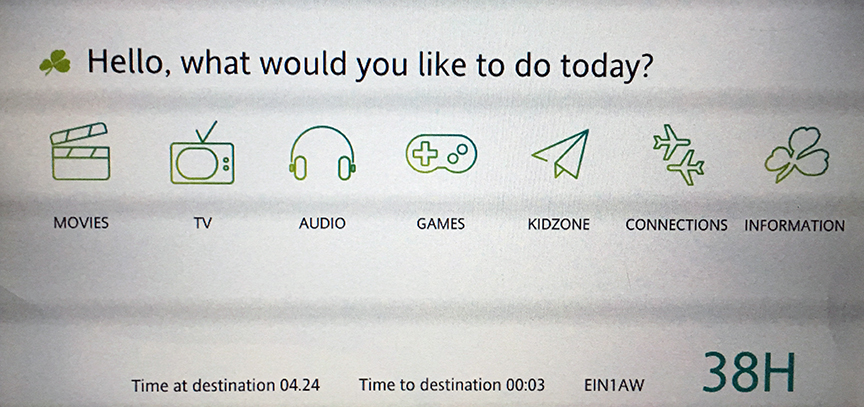
The entertainment interface was more advanced than that on my usual airline, JetBlue.

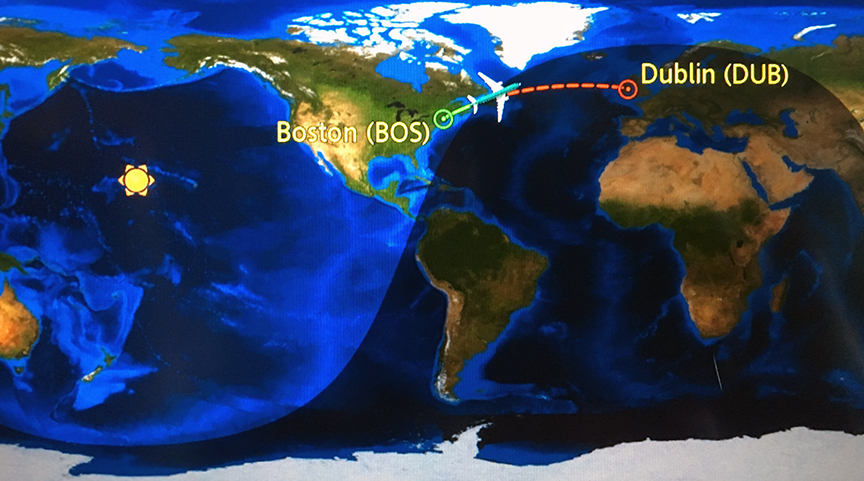
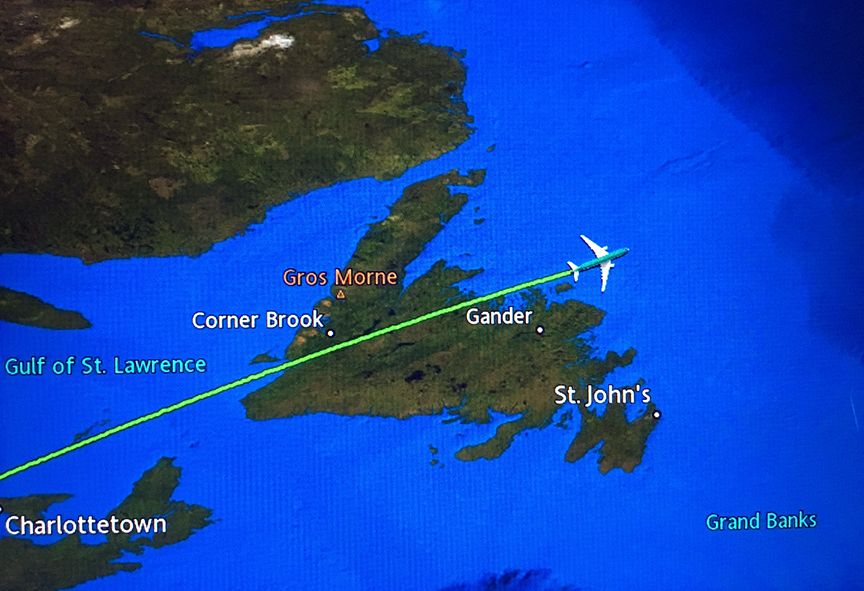
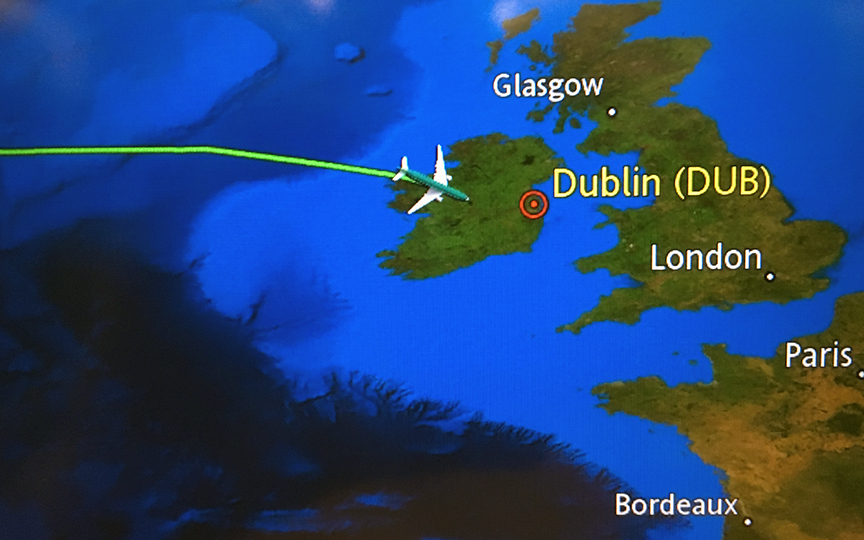
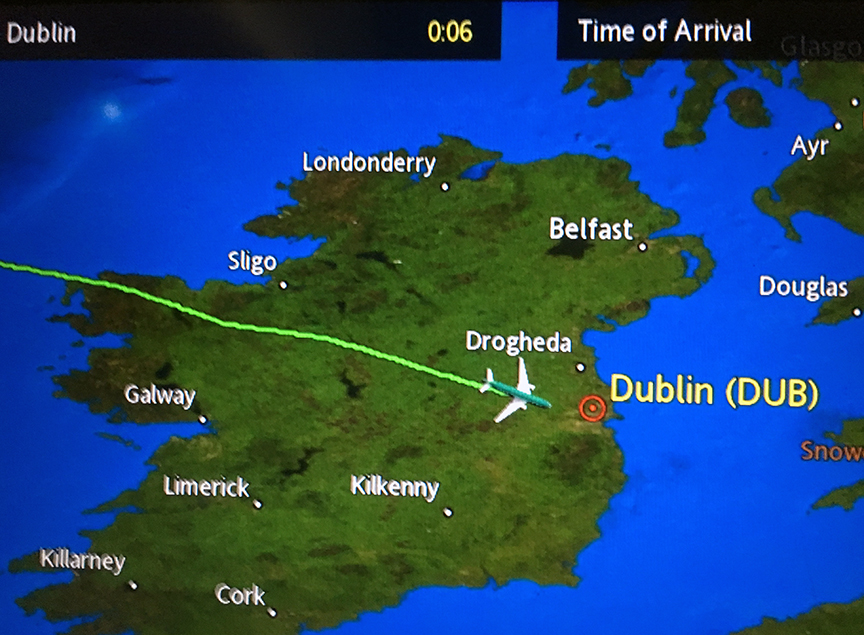
The maps showing progress of the flight were particularly impressive. Here’s a collection of those:


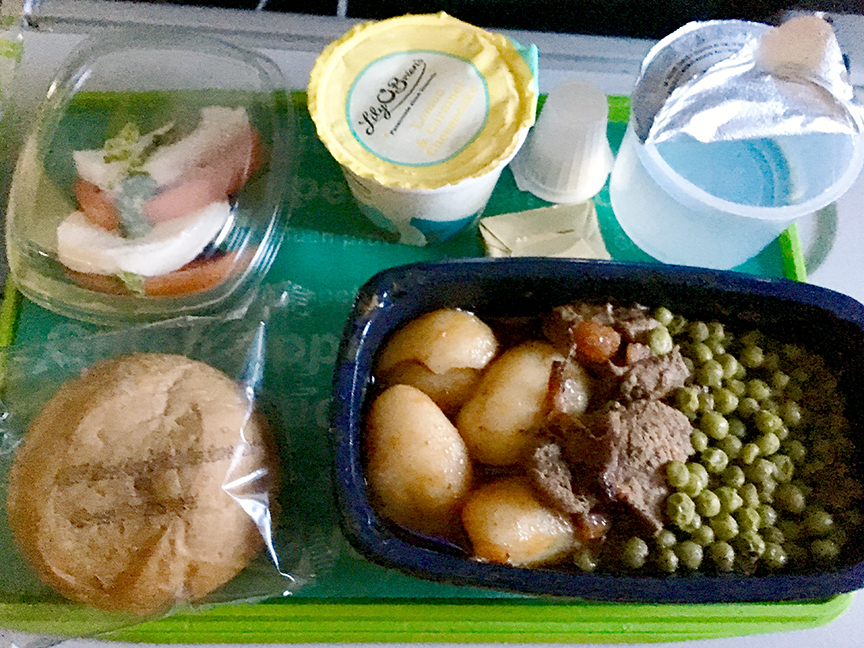
More surprising, based on my U.S. flying experiences, we were offered meals. Options were “beef stew” and pasta. I mean, come on, we were on an Irish airline. Beef stew, please.

The flight took only five hours, give or take a few minutes. We left at 6 pm and were flying toward nightfall. By the time we landed in Dublin, five timezones ahead, it was morning again.

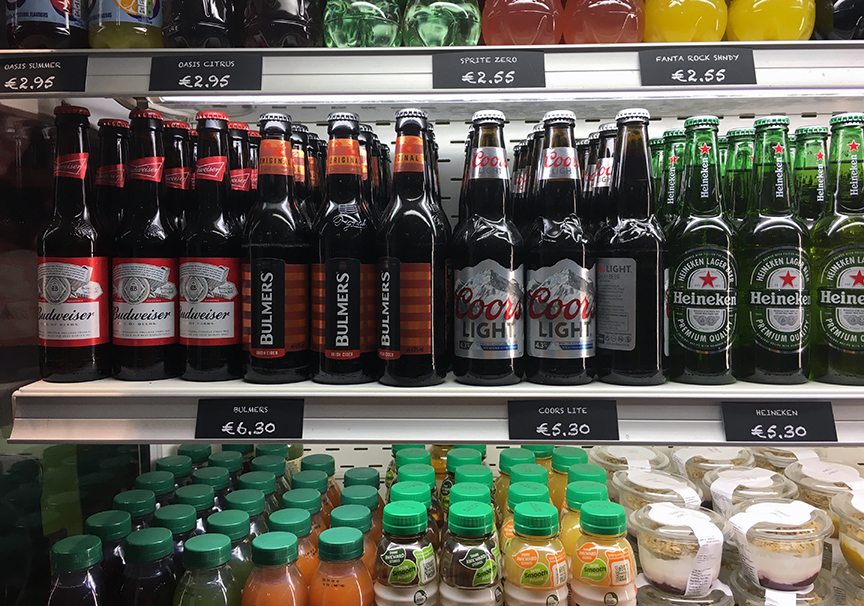
Waiting in Dublin for our connecting flight to Berlin, I was quite disappointed in the beer selection. Being early morning, I wasn’t planning to get one, but still . . . . 

Dublin was overcast and cool.

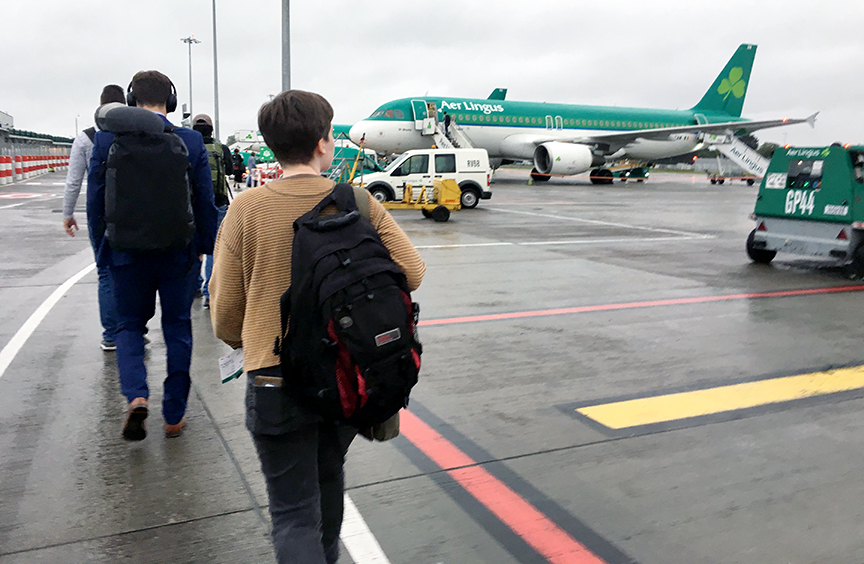
In Dublin, Julia approaches our connecting flight to Berlin.

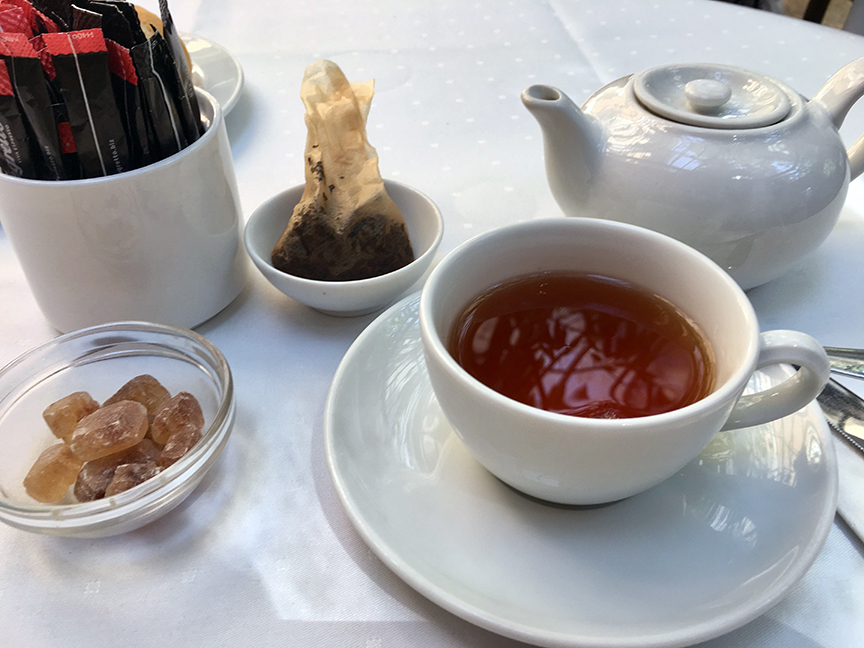
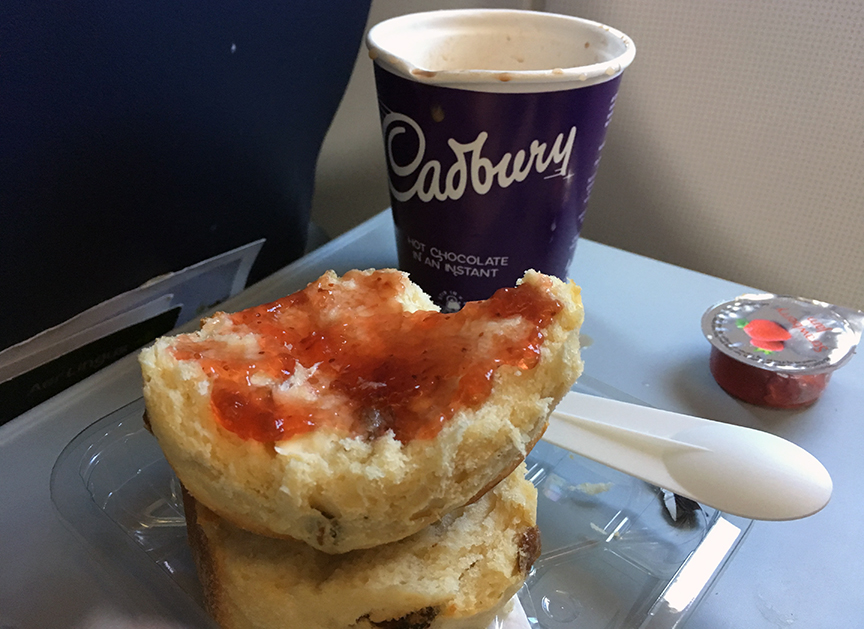
Our plane to Berlin was an Airbus 320, with no entertainment options. There was another meal, though. By the time the flight attendants got to us, they had run out of “Irish breakfast,” so Julia’s second choice was a scone with jam and tea.

Here’s Julia’s time-lapse of our descent into Berlin’s Tegel Airport.

Part II: Meeting the Canaris family

A Rose is a winner

The Farmers Insurance Open this year at Torrey Pines Golf Course, La Jolla, featured its best field (19 of the top 30 in FedEx standings), the 2019 debut of Tiger Woods on the tour, and what one TV commentator called “spectacular weather.” I concur. Best weather throughout the tournament in the seven years I’ve been a marshal.

Leader and eventual winner Justin Rose on the tee of 9 South, with a schematic of the hole at right.

This year’s tournament didn’t have the excitement of the extended playoff last year. World #1 Justin Rose took the lead in the second round and came to the final hole with a two-shot advantage over Adam Scott. Each birdied the hole, so Rose won by two. His total of 267, 21 under par, was a tournament record. Rains the previous week made the rough very thick, but also made the greens somewhat soft and better able to hold an approach shot.

Tiger on the fairway, 9 South

Tiger was back at Torrey, where he has won various tournaments nine times, for a second year following an absence of a few years. Crowds following him were the largest Thursday-Saturday and, if smaller than that with the leaders on Sunday, not by much. He saved his best for the final round, shooting five birdies for a score of 67. Overall, he finished 11 shots behind Rose, tied for 20th.

Screenshot from a video broadcast by CBS showing a surfer, with La Jolla in the background.

With high temperatures around 70 and bright sunshine throughout, the telecast of the tournament was also an advertisement for San Diego. In addition to the visuals provided by the Goodyear Blimp, CBS added video snippets of local scenes and announcer Jim Nantz piled on with praise for the region. On the first of my three seemingly interminable drives back from La Jolla to Fallbrook during rush hour (Wednesday), Nantz was interviewed on a local sports talk show and he basically said then that he was going to talk a lot about how much he liked San Diego.

Aerial view of the North Course, top, and some of South, below. Nine South is at lower right.

Wednesday is the pro-am tournament and it is essentially the toughest single day of the year for me. This year, I was there from pre-dawn to post-sunset and, to do that from 40 miles away on a weekday, meant I left at 4:45 am and got home after 7 pm. At the course, I met the 14 marshals, both returning and new, assigned to 9 South, and assigned them positions for the day.

Nine South, which plays 608-615 yards depending on where they place the tee markers, is a gentle monster. For professional golfers, especially, it’s a gentle par five. In terms of average score, players hit under par and on that basis it’s one of the easiest holes on the course. For a hole captain walking up and down the 600 yards, checking in with marshals assigned to the elevated tee area, the first landing area, second landing area, and the green, it’s a monster.

According to the Health app on my iPhone, I walked 6.7 miles, taking 17,258 steps and climbing 15 floors, last Wednesday. The mileage total meant I had walked the equivalence of the length of the hole about 20 times. Over the other four days, I spent less time moving about. It was better for me to assist at the first landing area, where maybe two dozen golfers hit drives over a fence into a concession area. When that happened, we had to move people away from the ball or the point at which it had crossed over the fence to permit the golfer to hit, usually after a free drop.

My walking distances for Thursday-Sunday were between 2.8 and 3.4 miles. Totals for the five days were 19.4 miles walked, taking 49,767 steps and climbing 46 floors. I also estimate that of the approximately 40 hours I spent on the course over the five days, I stood or walked for perhaps a total of 39 of them. Times to sit were very brief. When I got home each night, I was tired.

On the final round, 9 South featured what some called the shot of the day. Hideki Matsuyama hit his drive into a sand trap on the right. His ball was about 280 yards short of the green. As he lined up to hit, TV commentator Sir Nick Faldo advised viewers, “Don’t try this at home!”

Matsuyama’s three-wood shot out of the sand landed on the green, less than 20 feet from the hole. He missed the eagle putt, but made his birdie easily.

All the images here were captured off telecasts. While spectators can take photos with phones, not cameras, during the tournament, marshals cannot, or at least are not supposed to.

I had recorded the telecasts of the tournament and went through them Monday and Tuesday to see if any of my marshals could be seen. There were a few, so I took screenshots and sent copies to them. I also looked for myself. And the picture here was the closest I found. (My uniform is predetermined: black pants, provided polo, wide-brim hat, white [only white] lower sleeves.) Last year was even worse, as I only appeared in a shot from the blimp. Only I would have known I was in it, just like this year. Nothing since has quite matched what happened in my second tournament (2014), which you can see below.


Merry Christmas 2018 and Happy New Year 2019

Middle photo shows Alice, Winter, Adeline, and Meredith on Oceanside Pier. Outside photos, clockwise from lower left: Julia, Sam, and Juno; Golden Eagle me; Dillon and Baxter.

It was a year without the “excitement” of evacuation due to wildfire :), but a year not without moment. Perhaps most noteworthy was the 50th anniversary of our graduation from Boston College. I’m a Golden Eagle!

While our class reunion was at the beginning of June, I had spent the previous 10 months or so working on a blog about our years in college and those tumultuous days. In doing ProudRefrain.org, I renewed friendships with some classmates and made new ones. I had a great time at the reunion and enjoyed so many wonderful moments with friends, old and new.

It was also the occasion for another personal appearance on Twitter (my first is shown a little later in the post). BC used me and my BC bowtie in a tweet about reunion.

As part of our Golden Eagle year, I made three trips to campus during the year, instead of the usual single annual sojourn. First was a “Winter Weekend,” when I joined the Sutherland Road gang (close classmates) for four BC men’s and women’s basketball and hockey games, all on the same weekend.

During that weekend, we squeezed in a brief meeting with new BC athletic director Martin Jarmond, who liked my retro Eagles jacket and tweeted a photo of us and it.

After the June reunion, the Andersons (Meredith, Winter, Adeline, and Alice) picked me up and we journeyed down to Martha’s Vineyard to visit sister/aunty Ann and Gordon. After too brief a visit, the Andersons brought me to West Yarmouth on the Cape, where I joined the gang of classmates for several days in a wonderful seaside “cottage.”

My final “East Coast” fling was in October, to watch the Eagles beat Miami and visit friends and family, including Julia and Sam in their new home.

Because of the truncated note last year, I wasn’t able to give the attention I would have liked to the December 1, 2017, marriage of Julia and Sam and their honeymoon later that month in Paris and Berlin. This summer, they moved from Athens, Ohio, to Columbus, where Julia works at Defense Finance and Accounting Services, the people who send me my Navy retirement check!

Meredith and Winter and the grandgirls came out at the end of February for a week or so. Did Disneyland/California Adventure again. Adeline turns 7 in January and is in first grade. Alice is 3 1/2. This is a very recent pic.

Dillon also changed jobs, moving from event coordinator for Deepak Chopra to grants administrator at Scripps Research Institute. He works right across the street from Torrey Pines Golf Course, where I marshal at the Farmers Insurance Open. At the 2018 tournament, I was captain at a new hole — the 9th on the South Course. 601 yards. I definitely pile up the steps over those five days. I’ll be there again in January.

This year was also special for a very unusual reason. My parents married in Berlin in November 1945 and were billeted in the former home of Wilhelm Canaris, Navy admiral and head of the Abwehr, the German military intelligence operation. They came home with personal photo albums of Canaris and other personal items. After my mother died in 2001 and I came into possession of these materials, I tried to find out how they might be returned to where and whom they belonged. I kept hitting dead ends. Then Julia, who had been sleuthing online, recently sent me an item about a German woman seeking information about her great-great-uncle, Wilhelm Canaris.

Long story short, I was able to contact Isabel Traenckner-Probst. She has been working with a German professor who is preparing a book and documentary about Canaris, particularly his efforts opposing Hitler. The photo below shows me holding one of the albums, with Patricia Highfill, another great-great-niece of Canaris, who lives in Palm Desert, Calif. (Convenient!) Patricia will convey the materials to Isabel early next year. And Julia and I will be traveling to Berlin next June to participate in ceremonies tied to the historical projects and celebrating the return of these materials. We also plan a side-trip to our ancestral land (in addition to Ireland) — Lithuania.

Finally, I’m doing another blog. (But of course!) BlueandGold1968-71.org is about my 1,035 days on active duty in the Navy 50 years ago. I’ve reached out to fellow members of my platoon at Naval Officer Candidate School and we have found and contacted more than half of them so far. Next year, the blog will focus on the ship on which I served, USS Biddle (DLG-34), and our deployment to the Western Pacific, i.e., the Gulf of Tonkin.

Wishing you a very merry Christmas and that your twenty-nineteen is pristine.

John McCain 1999

I lived in New Hampshire at the time and was at Greeley Park in Nashua, N.H., on September 27, 1999, when John McCain formally announced his candidacy for the Presidency . . . the first time. It was supposed to have happened earlier, in the spring. In March, however, the Kosovo War broke out and, while he issued a simple statement then that he was a candidate, he postponed the “roadshow.”

In one respect, at least, the schedule change worked out. His memoir, Faith of My Fathers, was published in August and it’s best-seller status gave an impetus and brought a strong message to the start of the campaign. After Sen. Warren Rudman (N.H.) read a brief passage from the book when he introduced McCain to the crowd, McCain thanked Rudman and then added, “You can still buy the book.”

Cindy McCain brushes some New Hampshire dust off the Senator as he awaits to talk.

Here is a video of the event (16:07)

I edited out many of the many applause sections. This was his crowd, so applause, approval, respect were extensive. Even had the University of New Hampshire cheerleaders on his side.

His talk summed up much of the philosophical underpinnings of his campaign. I edited out much of the specific policy commitments. It seems he was prescient, at least a little, talking about the need to change the scale of division and cynicism among Americans. At around the 12:10 mark, he says, in the context of protectionism and isolationism,, at least, “Walls are for cowards.”

He also speaks about how he intended to campaign respecting the dignity of the office he sought and of the people whom he would serve.

It is also a bit eerie, hearing it now, how often he makes reference to “when my time is over” and such as the speech concludes. And, also, that the first burst of song at the speech’s conclusion is the recitation of “Freedom, freedom, freedom” by Aretha Franklin. 

Being the start of a Presidential campaign, the McCain family was there. Well, at least his wife, Cindy, and the children they had and had adopted. (He had adopted his first wife’s two children and they had a third, born in 1966.)

Meghan, John IV, and Jimmy McCain

Children present were: Meghan, then just about to turn 15; John Sidney McCain IV, 13; Jimmy, 11; and Bridget, adopted from a Bangladesh orphanage at the age of three months, 8. Meghan’s the most well-known, of course, as a co-host of The View. John graduated from the Naval Academy and is a helicopter pilot. Jimmy joined the Marines at age 17 and deployed to both Iraq and Afghanistan. Bridget, I believe, lives at home.

You’ll also see some media types from the day, both local (John Henning and Dan Rea of Boston’s WBZ 4) and national (Jack Germond and Newsweek‘s Howard Fineman [remember Newsweek?]).

At one point, McCain says that soon every school will be connected to the Internet. Remember, it’s still the 20th Century and a lot of people are worried about Y2K.

I volunteered to assist the McCain campaign and ended up  being designated chairman of the Durham McCain Committee. I also ended up the only member of the committee. I don’t mean to say there were no other McCain supporters in town. Indeed, McCain trounced Bush in Durham, 882 to 440. Those other voters were just not as public as I was, I guess. In the Democratic primary, Durham voters were more numerous, with 1,333 voting for Bill Bradley and 802 for Al Gore.

A stump speech by Senator McCain. Daughter Julia, 10, is sitting on the floor at right.

I attended strategy meetings and fundraising events, as well as several of McCain’s “town halls.” I had the pleasure of shaking hands and chatting with the Senator several times. He signed a copy of Faith of My Fathers, along with a personal message. Closer to election day, I made phone calls. On the day of the primary, I stood outside a couple of different polling places, pretty much all day, with my McCain sign. At one point, I think mid-afternoon, some GOP officials dropped by to say hello to the volunteers. A woman, whom I later learned was a member of the Republican National Committee, came up to me and said, sotto voce, “Your guy seems to be doing really well.”

He did. Totals at the end of the night were McCain 115,606 and Bush 72,330. What Senator McCain described as a “mission” in his announcement turned out not to be successful. A reprise in 2008 got him the nomination, but not the prize. I’m disappointed we didn’t get to know what John McCain would have done as President.