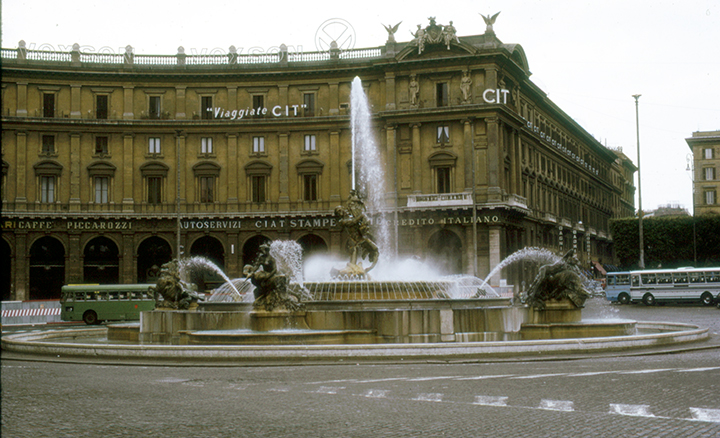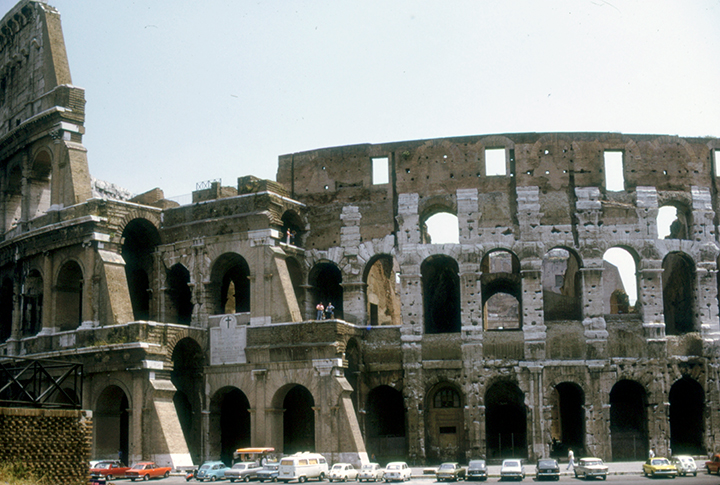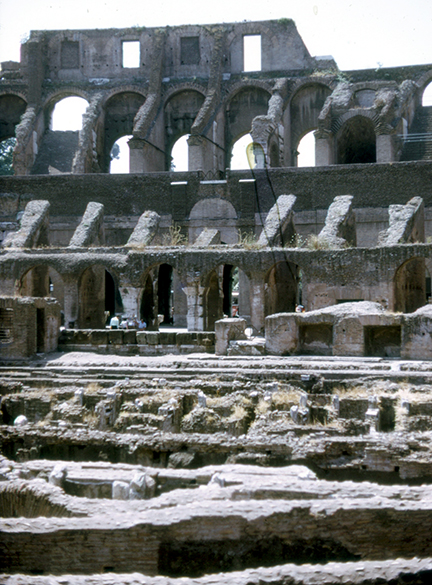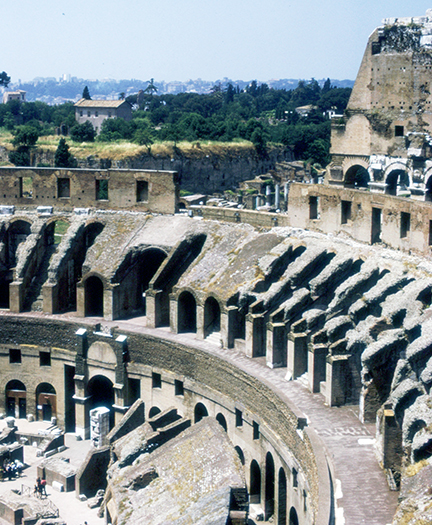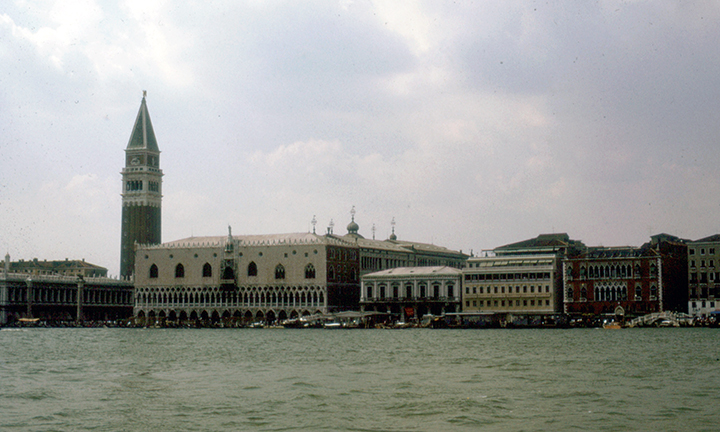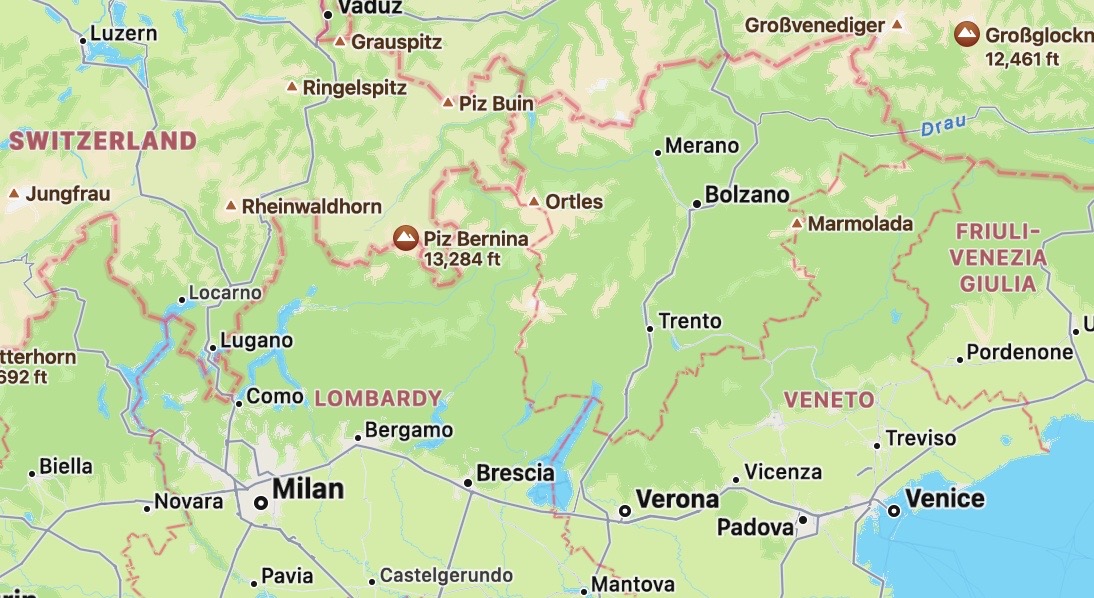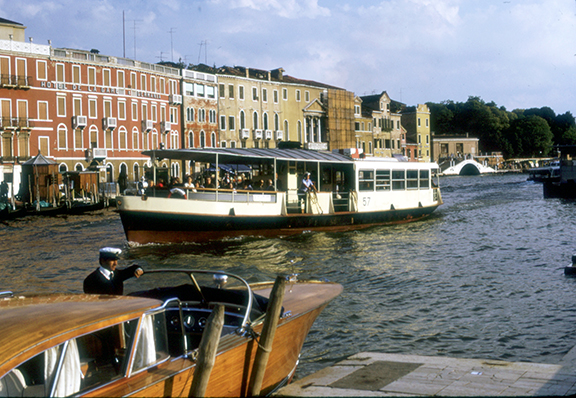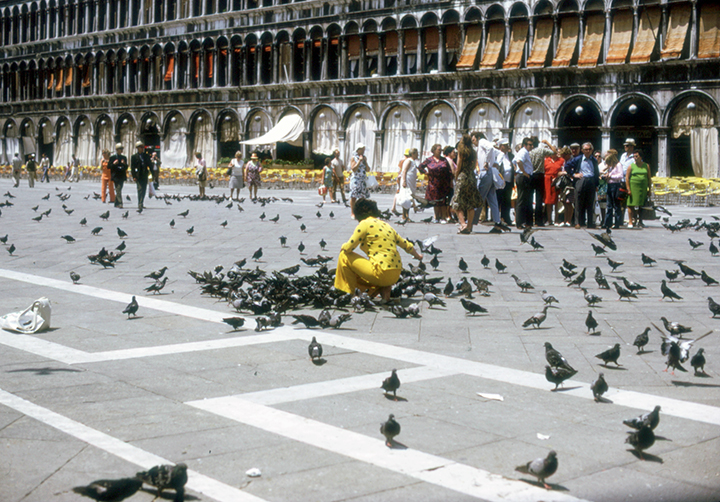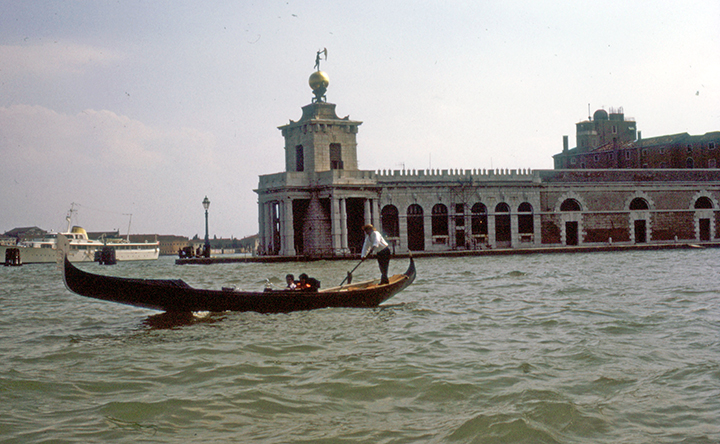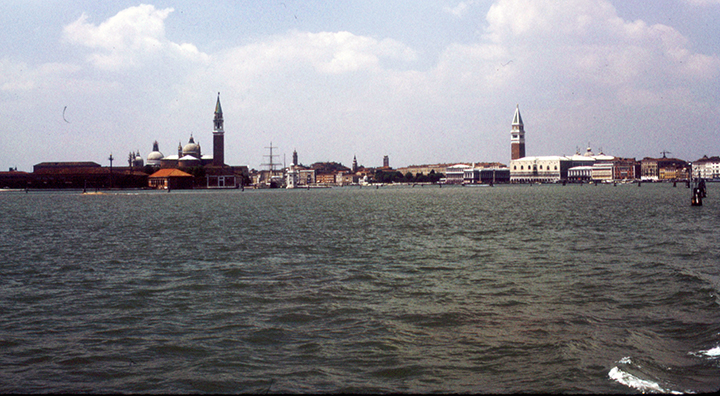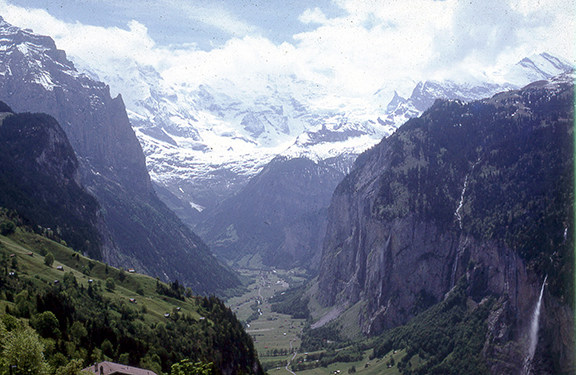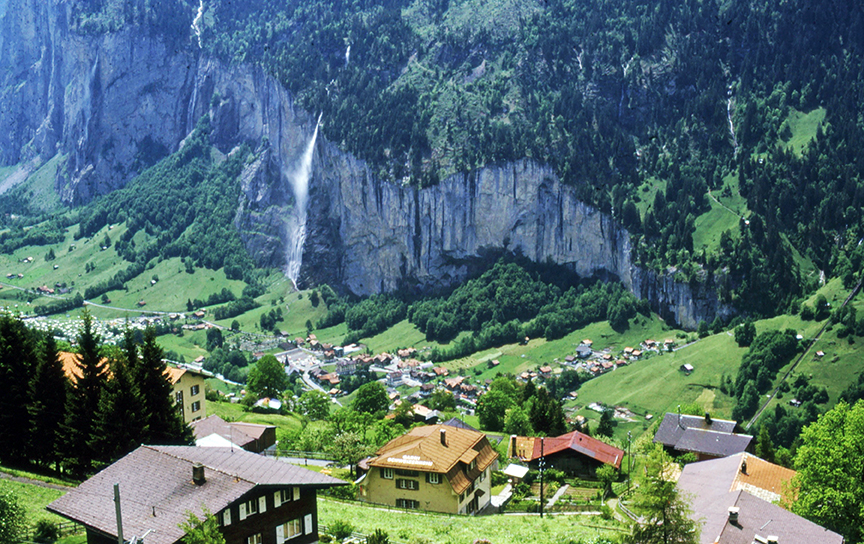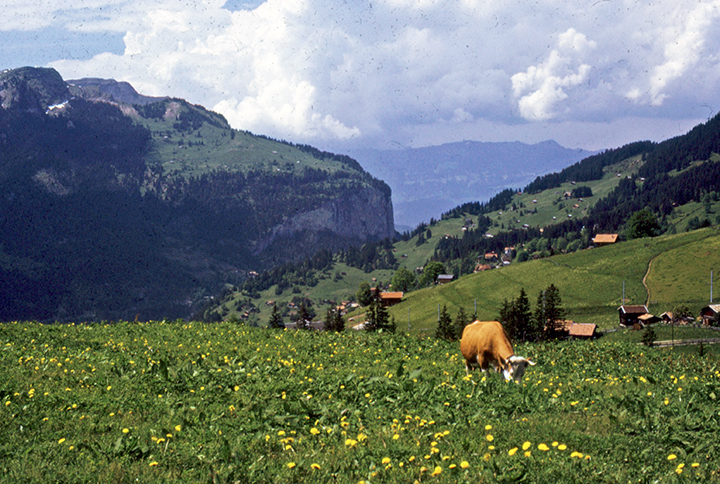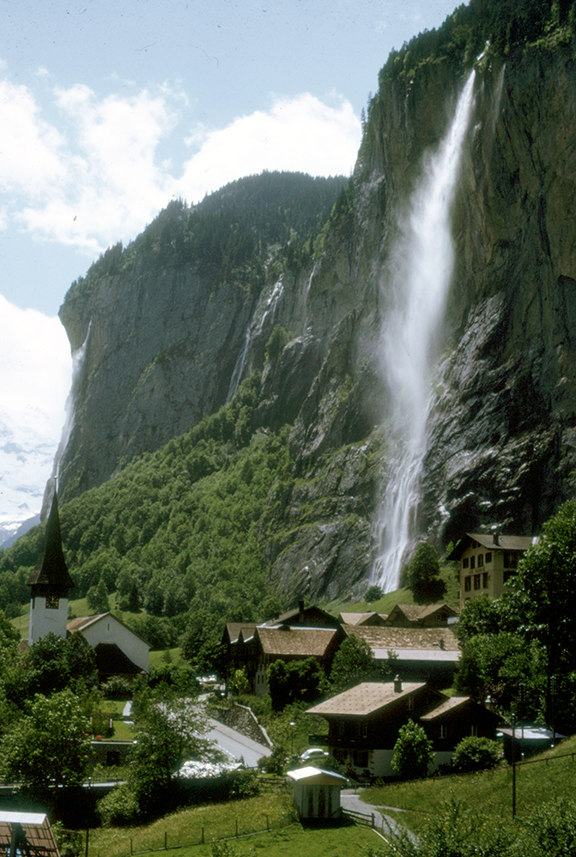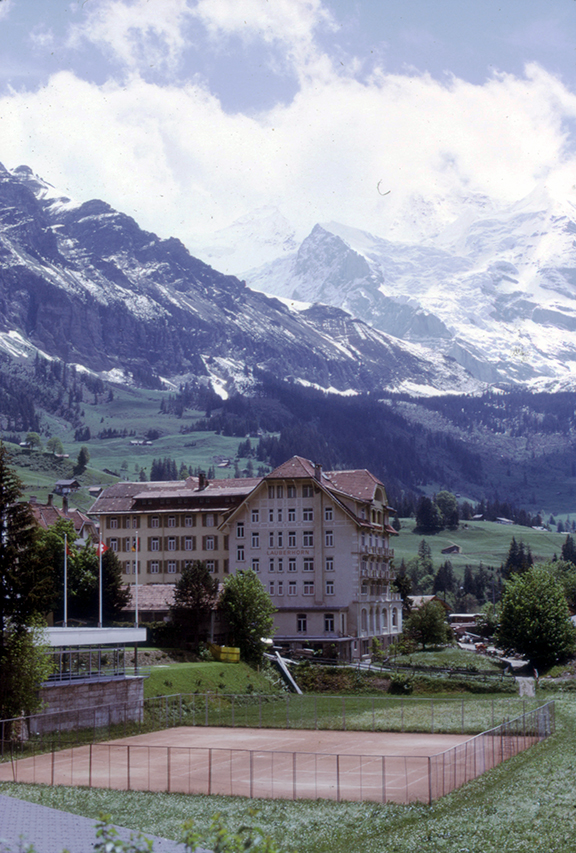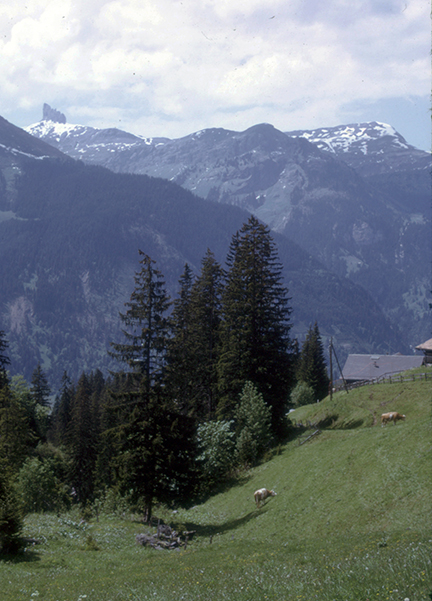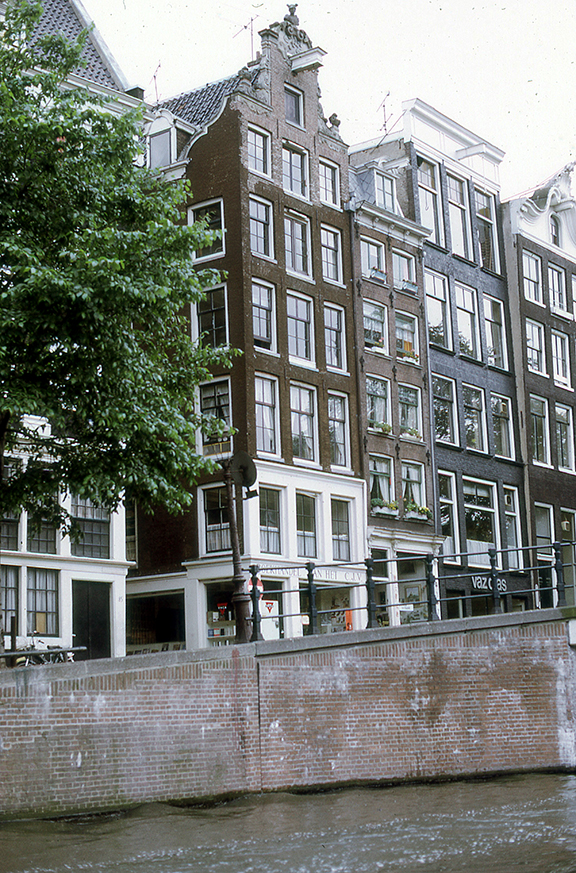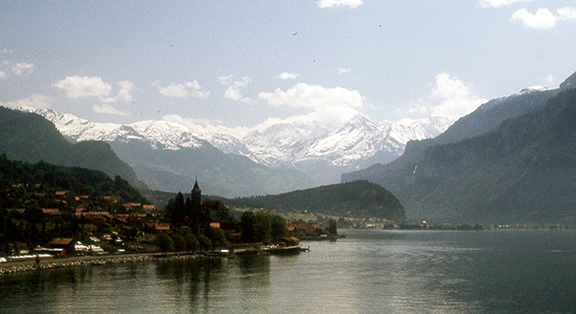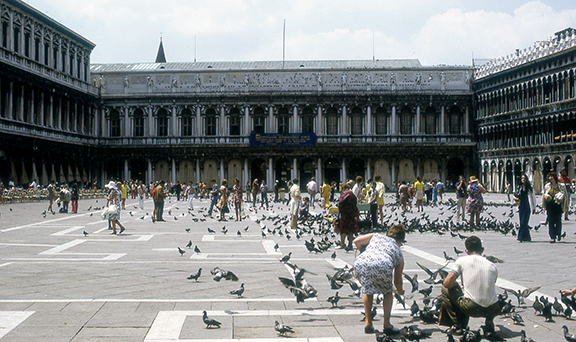

I know Switzerland has cultural and historical elements of significance, but I’m quite sure the dominant memories Kevin and I have from our visit to the Lucerne area 50 years ago are of its physical grandeur. Especially Wengen, pictured above.
As Kevin recalls, we had first learned of Wengen from a Canadian waitress in Boston, who, overhearing our conversation about where we might go in Europe, told us of its beauty. And the Harvard Coop travel guide we used said of Wengen, “When they remake the movie Shangri-la, they will do it here.”
We had missed the train for which we had reservations (surprise!), and had left Munich in early afternoon on this date 50 years ago. We had the compartment to ourselves for a change, but it was a relatively short trip, about six-and-a-half hours.
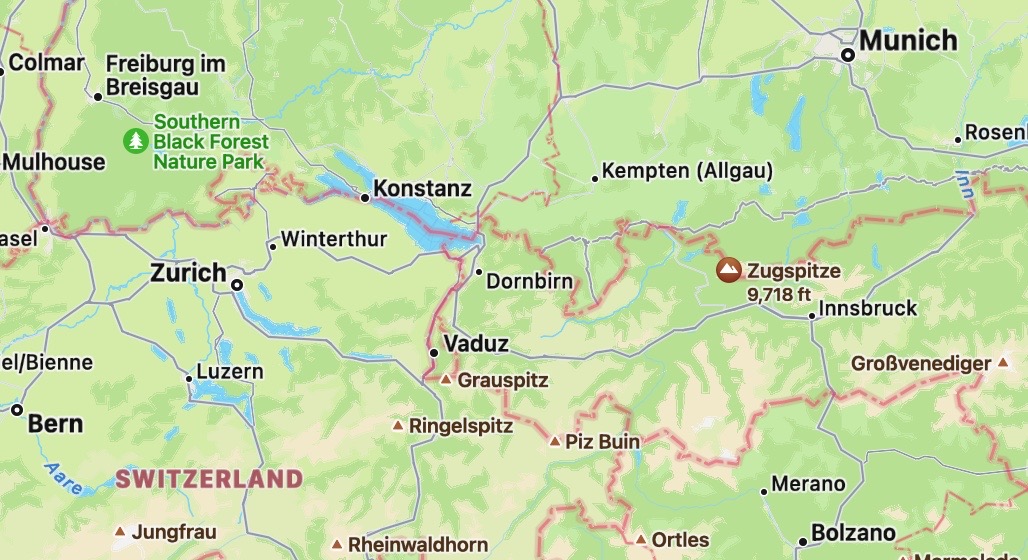
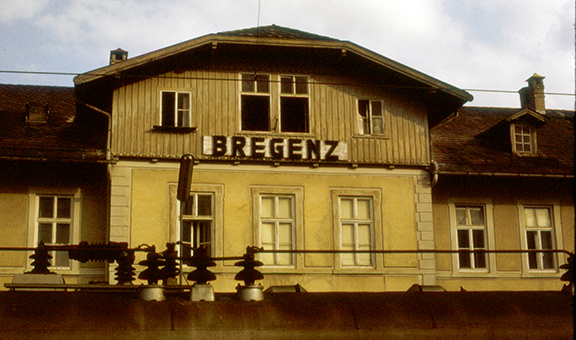
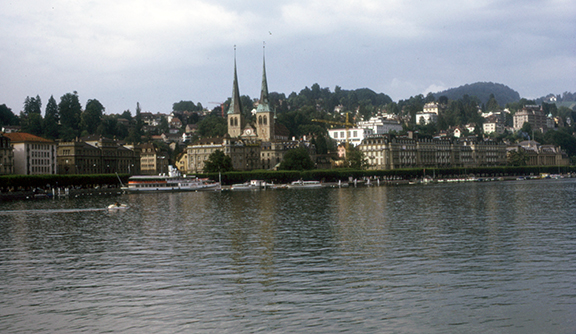
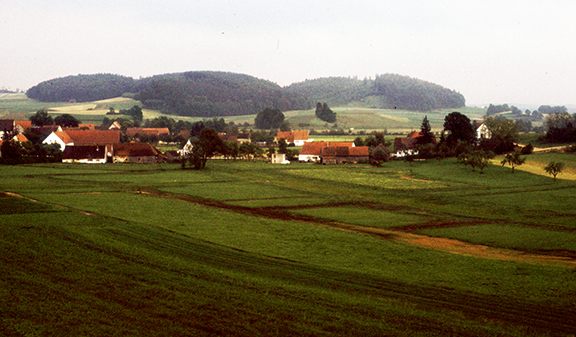
In preparing this post, I noticed a slide of the photo above. Until I looked up the location Bregenz, I had not remembered that we had gone through Austria on the way. I assume we had passports checked, etc.
Arriving around 2100, we found a hotel. “Really nice, and $6 a night apiece.”
The next day was Wengen-centric. I remarked in my journal that our train to Interlaken definitely climbed, but that it compared in no way to the steep climb we had from Lauterbrunnen to Wengen. Kevin recalled that segment was by cog railway and was “a bit frightening.”
The initial impression of Wengen — the deep valley, with waterfalls spreading mist from hundreds of feet above, backed by the snow-capped 13,642-foot-high Jungfrau — is visually stunning. The weather was great — 80 degrees and sunny. My journal entry was “Wengen is indescribable (see slides).” Here is a gallery of said slides.
Kevin recalls “we were sitting on the hillside and a girl came along with a donkey pulling a cart full of flowers, and we said, ‘Holy sh*t — we’re in the middle of Heidi.'”
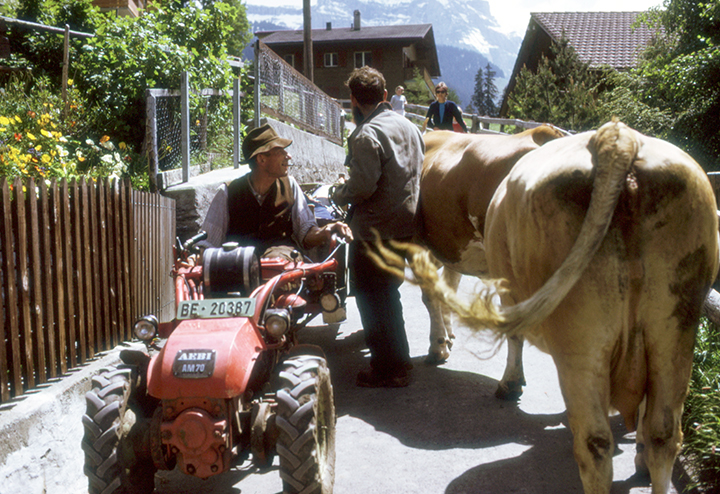
Wengen was then and is now car-free. Doesn’t mean you don’t have traffic jams, such as below.
I was curious how that massive rock Jungfrau got named “young girl.” Seems the term more commonly refers to a “maiden” or “virgin.”
Jungfrau close-up.
One of the main summits of the Bernese Alps, the Jungfrau was reportedly named in reference to nuns who lived in the nearby Interlaken monastery. Another peak in the area is named Mönch (“monk”).
We returned to Lucerne about 2000 and later ran into that group from Texas we had met earlier, in Copenhagen. Seems as if a lot of Americans were using the same travel guides.
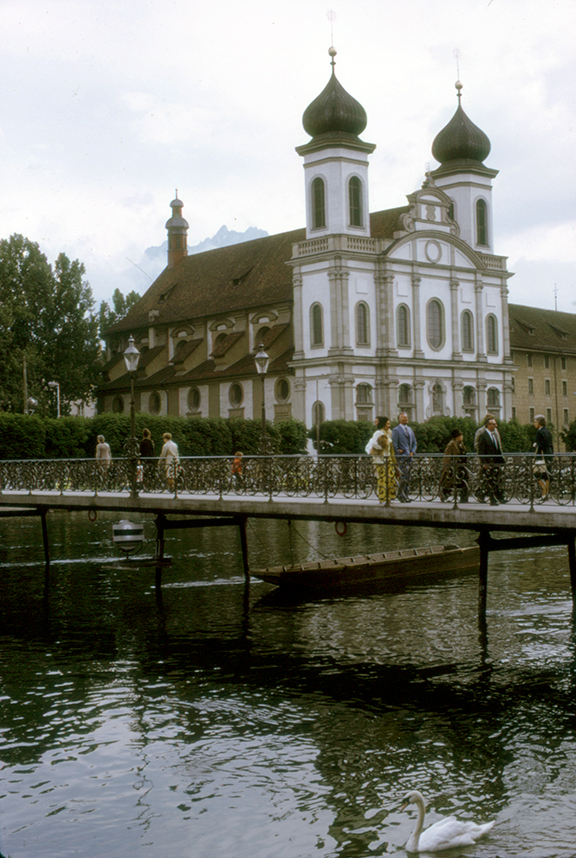
Our last day in Lucerne we spent “doing business.” Dropped clothes off at a laundromat where an attendant did the wash. Went shopping for gifts and walked around. Here’s a gallery of scenes from Lucerne. The church with dual spires is the “Jesuit Church.”
Our travel from Copenhagen to Munich 50 years ago was the longest of the trip. It was on two separate trains. Copenhagen to Cologne, Germany, was 400 miles and nine hours; Cologne to Munich was 280 miles, almost five hours.
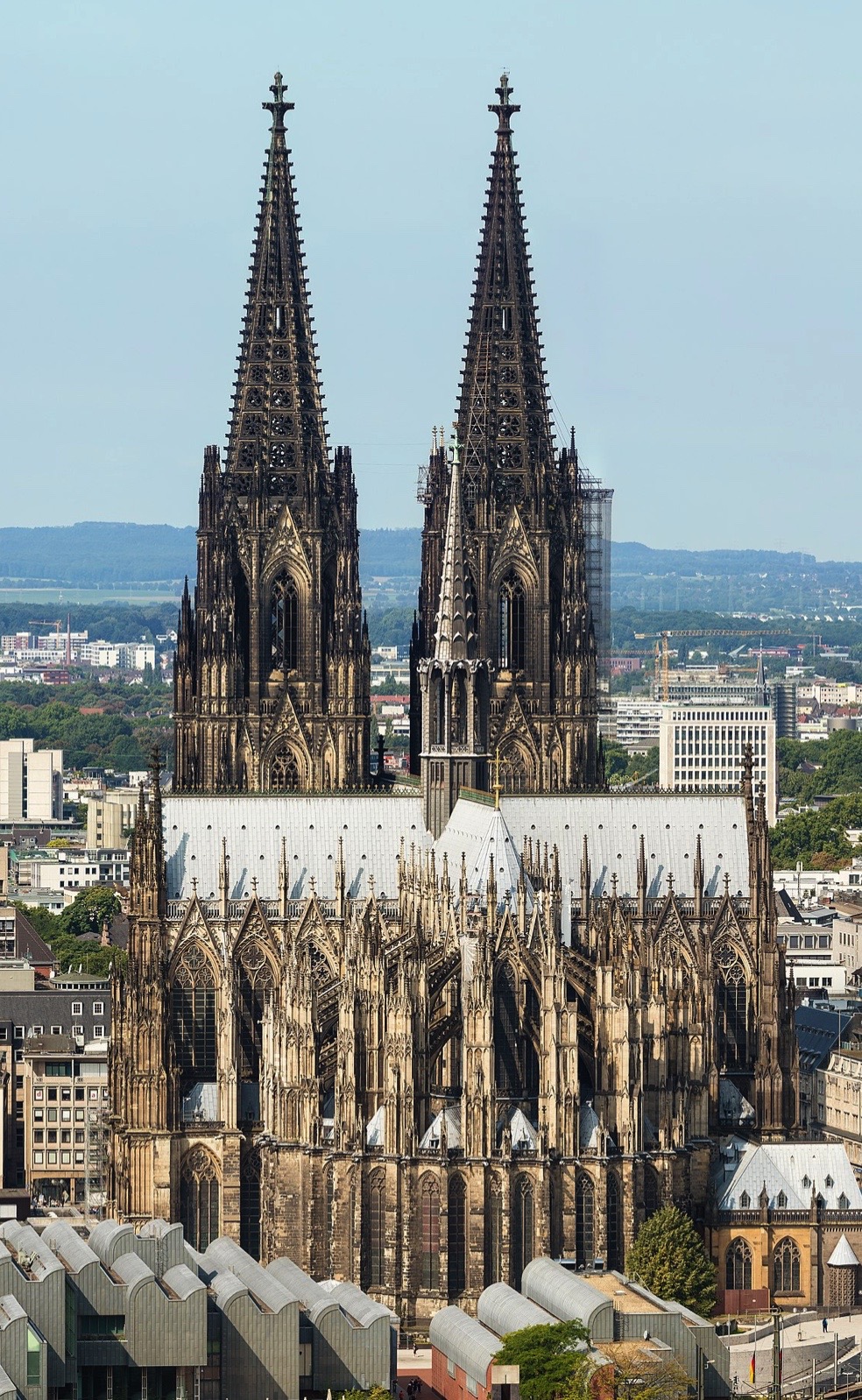
Cologne Cathedral
The first leg was an overnight and the usual difficult sleeping conditions. This time, the seats didn’t fold down flat. Spent about two hours in Cologne and viewed the cathedral there, the most visited landmark in Germany. I wasn’t able to find a photo of it that I took, so the one here is from online.
(Some might wonder how “cologne,” a French fragrance, came from the name of a German city. In German, the city is Köln and the fragrance is, in French, eau de Cologne.)
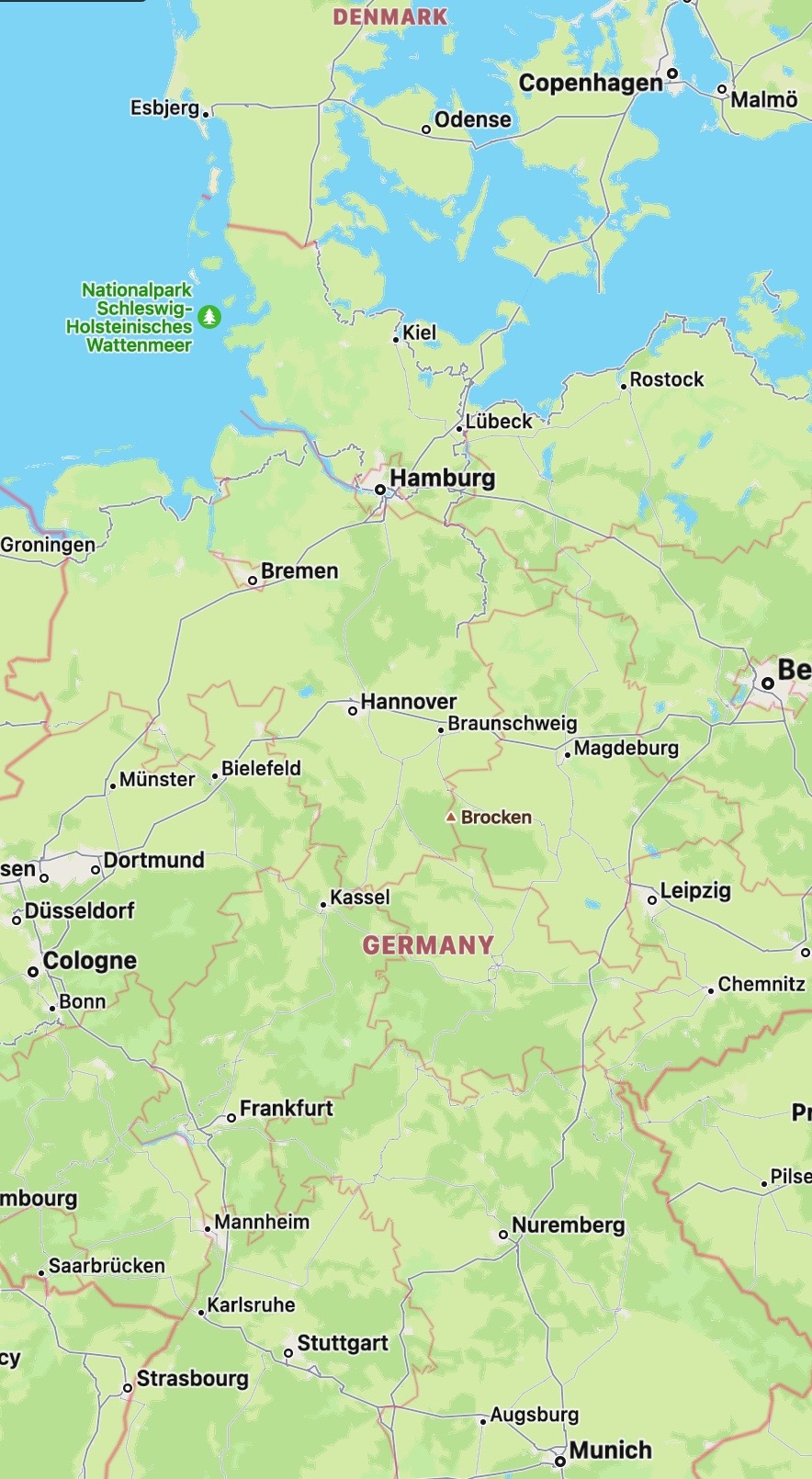
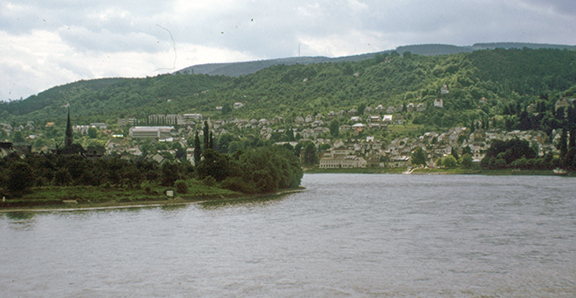
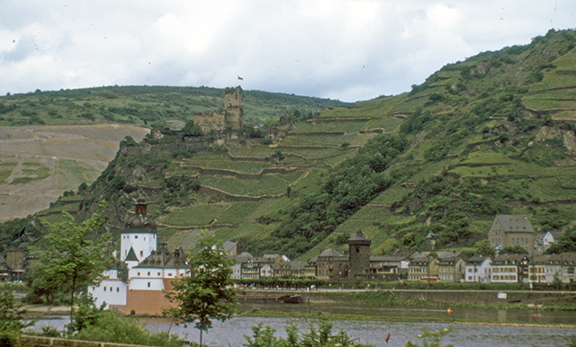
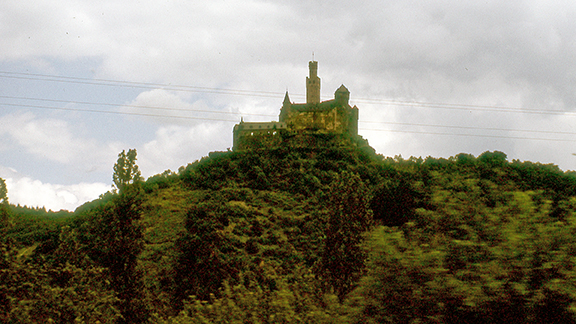
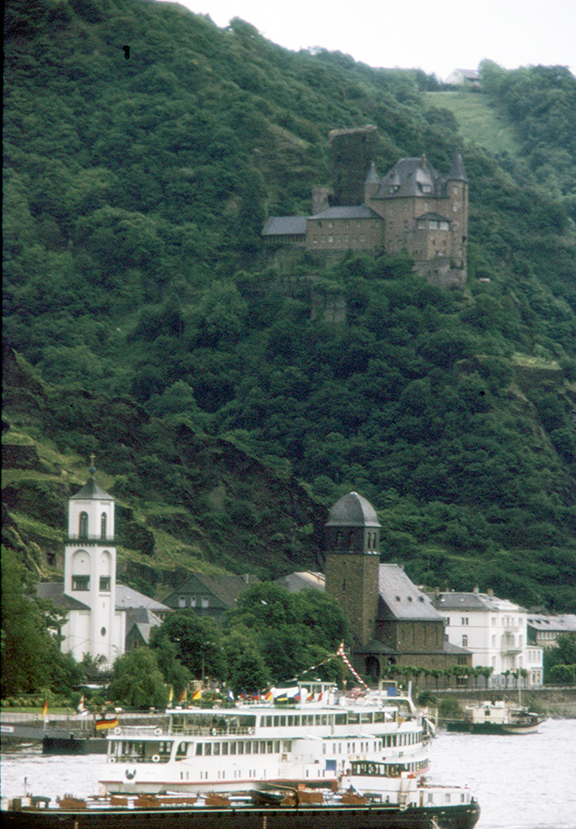
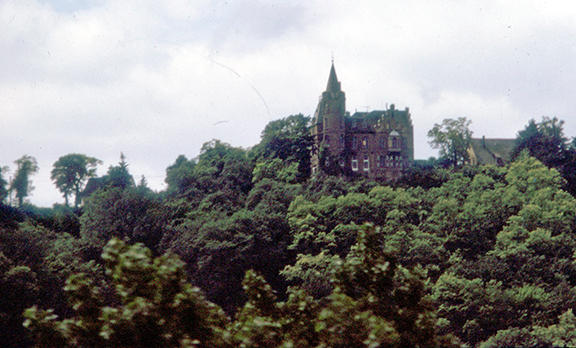
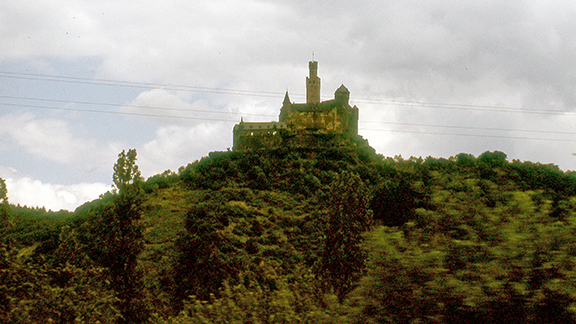
The trip from Cologne to Munich was the rail equivalent of a river cruise down the Rhine River, going alongside it for some time. Below is a gallery of scenes taken from that train.
We arrived in Munich on June 9 at just before 1800. My journal notes that we “Got hotel on first try!” The Hotel Jedermann. Double room with shower for DM45, about $15 a night. “And an elevator!”
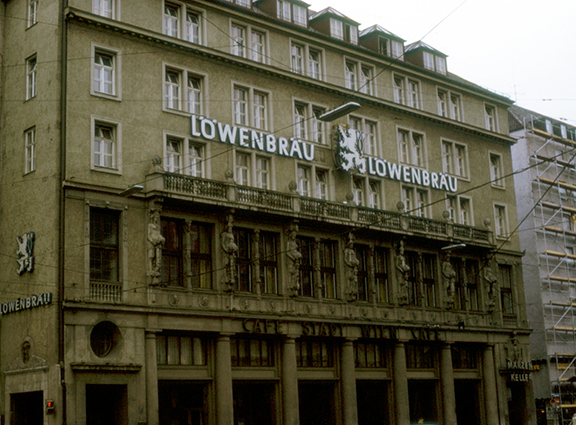
Munich is known for its beer halls. On our first night there, we went to what was described as the world’s largest beer hall — Hofbrauhaus. A liter of beer was DM2, less than a buck. As usual, many Americans in attendance. People we initially sat next to were from Illinois and Colorado. We joined another group later — a couple from North Dakota and two girls from Vermont.
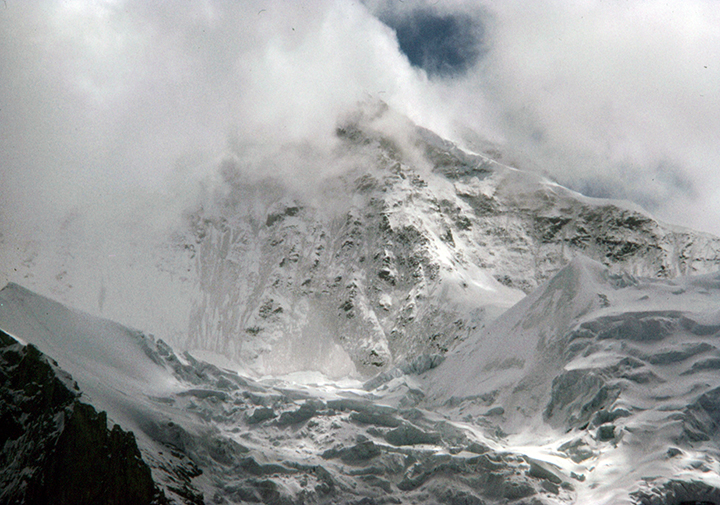
Ah, the source.
Hofbrauhaus closed at midnight, so we went somewhere else before heading back to hotel. The Jedermann locked its doors at 0200!
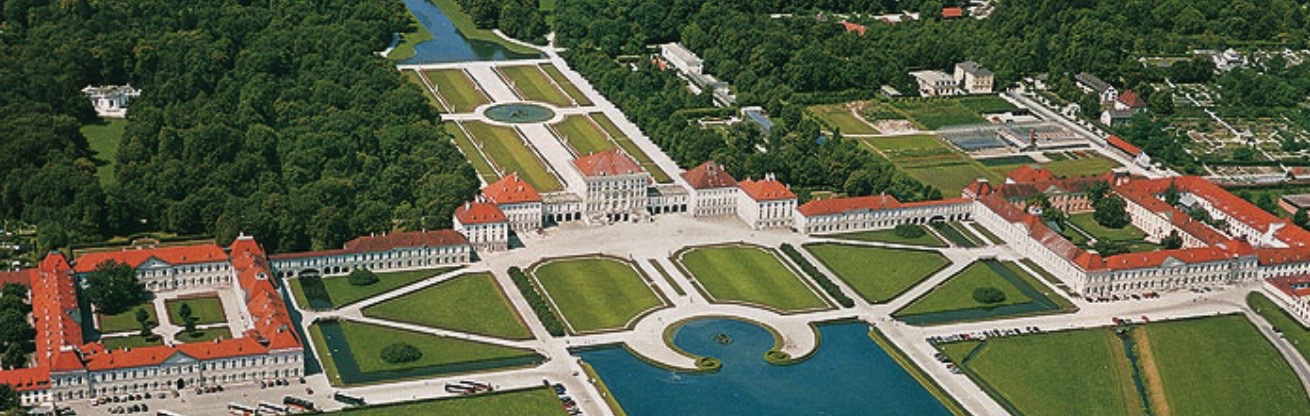
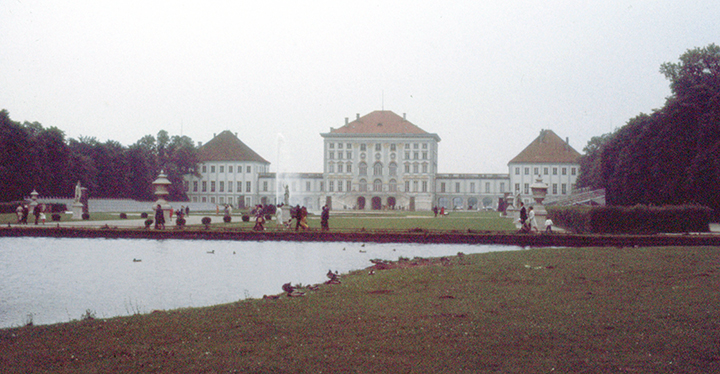
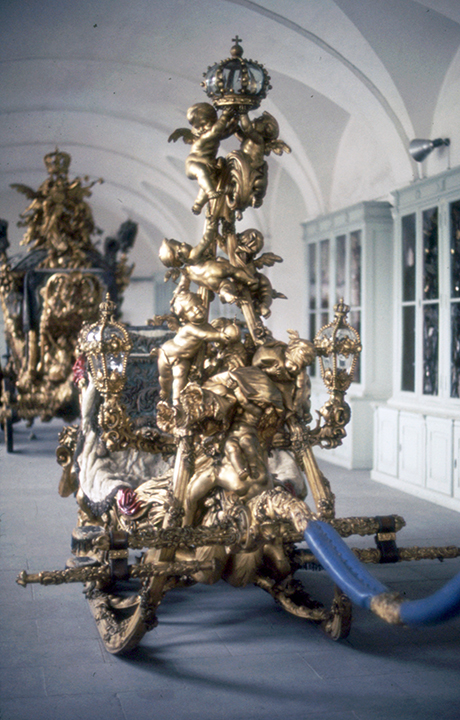
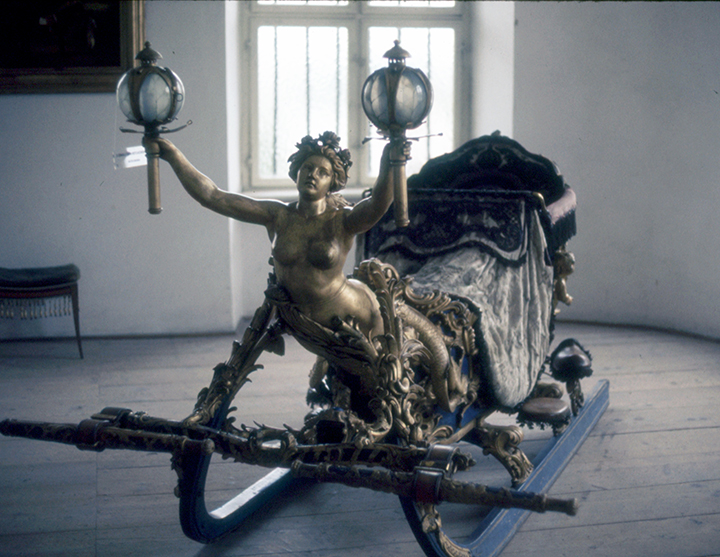
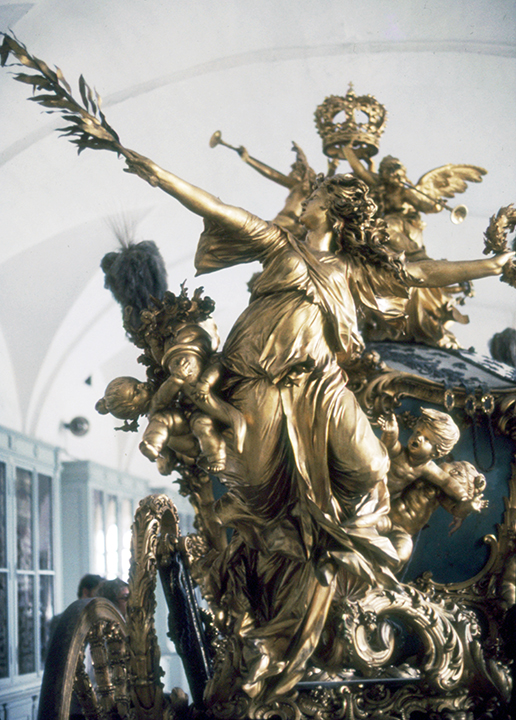
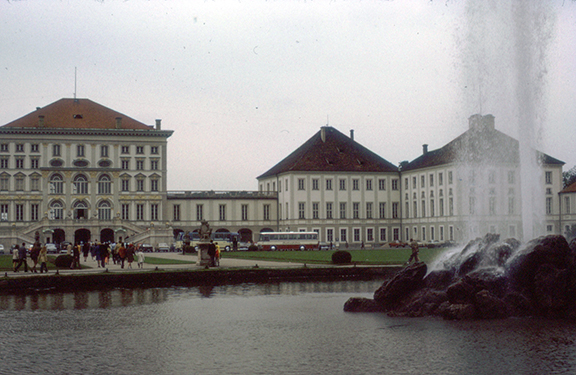
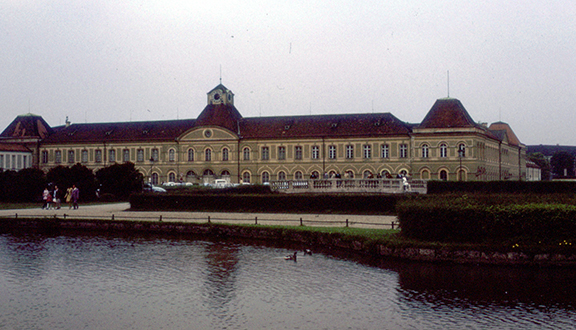
Also as usual, our next day started late. Took a streetcar and spent the afternoon at a place I had known nothing about previously — Nymphenburg. It started as the 17th century “summer residence” of a Bavarian ruler and his wife as they awaited the birth of son Maximilian Emmanuel in 1662. Max built up the place after taking over. A gallery of photos I took is below, but this is a view unavailable to us at the time that gives you a sense of the place.
Nymphenburg Palace
As you’ll see in this gallery, they had a thing about snow sleds. Really ornate sleds.
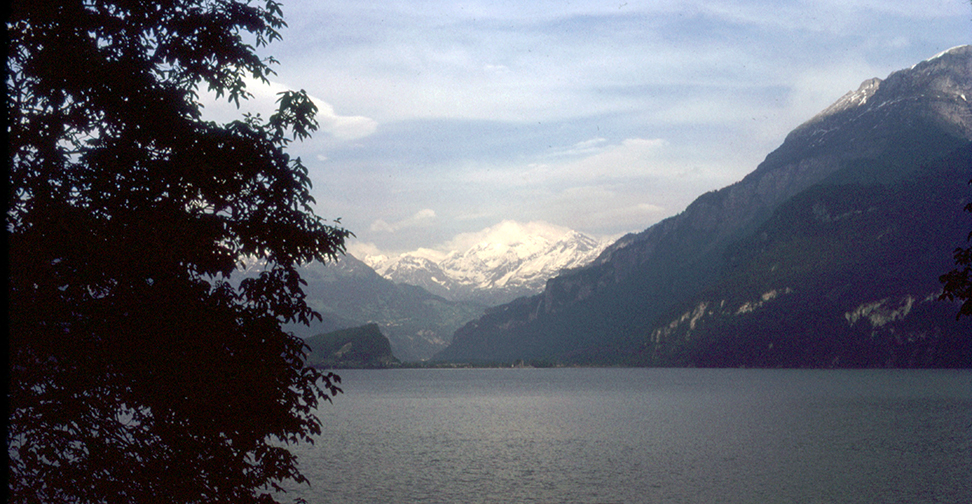
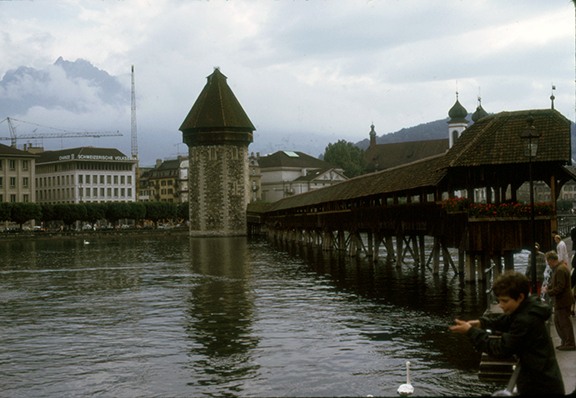
Back in the city, went out to dinner at the Augustinier and had schweinbraten mit sommelknödel und salat. “Pretty good,” according to my journal. “Pork and some kind of dumpling.” Frommer’s Guide said the Schwabing section of town was something like Greenwich Village in New York City. Had good bars, anyway. Tried a few and ended up at the Scotch Kniepe, a whisky bar. I tried schnapps, which I didn’t like. They also had Dinkellacher beer, which I did like. Beat the deadline at the hotel.
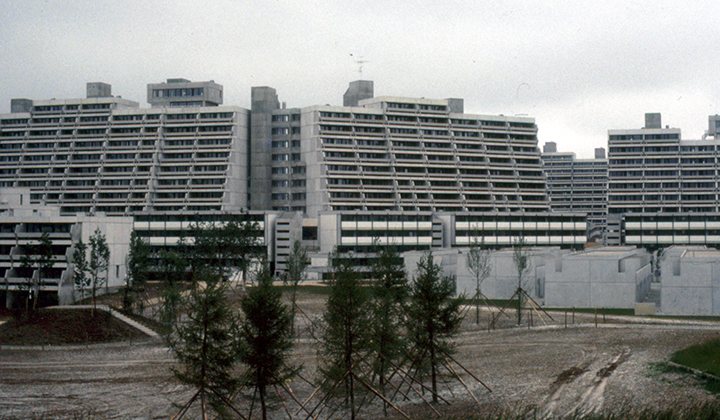
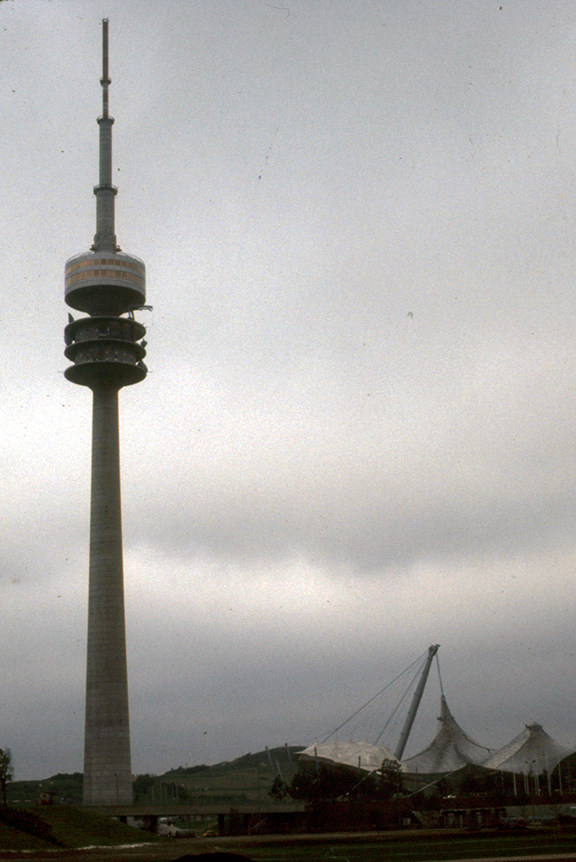
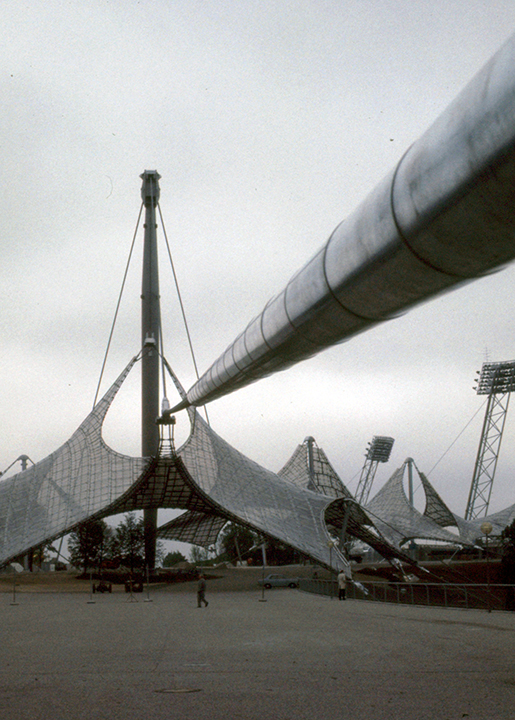
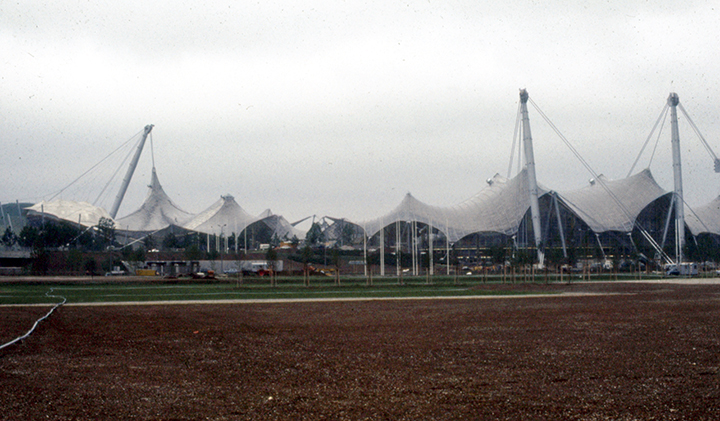
Must have been rested, because our last full day in Munich started at about 0930. Weather was lousy, though. We took the S-bahn, the electric rail system, to the Olympic grounds.
Olympic Village
The photo above shows some of the residences intended for athletes participating in the summer games of the 1972 Olympics, due to begin a couple of months after this was taken, in late August. It was to become the site of a Palestinian terrorist attack and the murder of Israeli athletes that sadly defines the 1972 Olympics.
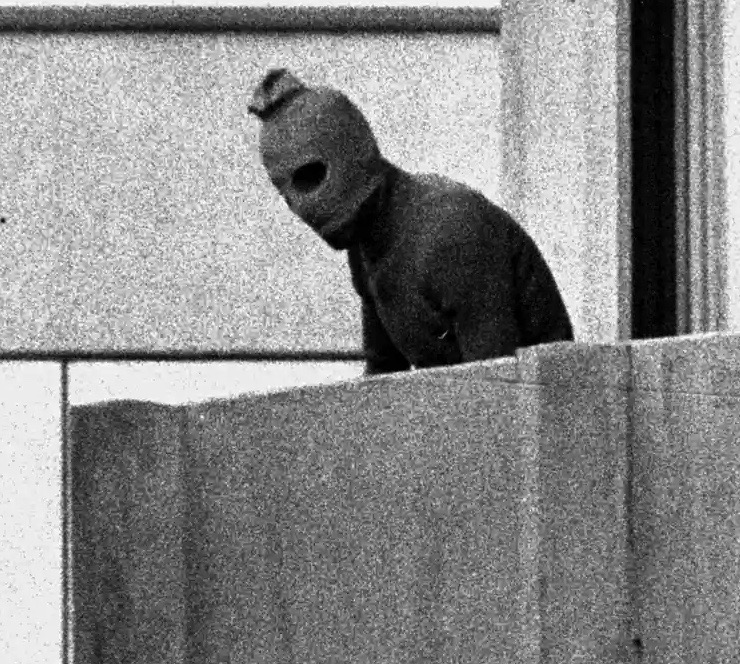
Early on the morning of September 5, 1972, a group of Palestinians, members of “Black September,” stormed the Olympic village apartment of a group of Israeli athletes, killing two and taking nine others hostage. The Palestinians demanded the release of more than 200 prisoners and two German terrorists in exchange for the hostages. This image of a masked terrorist on the balcony of the apartment became one of the iconic photos of the event.
Jim McKay was the host of ABC’s coverage of those Olympic Games. On September 5 and 6, he broadcast for 14 hours straight on the events surrounding the attack.
Black September demanded a plane to fly the hostages to Egypt. German authorities schemed to attack the terrorists at the airport and free the hostages. Events went terribly wrong, however, and, at the end of a firefight, all the hostages, five of the terrorists, and a German police officer were dead.
Those who watched the coverage likely have not forgotten McKay’s simple and poignant concluding statement, “They’re all gone.”
Stained by this event, the 1972 Olympics also featured the performance of American Mark Spitz, who won seven gold medals in swimming, and the debut of Soviet gymnast Olga Korbut, who won two golds in gymnastics.
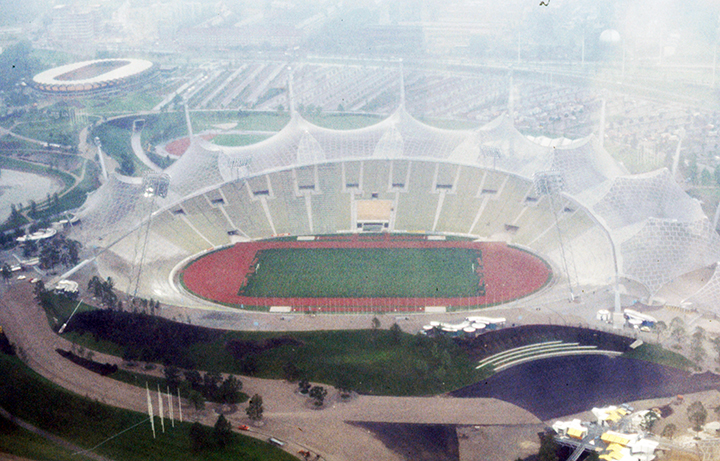
Here is a gallery of other scenes of the Olympic grounds in 1972, the view of the stadium taken from a observation platform, two-thirds of the way up the 955-foot Olympic Tower.
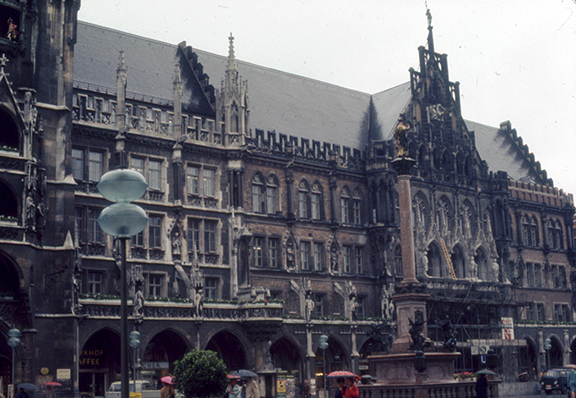
We then visited Mariensplatz, to see the Rathaus, Munich’s city hall.
The Rathaus.
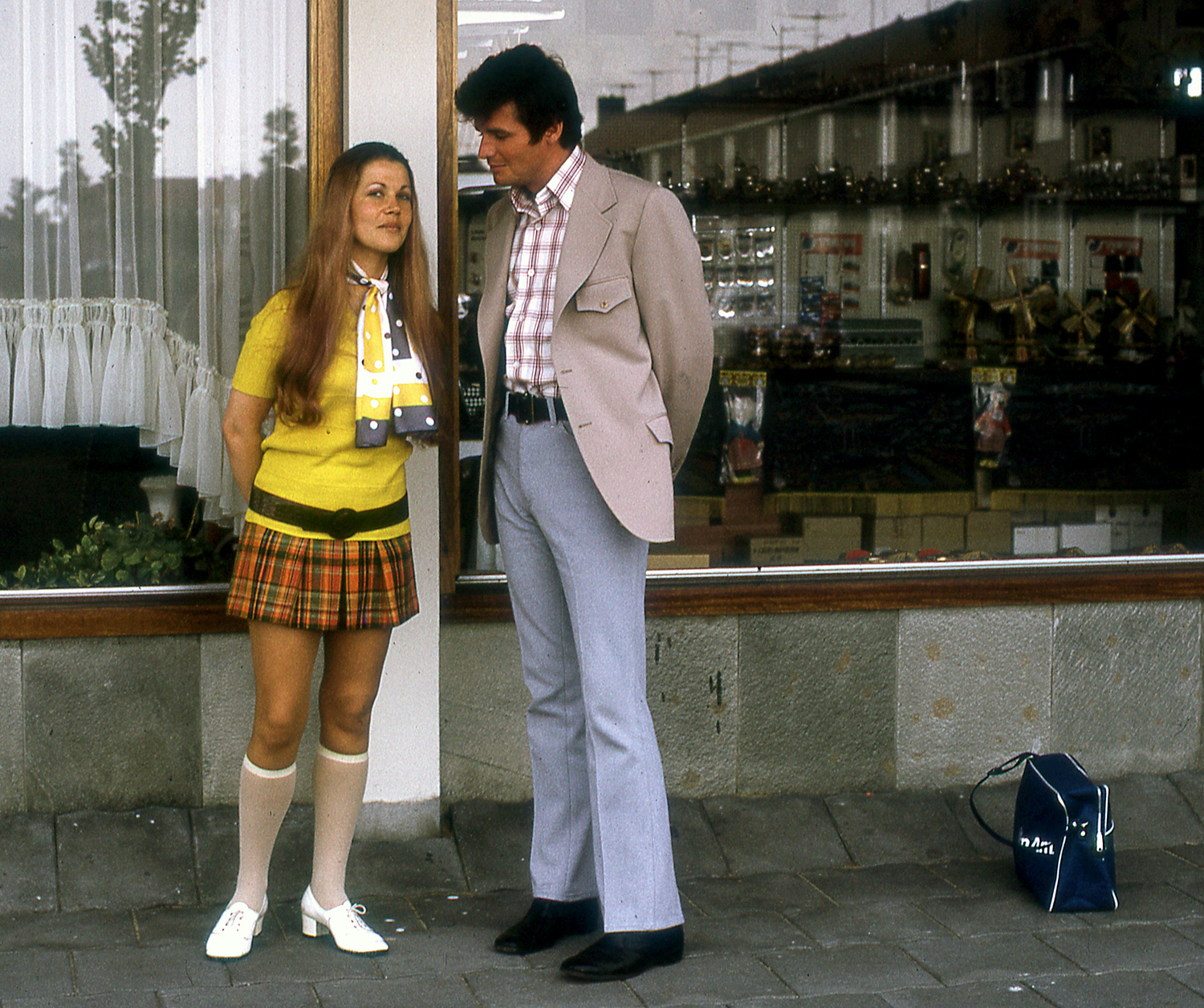
Had leberkäse, “liver cheese,” at the Cafe Imbiss. Similar to liverwurst, but not the same. “Hard to describe,” my journal said, “but good.”
Returned to the Scotch Kniepe to enjoy some more Dinkellacher. We missed the hotel deadline, but not by much, and the guy was still up and let us in. On to the mountains next!
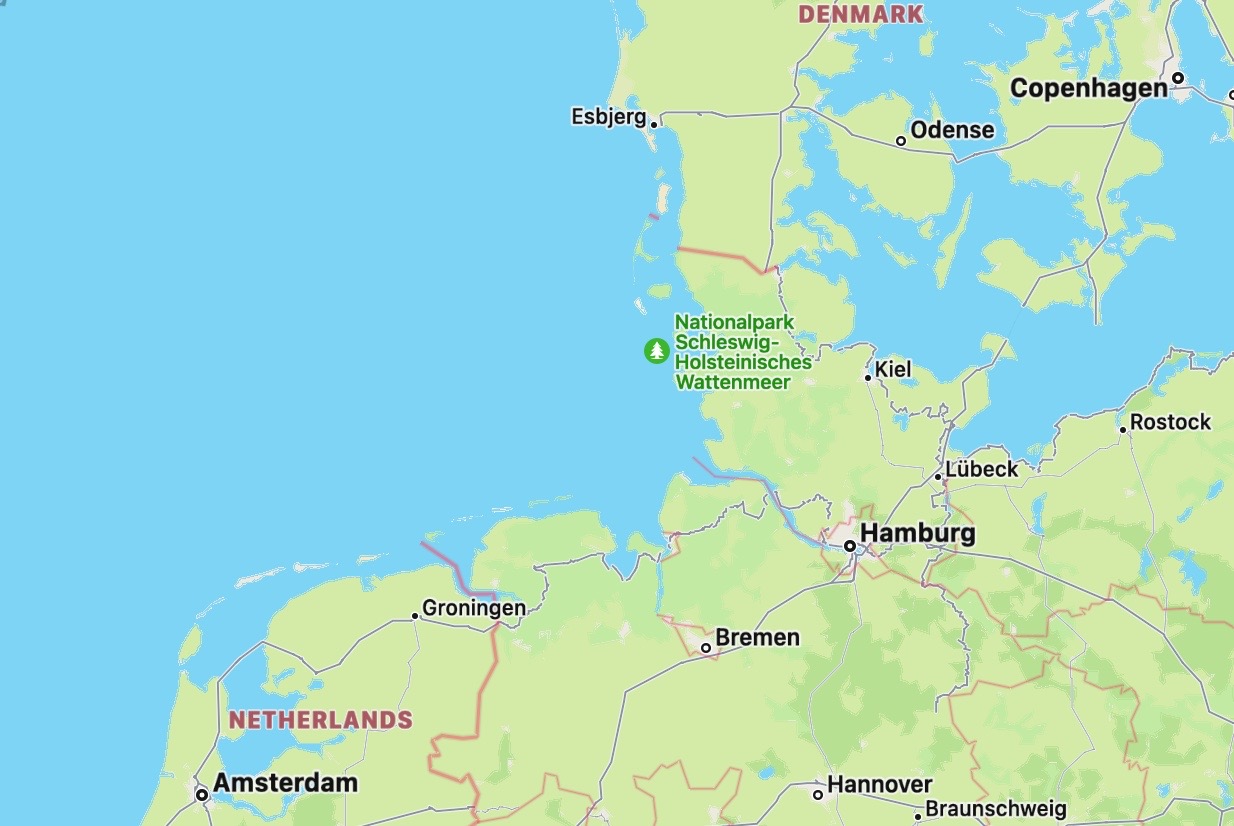
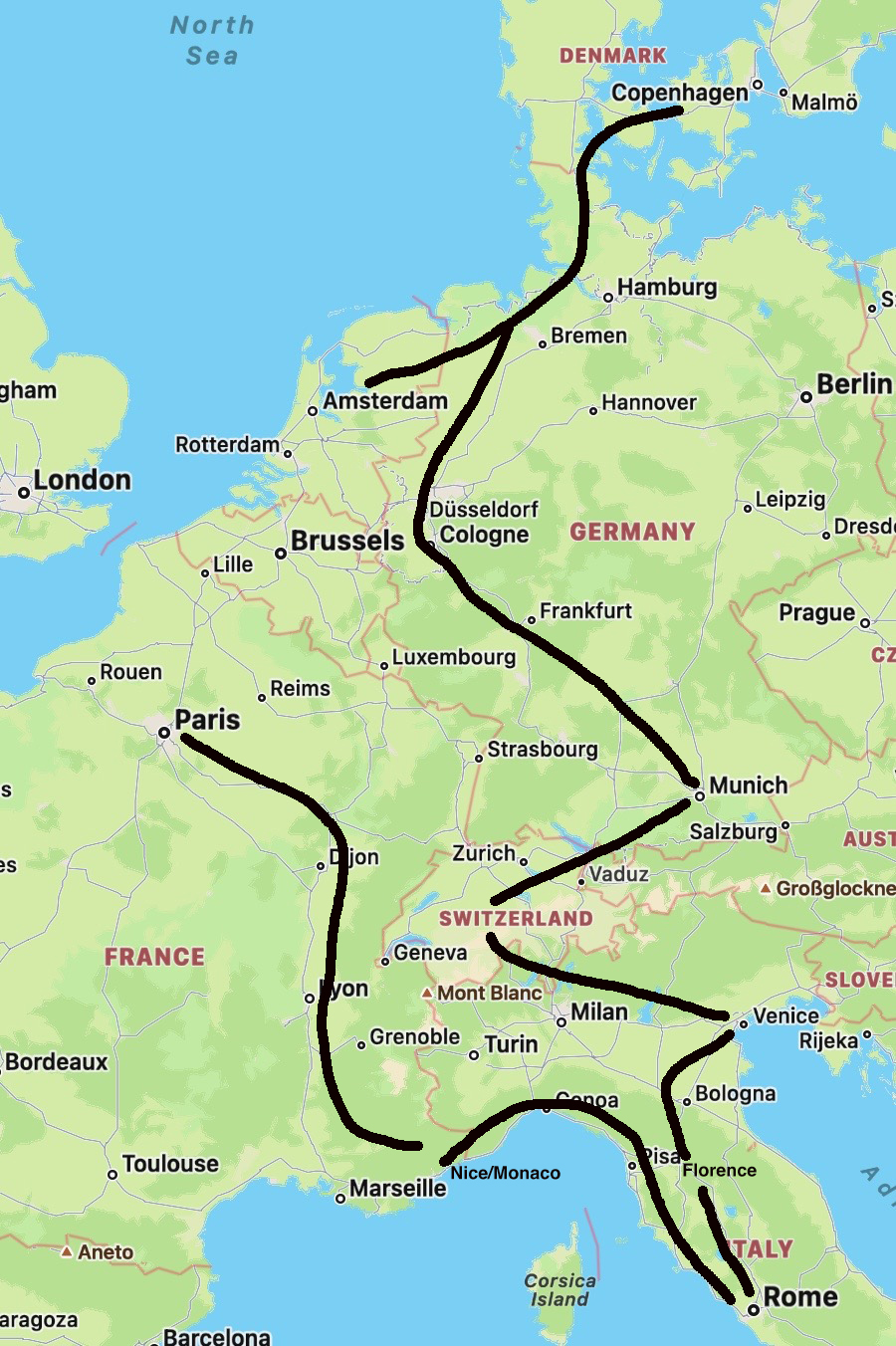
Headed north to Copenhagen, as map shows, 50 years ago last night. Sun rose around 0430. How did I know? Because I hardly slept. Remember, we were in a train compartment with several other people. To sleep, we extended our seats and laid out, alternating feet and heads. Also didn’t help that passports and tickets were checked seven times.
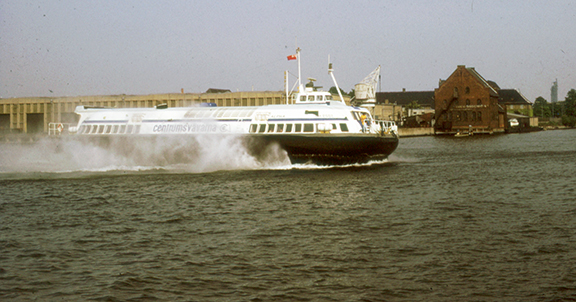
Ferry to Copenhagen.
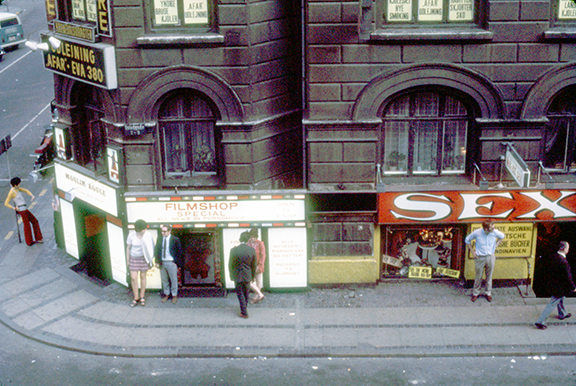
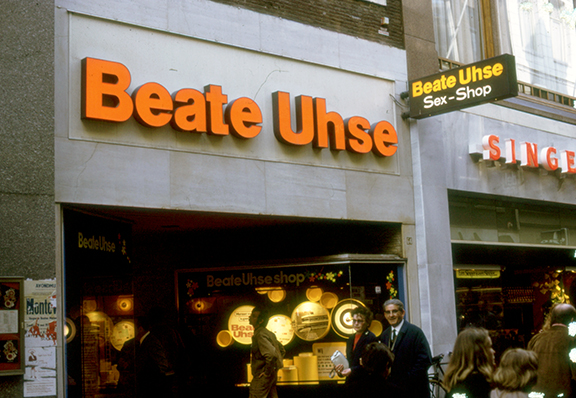
The map also shows that rail access to Copenhagen from the west is more than difficult. The train brought us to a ferry at about 0500. Had some tea in the restaurant on the ferry. Arrived in Copenhagen at about 0830. The Hotel du Nord was nearby and in a neighborhood with several porno shops, as befitted its price and quality.
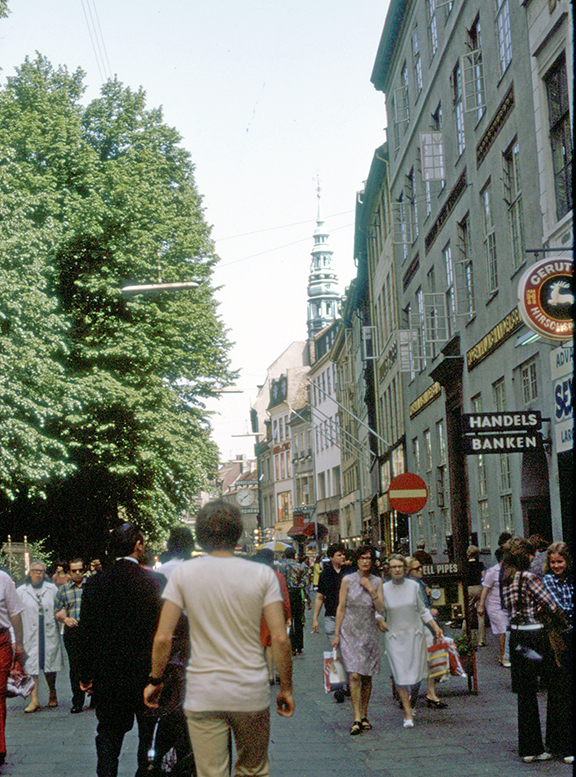
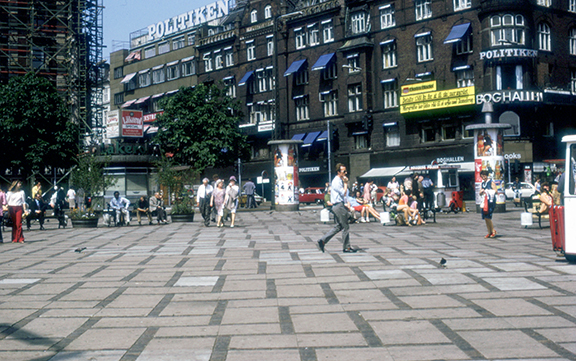
View from our hotel room.Ströget scene
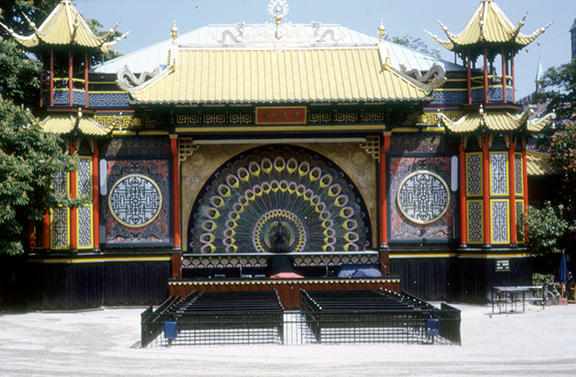
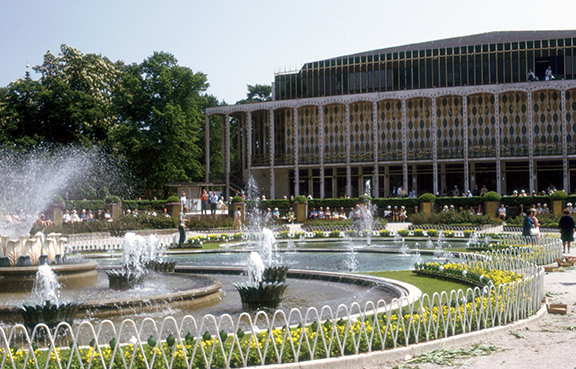
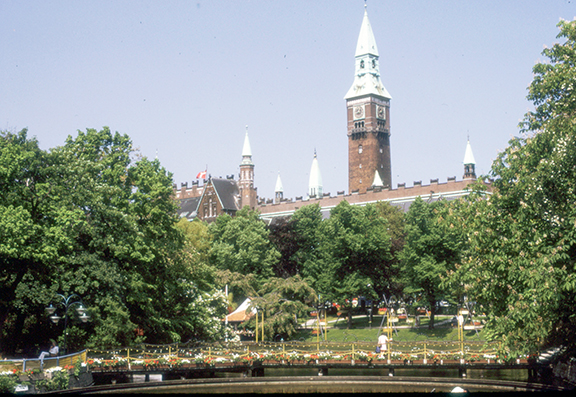
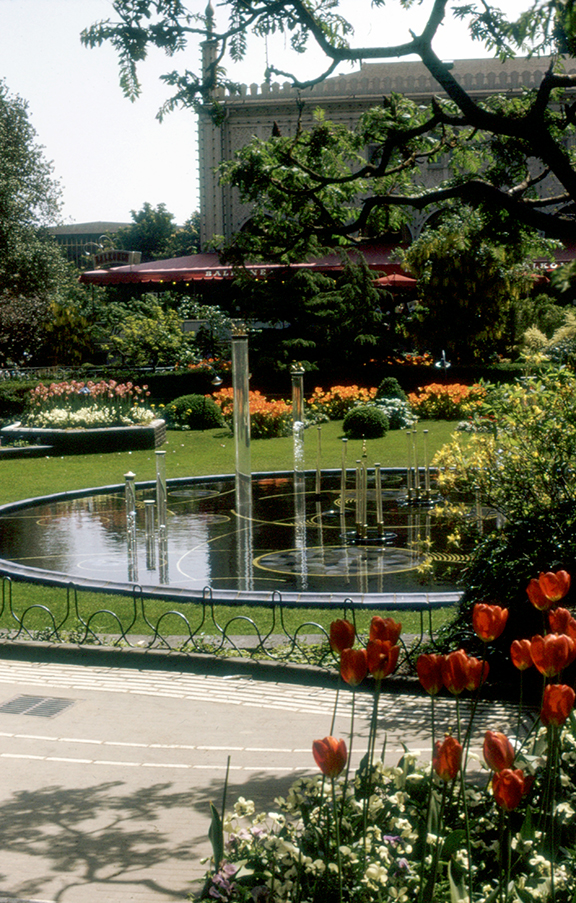
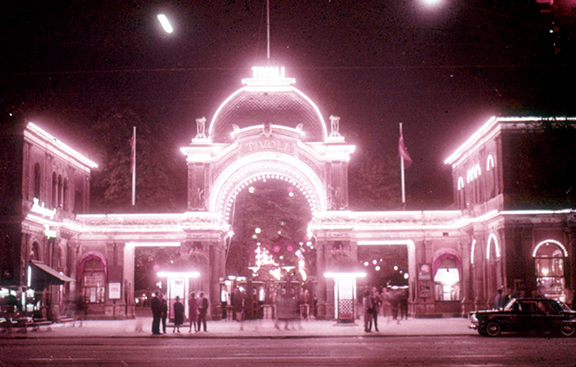
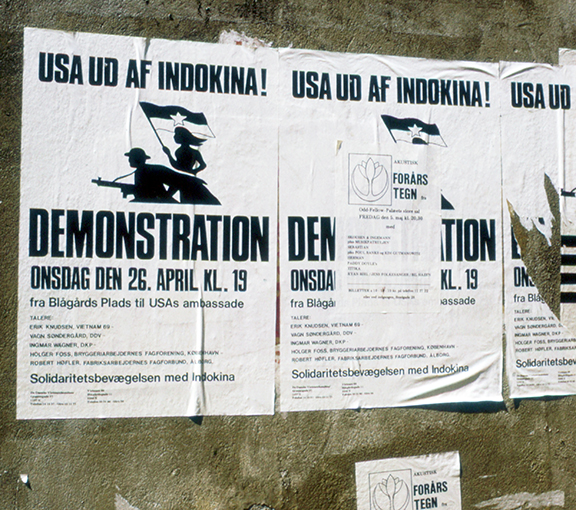
After a walk along the Ströget, a mile-long pedestrian street, we came back to the hotel and took a nap until about 1730. After dinner, we visited Tivoli Gardens. In my journal, I simply said, “It was amazing.” Sunset there and then was almost 2200, so my pictures in the gallery below are in daylight. When it was dark we were in bars, so the picture of Tivoli at night was purchased.
We stayed out late and imbibed, as was our wont. The next morning at breakfast, the morning manager at the hotel said he recognized us because, when he went to wake another guest at 0700, he found the door to our room wide open.
After walking around taking pictures, we went back to the hotel and took a nap until 1930. After grabbing dinner, we wandered about and found the Club Pussycat. Might as well say this now begins the expurgated report on our visit. We first connected with a couple from Seattle, a local named Sven, and about six or seven kids from Texas on a tour. Later, after spending some time with a guy and a girl from Finland, we walked home around 0530.
Next day started for us around 1330. Hours of unimportant activity later, we were back at the Club Pussycat. Hung around with Sven and met two girls from Seattle — Laurie and Dawn. They were on a post-graduation tour of Europe (but after high school!). They had also been in Amsterdam and loved it for the hash. At some point, Laurie said she was in Scandinavia to “find my Thor”! Well, Sven became her companion. Later, waiting for drinks, a girl at the bar asked if I was American and we struck up a conversation. Üna was 20 years old and from Greenland. I believe she’s the only person from Greenland I’ve ever met.
Next morning, we went to Sweden . . . for a few hours. Malmo, Sweden, is a short ferry ride from Copenhagen. Rainy day and inconsequential. Back at the Pussycat that night, we met a local who was a Buddy Holly freak and talked about American rock in the ‘50s and ‘60s. Kid was named Flemming Anderssen and he drove us back to the hotel around 0400.
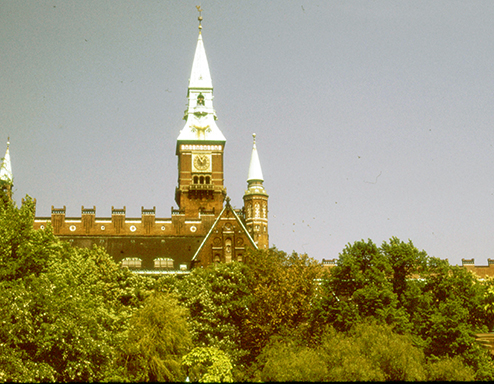
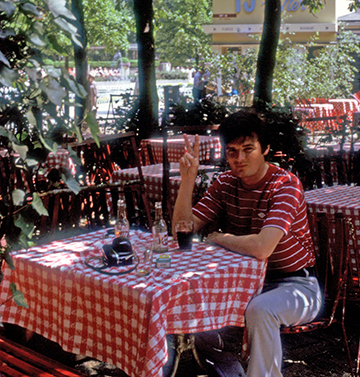
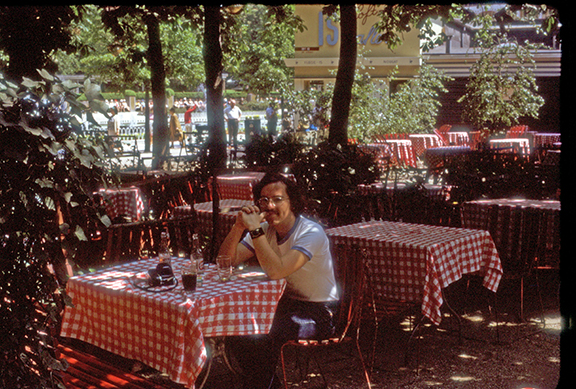
Here’s a gallery of random photos from Copenhagen, including one of each of your intrepid travelers.
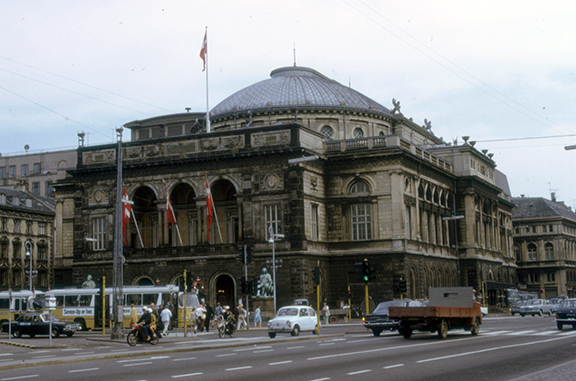
On our last day in Copenhagen, we did our duty. Getting up at 1130, we bought some post cards and went to the lounge of the Royal Hotel to write them. Our train to Cologne was to leave a little after 2100.
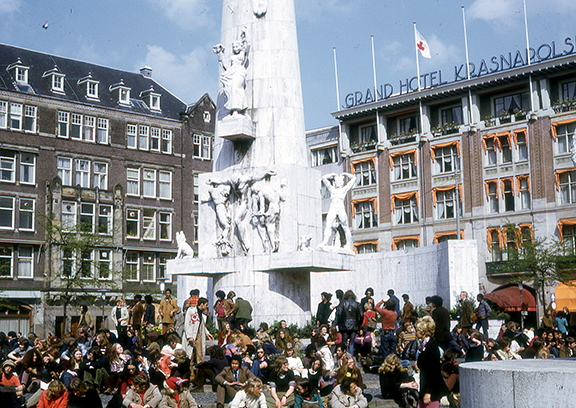
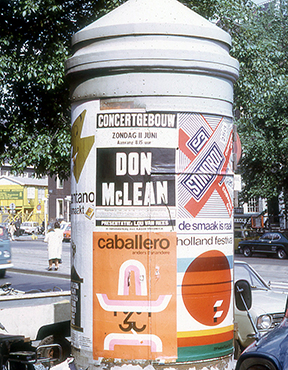
Kevin and I arrived in Amsterdam on May 31, 1972, and were met by cheers and celebration. We soon learned that the Dutch were jubilant because Ajax (pronounced eye-yacks), the Amsterdam futbol (soccer) team, had won the Europa Cup that day (its second consecutive win).
The celebration had been a little confusing at first to me. It seemed that the streets just suddenly filled with people running, yelling, and singing. A political protest? People were too happy for it to be that.
Kevin: “The victory of Ajax, as I remember, dominated everything that day. We took the trolley into the Dam Square, where people dressed in orange were hanging off the rooftops, drinking beer, and smoking dope. There were thousands in the square celebrating. At some point in Amsterdam, I bought a pack of cigarettes and the matches had a photo of an Ajax player on them — no name, because everyone in the Netherlands knew all the faces by sight. We were bought a few beers, and one bar had a phonograph and kept playing the Ajax song over and over again.”
The national monument in Dam Square. Don’t know if this was during Ajax celebration.
We had left Boston on an Aer Lingus Boeing 747 late the evening before, delayed about an hour by weather. Movie on the flight was The Hot Rock, starring Robert Redford and George Segal. Remember nothing of it.
The flight arrived in London at 0845 (I’m going to use the European style for time) and our connecting flight in a Boeing 707 took off at 0930. We landed in Amsterdam about an hour later.
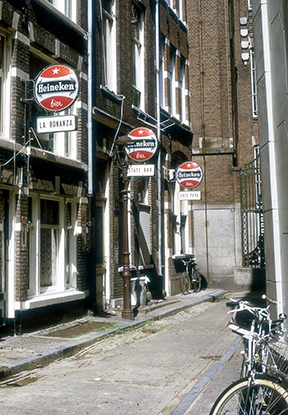
It took us quite a while to locate and walk to the Pension Weidemann. Once somewhat settled in, we took a walk around, had some rosbief broodjes (Dutch versions of sub/grinder) and Heineken, and then returned to the hotel for naps until 2030.
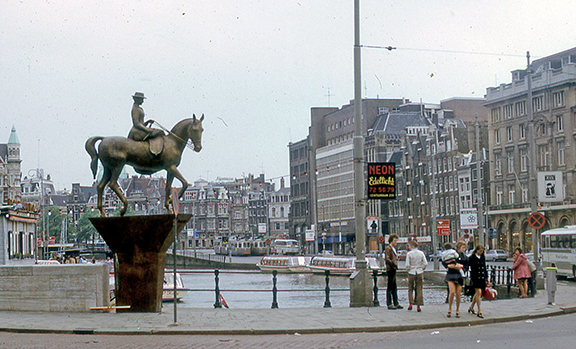
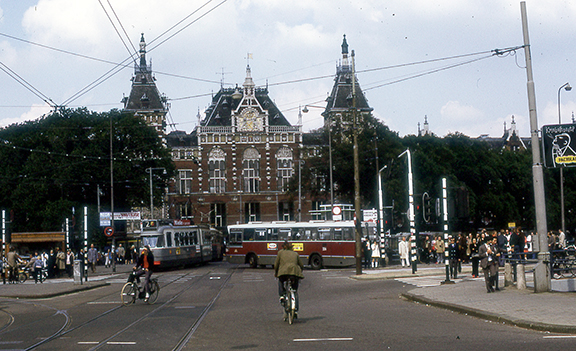
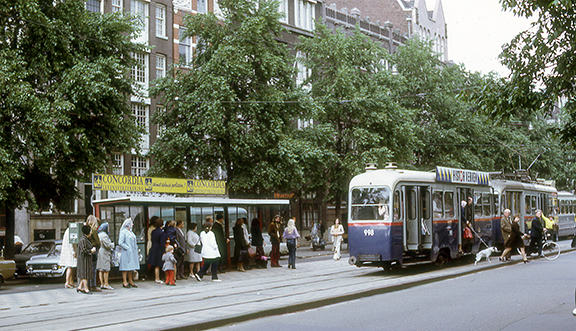
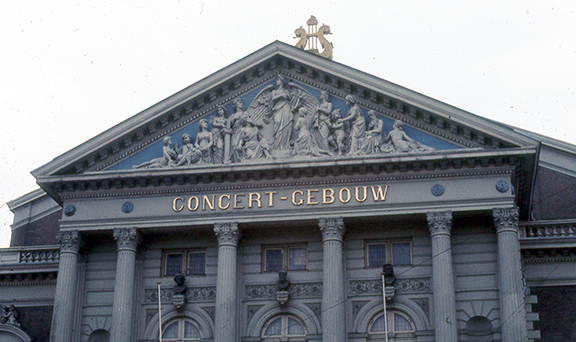
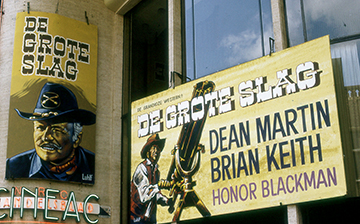
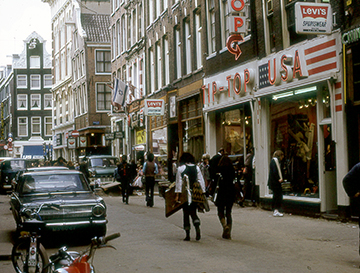
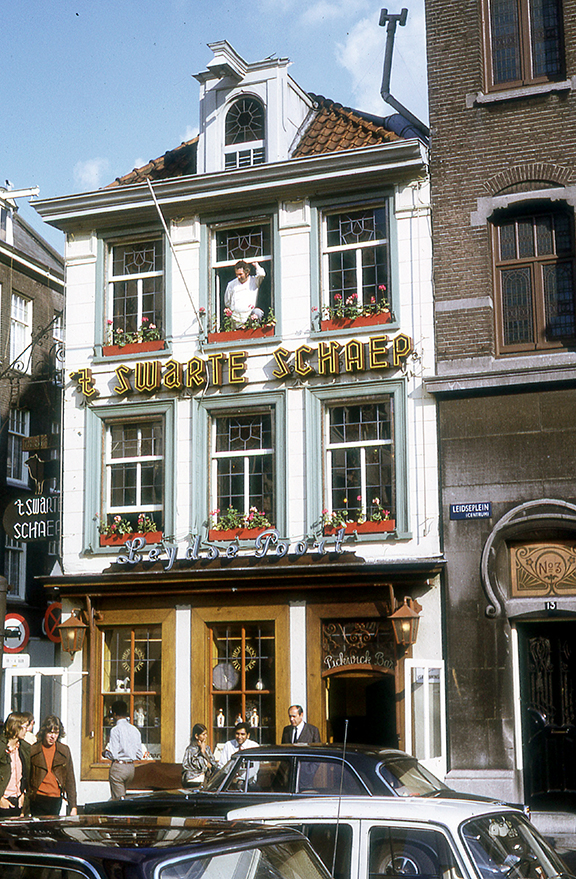
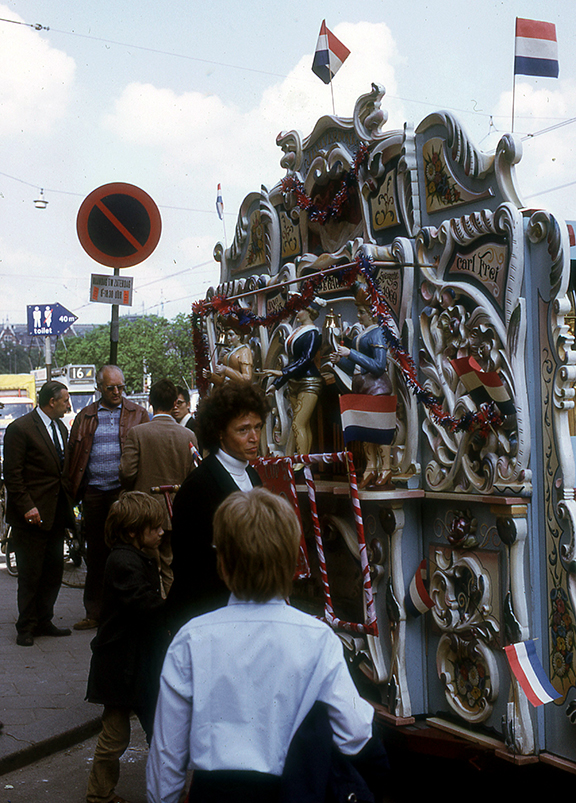
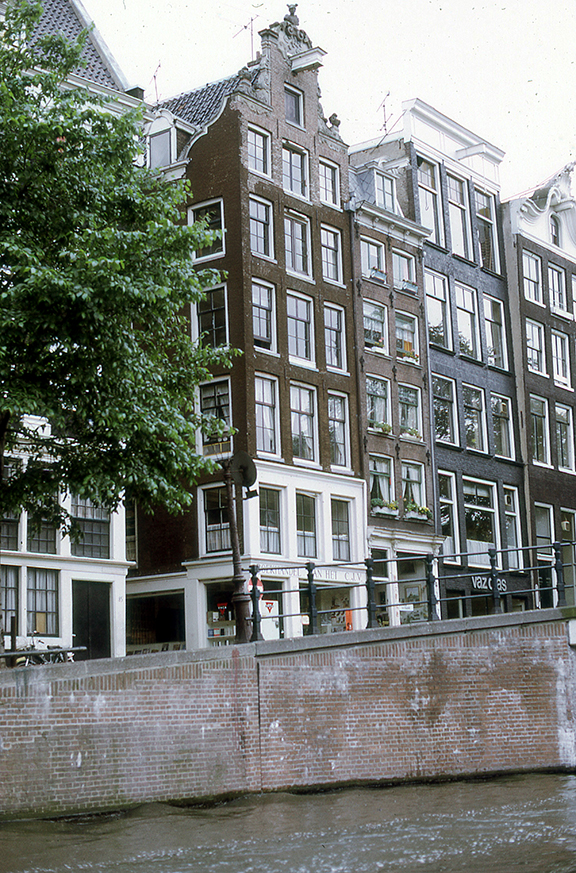
Here is a gallery of street scenes in Amsterdam. (Click on arrows to advance or go back. If you click on an individual photo, you’ll get a larger presentation. But you’ll need to click to see the previous page to go back to the gallery.)
Fortified by tosti (toasted ham and cheese sandwich), we started bar-hopping around Rembrandtplein, major square in the center of town. After a couple of stops, we went to a hotel bar into which we had seen a nice-looking girl enter with a friend. After a bit, we noted that it appeared to be a gay bar. Whatever. We saw the girl who had entered and she responded to our glances with a smile.
She inquired if we were American and that started a chat. Wilma came over to talk with us. (Her friend did not speak English.) Born in Holland, Wilma had emigrated with her family to Australia as a young girl, returning at age 19, six years earlier. The four of us left for another bar at about 0330. That was closed, so we got into line for the Club Privé.
A few moments later, someone in line behind us yelled in English, “I can’t believe it.” Turning around, we saw our high school classmate Brendan Montano. Whaaa? Made plans to meet the following day.
Skipping the line at Club Privé, we finished the night at the Blue Note. After arranging to meet Wilma again, the girls took a taxi home and we walked back to the hotel at dawn.
Of course, with accumulated jet lag, numerous beers, and dawn bedtime, we totally blew past the time we were to meet Brendan. And there was no way to get in touch with him or him with us. (The [literally the] mobile phone was invented in 1973 and common use was decades away.)
Starting the day in early afternoon, we made train reservations for Copenhagen and tried to secure another hotel. For dinner, we tried rijstaffel (Dutch for “rice table”), the Dutch adaptation of an Indonesian meal, at a restaurant named Bali. The meal consists of as many as 40 side dishes served in small portions, e.g., egg rolls, chicken, fish, fruit, vegetables, pickles, nuts, along with rice also prepared in different ways. I recall enjoying it, though I haven’t had it since.
Kevin: “Sixteen years after this trip, Debbie and I went to the Bali for rijstaffel and it was just as good. We always send people there (just gave the name to our neighbors who are starting a river trip in Amsterdam in July).”
My journal notes that at various bars later in the evening we met a girl from Saskatchewan named Jeannette, some people from South Africa, and Tony and Fritz Klein, along with a girl who had spent two weeks in Pittsfield, Mass. We walked back to the hotel again at dawn.
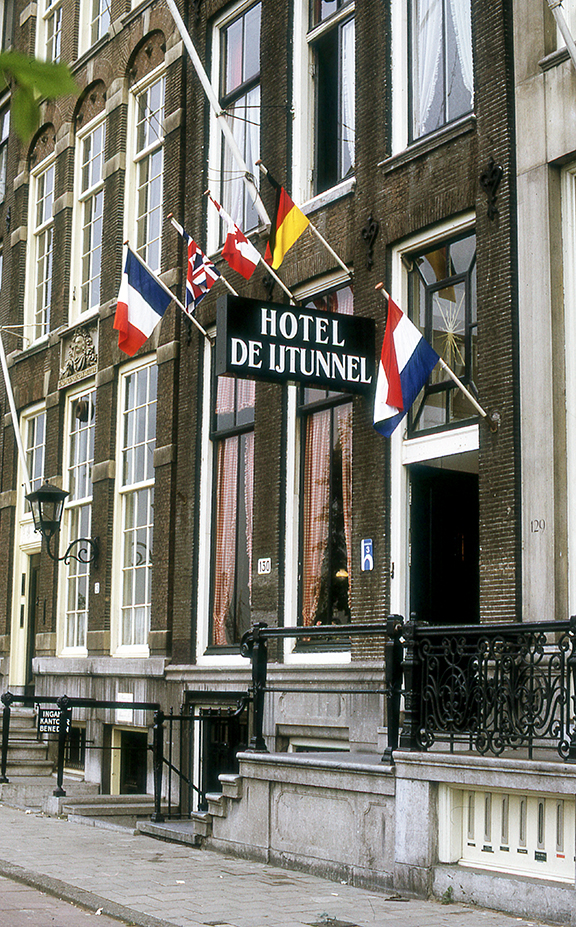
We had to wake up at 1100. The hotel maid required it. It was checkout time. We moved to our new hotel — the Hotel De Ijtunnel. We deliberately looked for these pensions, more like boarding houses than chain hotels. More European and much cheaper. We readied for our visit to Volendam to see Wilma.
At the hotel in Volendam at which Wilma worked, we learned she had called in sick. Kevin was able to call her home and she sent her brother and a friend of his to pick us up. On motorbikes!
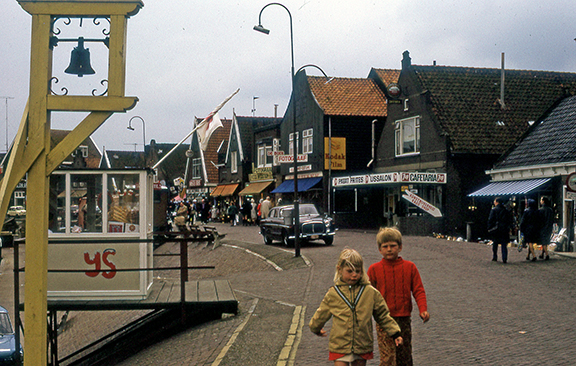
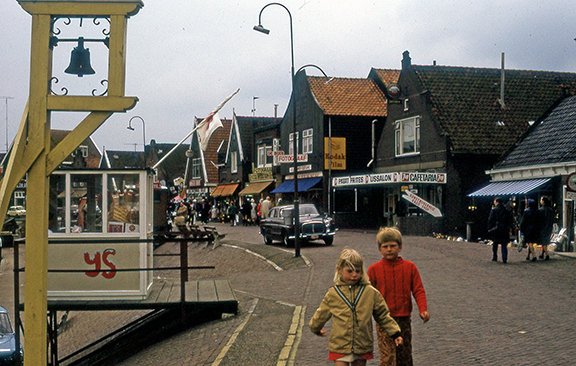
Street scene in Volendam. These kids are now in their late 50s. Yikes.
At her house, we met another brother, Hank, who had just jumped bail in Australia. He had been picked up with four pounds of hash and had fled the country using a Swiss passport. He had also picked up hepatitis from a dirty needle, while shooting morphine, Wilma told us. Modern times, even then.
After a couple of hours, we exchanged addresses and bade farewell. This time, we skipped the motorbikes and took a bus, waving to Wilma and her two little sisters waving back as we left.
Kevin and Wilma as we said farewell.
Spent our last full night in Amsterdam doing what and where we began — bar-hopping around Rembrandtplein. We donned coat and tie as we did often in the evening. Guess it was still the era when you “dressed up” to go out.
After a while at the Folies, we decided at about 0100 to check out the “Sailors’ District” — the Zeedijk. (Seems disparaging to use the term for us noble seafarers to describe a red-light district. Not inaccurate, just disparaging. It’s located adjacent to the harbor.)
This was during a time in that area when women prostitutes would sit in street-level windowed rooms with a red light on, “on display,” as it were. Over the years since, the area has apparently been cleaned up quite a bit and the red-light district confined to a smaller area. Prostitution in the Netherlands, nevertheless, remains legal and regulated.
After visiting a couple of bars, we got back to the hotel early . . . before 0400. Stopped in for one last one — at hotel bar — and met some US Army Airborne guys stationed in Germany. Had two beers — once again, the sky was bright when we hit the sack.
Our last day in Amsterdam was to be filled with history and culture. Finally! But, as usual, it started ahead of our preferred wakeup time. In fact, we were kinda hustled out of the hotel. Checkout time was again 11, at which time we were fast asleep. Knocks on our door. Woman looks in, “You know, it’s time for you to leave.” Okay. We checked out and checked bags in at the rail station for the overnight train to Copenhagen.
We had purchased Eurail Passes both for travel and, when possible, a place to sleep. According to a 1973 article in the New York Times, a pass for one month cost $160. There was also a “student” pass good for two months of unlimited second-class rail travel for $135. (The article said those prices were “slight” increases over 1972.) The student pass was also for “bona fide” students under the age of 26. I was technically still a student at Columbia and we were both 25, but I don’t remember which pass each of us got.
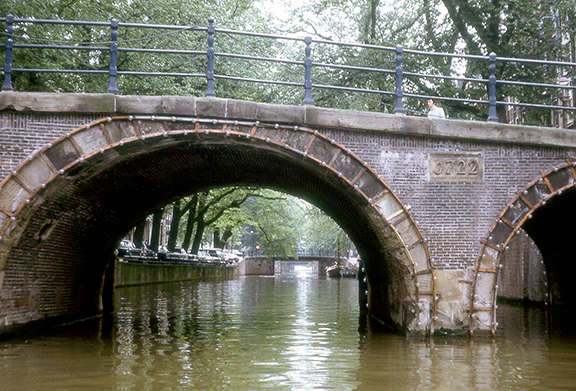
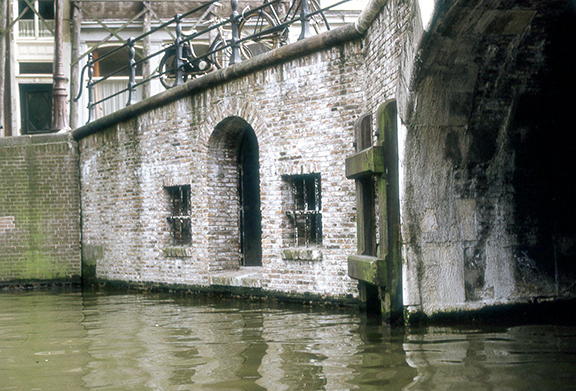
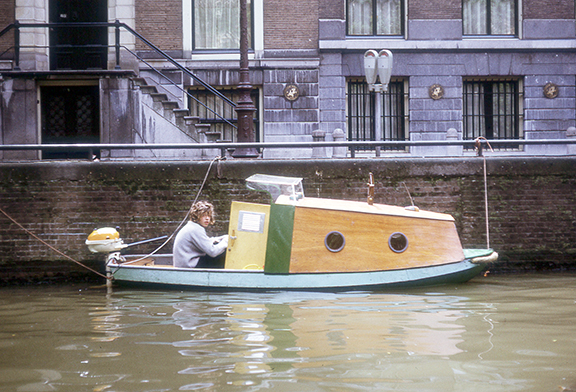
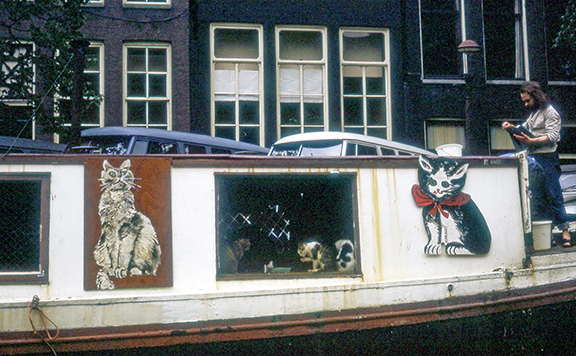
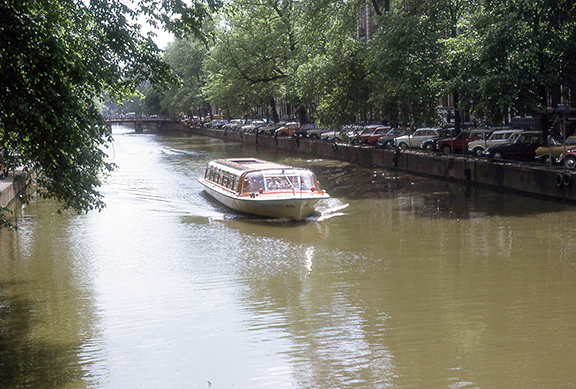
After rosbief and eggs, we took a tour of Amsterdam’s canals. Below is a gallery of scenes from that tour. They include what appears to be a canal-side “jail cell” and a “cat boat.”
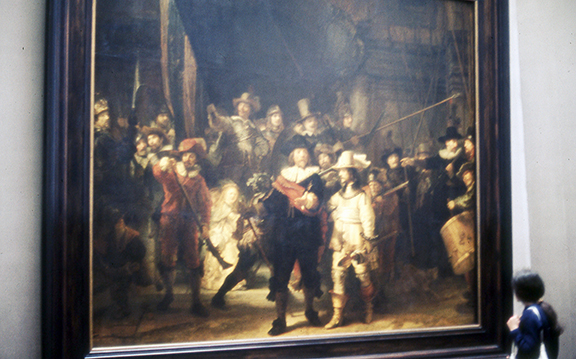
Following the canal tour, we visited the Rijksmuseum, national museum of the Netherlands and home to many “Dutch masters,” including Rembrandt’s “Night Watch.”
Night Watch
We also visited the Municipal Museum, which featured contemporary art (to my mind, not worth including).
By then it was after five, so we had steak at a little German place and went to catch the train. Our companions in the compartment were all US. One had known Kevin in Army Reserves. His wife was there. And a guy from Albany. Off we go.
Fifty years ago, on this date (a Tuesday then, the day after Memorial Day), classmate and longtime friend Kevin O’Malley and I took off from Logan Airport in Boston bound for a four-week tour of Europe. We left in late May because the airfare went up in June. I had left Columbia Journalism School a little early, missing graduation ceremonies in early June. (They mailed me the degree.)
Kevin had made all the plans — itinerary, hotels, etc. — for which I thank him effusively and very belatedly.
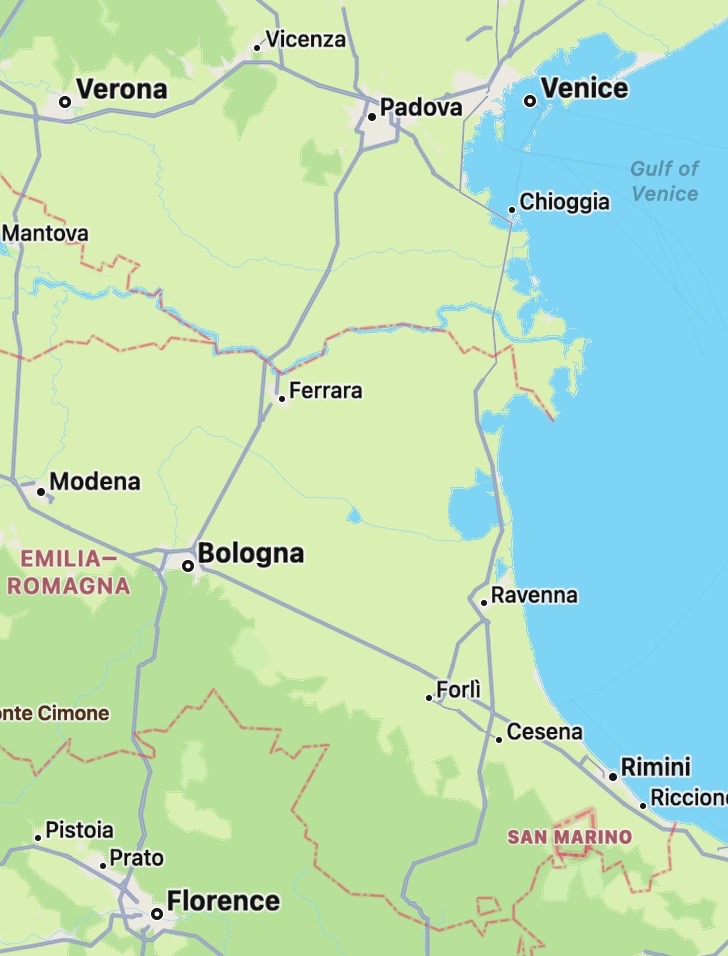
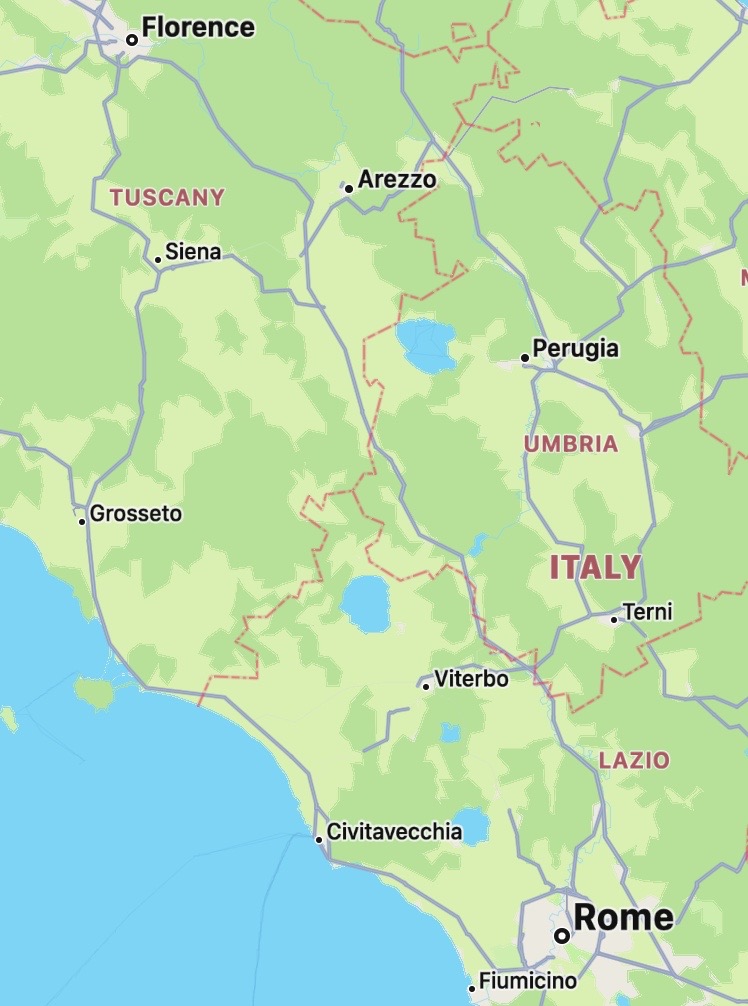
Here’s the list of locations, in order, and a map:
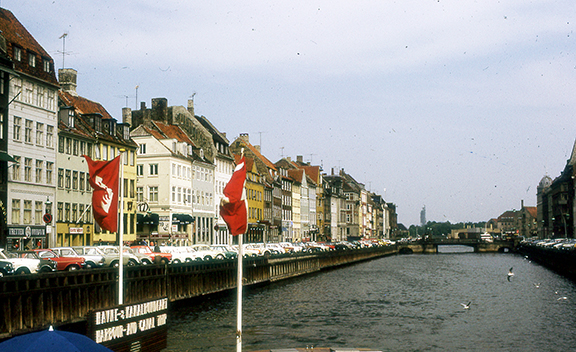
Amsterdam
Copenhagen
Munich
Lucerne/Wengen
Venice
Florence
Rome
Nice/Monaco
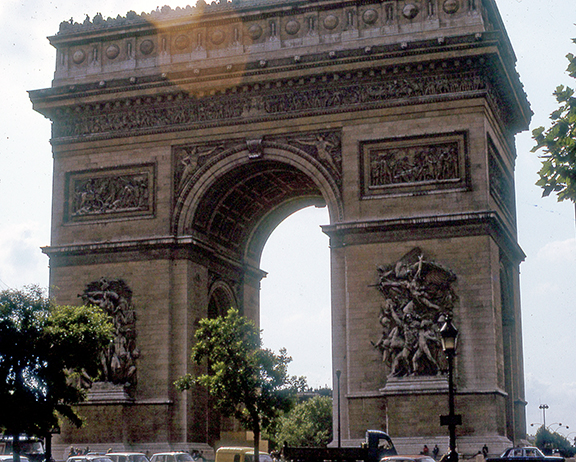
Paris
I kept a journal during the trip, which will be a source for posts about each of the destinations. And there will be some of what we remember (we have reputations to protect). Kevin will be contributing his recollections.
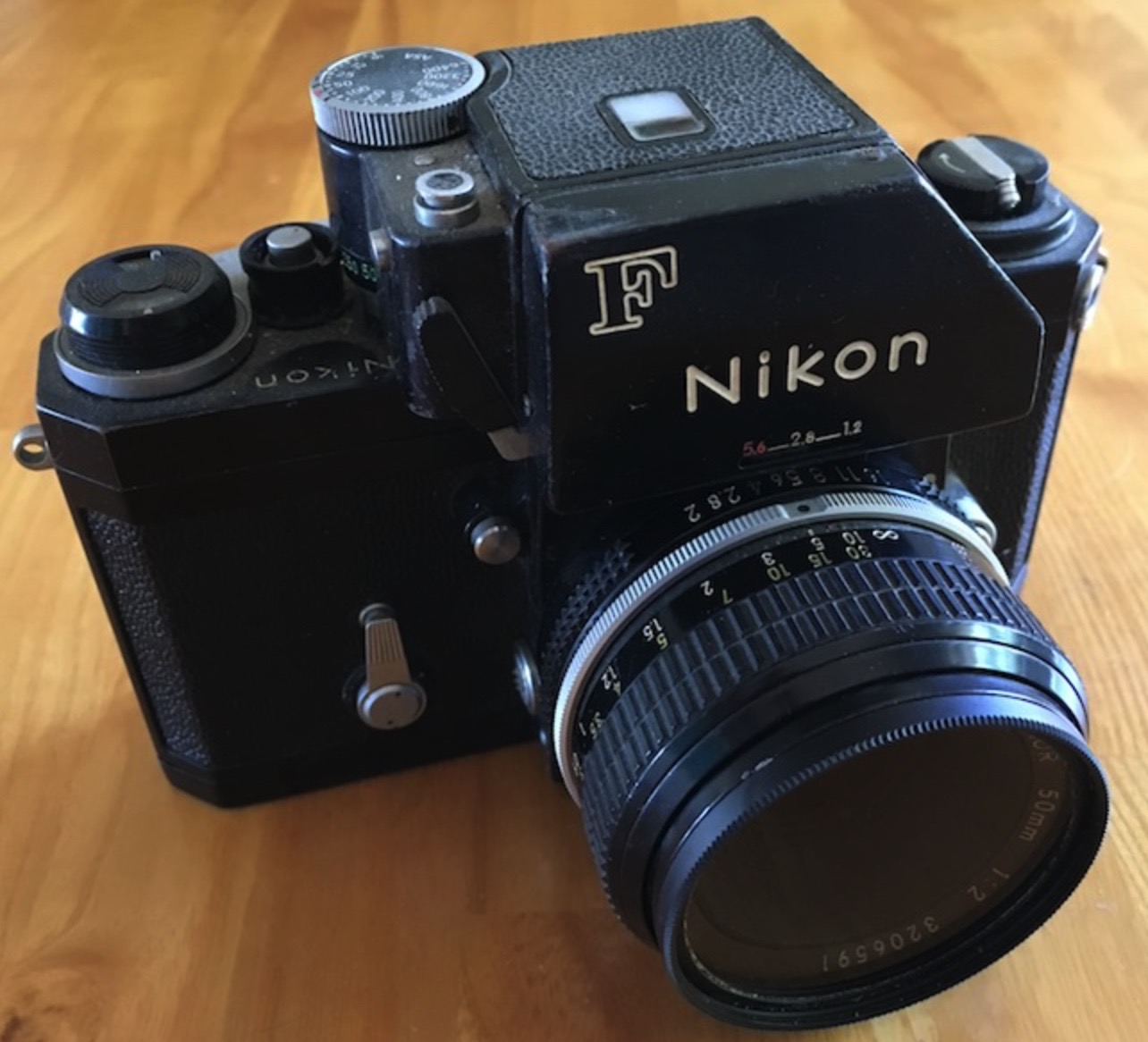
And there will be lots of photos. You’ll get to see what some of Europe looked like a half-century ago. The scenes were captured on positive film, 35-mm slides, using a Nikon F I had purchased in Japan in 1969 while in the Navy on deployment to the Western Pacific (still have it). Film was Kodachrome and Ektachrome, names totally unfamiliar to many younger folk.
Bottom, from left: Bill, Meredith, Winter, Adeline, and Alice. Top, from left: Sam and Juno, Julia and Tarski, and Dillon in Ypsilanti, Mich.
I expect nearly all of us wanted 2021 to be normal. I did some things this year I hadn’t done for more than a year and also hunkered down a bit. I hope you and your families were safe and healthy during this unforgettable (or forgettable?) year.
For me, the year started with a couple of unusual experiences.
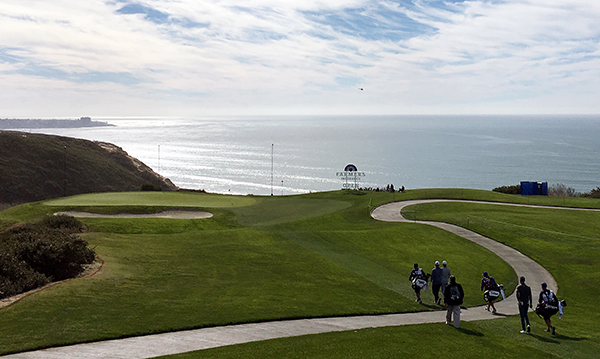
I’ve been a volunteer at the Farmers Insurance Open golf tournament in San Diego for almost 10 years. In January, the tournament took place, but without fans. (Then why have marshals?) I was assigned to a different hole than in the past, however — Torrey Pines’ #3 hole SouthCourse, the most photographed hole on the course. It was a somewhat weird experience, but a relatively pleasant one.
Hole #3, South Course, Torrey Pines
You can see more from that tournament, featuring some awesome skyscapes and turbulent weather here.
Early in the year, I was elected president of the Anza-Borrego Foundation (ABF), official nonprofit partner of Anza-Borrego Desert State Park, the state’s largest at 640,000 acres. I am, of course, unworthy to hold this position, but very honored to do so. I have been a member of the board for several years and was vice president for five years.
In November, I joined other trustees in the desert for a board meeting, the first time we had held a meeting in person in nearly two years. I had the pleasure later of joining colleagues on an excursion into a remote area and welcomed the desert experience again.
My grandgirls started the year schooling remotely and returned to school in person in August. Adeline is in 4th grade and Alice in 1st. Meredith continues to work at the local Boys & Girls Club and Winter at Charlie’s Foreign Auto in Encinitas.
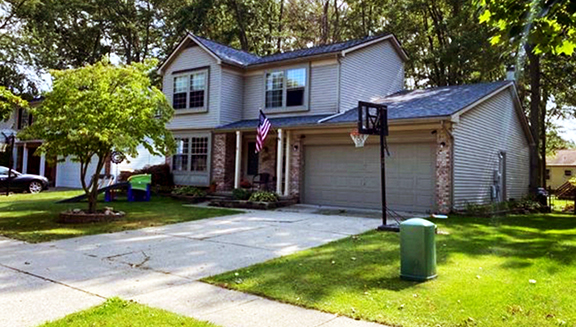
Dillon, who had lived nearby for several years, moved to Michigan in early December to join sister Julia and brother-in-law Sam in Ypsilanti. That’s why he’s in the picture with them. Julia and Sam bought a house there in November.
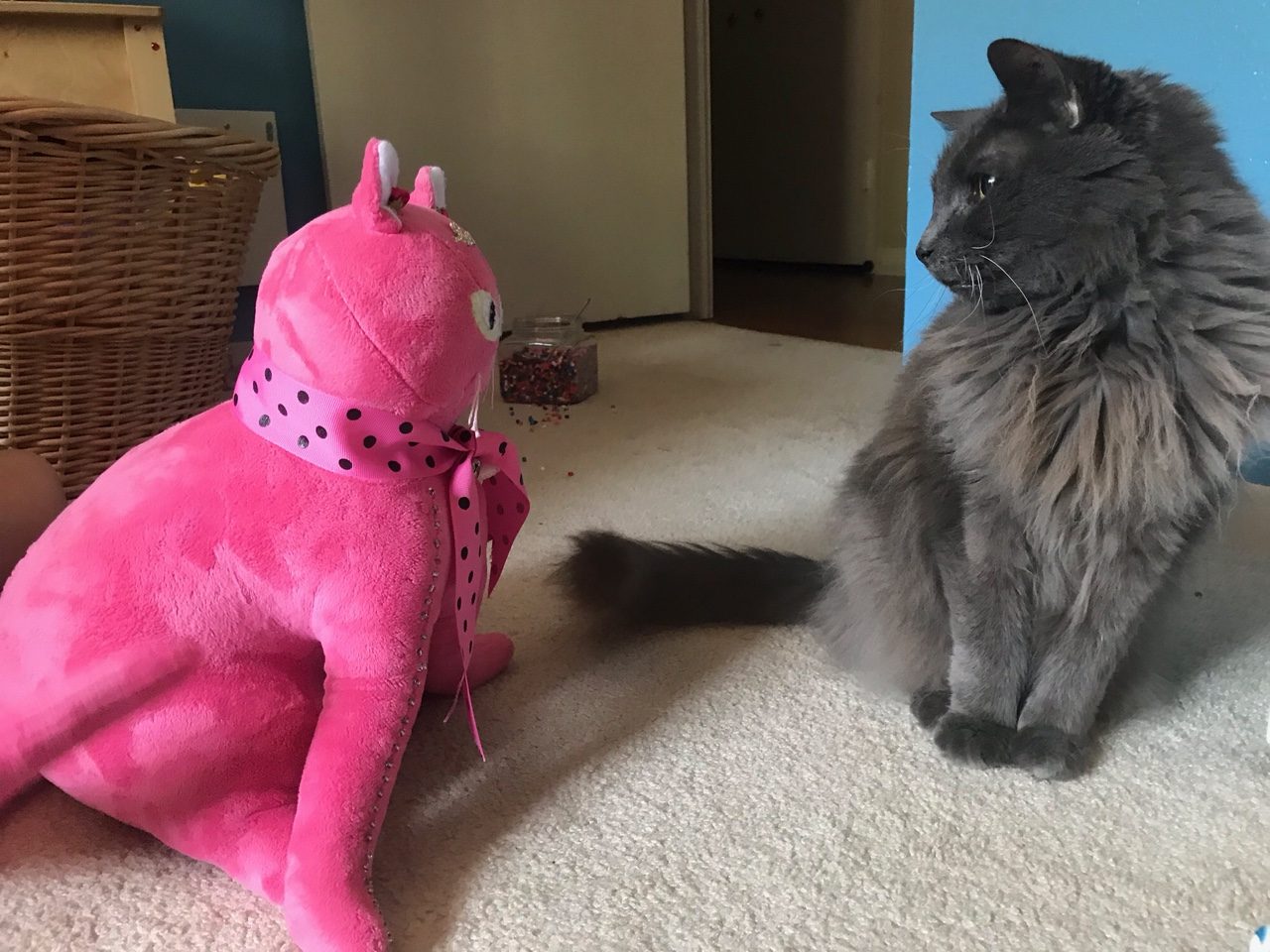
Julia and Sam’s house in Ypsilanti.Knowing Boo as I did, I can just sense his disdain for this imposter.
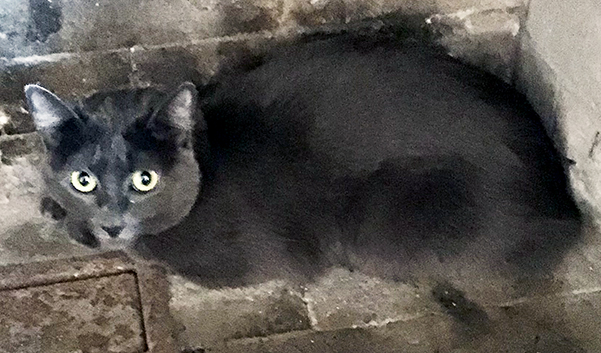
Bodacious “Boo,” the cat Julia and I rescued in 2005, showed major signs ofdistress in June and he was euthanized. Boo was not an “easy” cat, but he was also unforgettable and he has been very much missed by me. That said, within a few days of his death, Julia sent me a pictureof a rescue cat in San Diego and I secured her. When she hid in the fireplace soon after arrival, she got the name Cinderella.
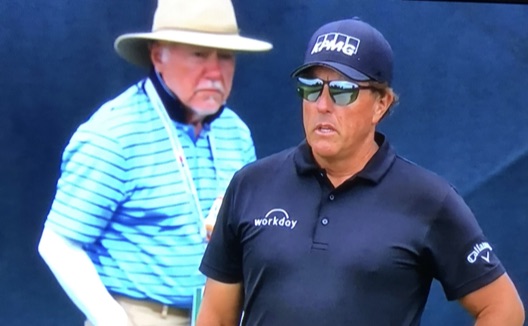
Me and Phil.
Also, in June, another distinctive experience for me. I served as a volunteer at the US Open Golf Championship, played at Torrey Pines. I was Hole Captain at #11, a par 3 that had the highest scoring average relative to par on the course. I supervised 28 marshals who worked am or pm shifts over a few days. The hole captain had the sole privilege of working every shift over seven days. On the second day of thetournament, I was caught in perhaps my favorite screen shot from my golf experiences. Much more about the US Open here.
We celebrated Alice’s 6th birthday in July on the beach with guests, as we had in 2019. That was when a lot of people thought we had overcome the virus. Then Delta dawned.
The BC San Diego alumni chapter renewed football game watches this fall, choosing a location that offered open doors for air circulation. It was fun. Some new folks joined us. Just wish the Eagles had done better.
My BC buds and I decided in the spring to reinstate our annual football game gathering. We gathered for the BC-NC State game Oct. 16. Over 8 days, I also visited family and friends, spending a couple of days on Cape Cod. As always, Marcy and Larry Kenah were gracious and generous hosts.
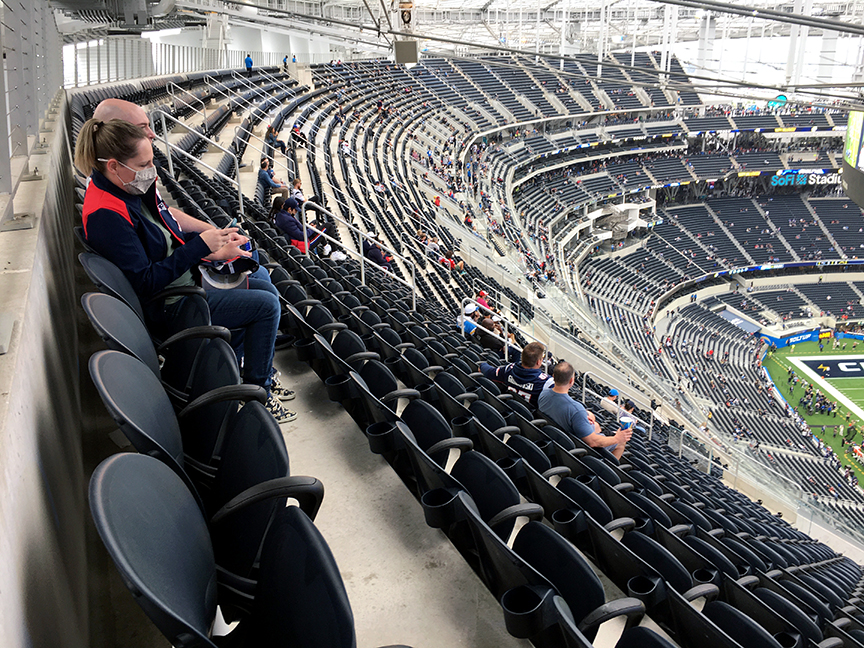
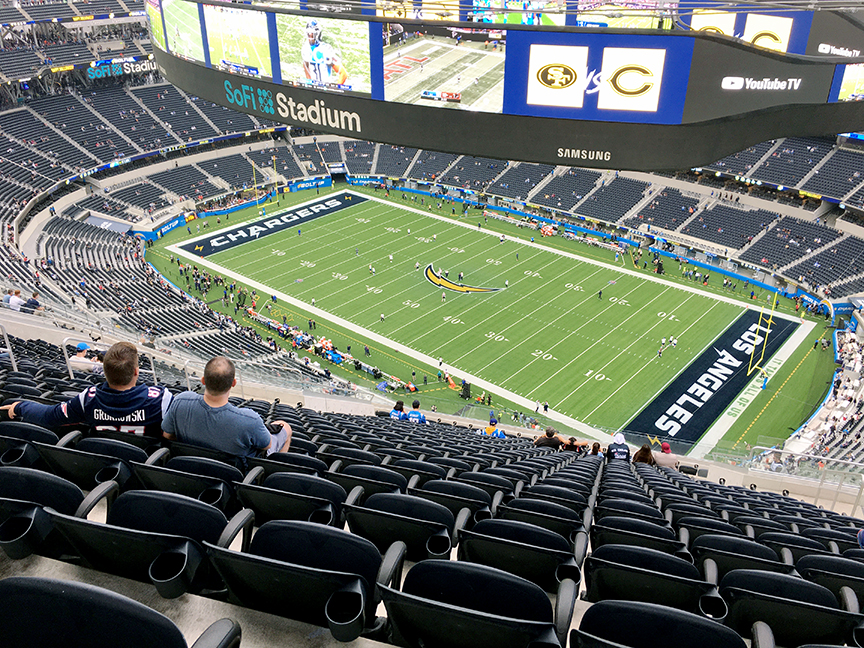
On Halloween, Meredith, Dillon, and I attended the Patriots-Chargers NFL gamein SoFi Stadium, LA. We literally had seats in the last row of a 70,000-seat stadium that is an engineering marvel. Protocol was that everyone was to wear a face mask, but it was honored more in the breach. I am not a fan of the modern sports experience. The atmosphere is too loud, people are too drunk, the focus is on constant “entertainment,” not the sport. Get off my lawn! As usual, there were more fans of the opponent than of theChargers. Pats won, 27-24, allowing a late TD to make it close. More about that experience here.
Baxter has noted he’s the only living creature among us not included in this letter. ‘Nuff said.
Merry Christmas to you and your family. I hope we will gather again safely and happily. May 2022 allow us to renew!
On Halloween Sunday, Meredith, Dillon, and I traveled to LA to attend the Patriots-Chargers game at SoFi Stadium. It was the first NFL game any of us had attended. (I don’t think I can count the AFL Jets-Boston Patriots game I attended in 1963 at Fenway Park. That was pre-merger.)
Dillon is an uber-fan of the Pats and Meredith is also a fan, when they’re not playing the Packers. I was most interested, frankly, in the stadium. Pictures of it made it seem pretty futuristic, an engineering/architectural marvel.
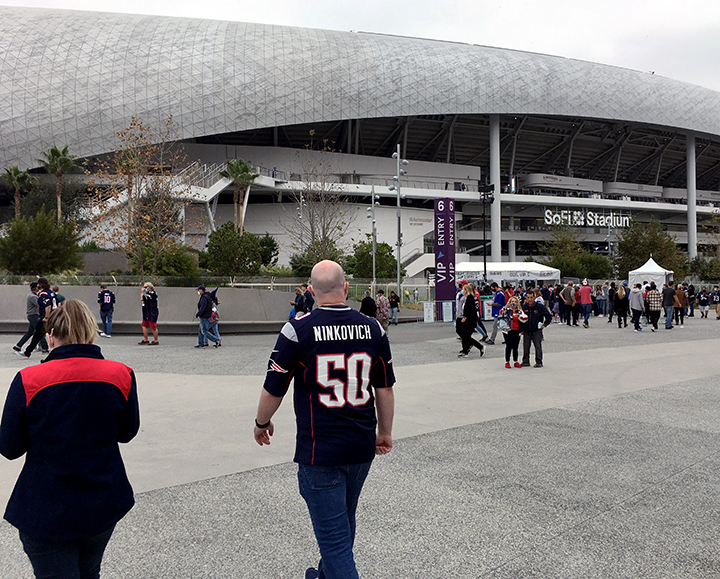
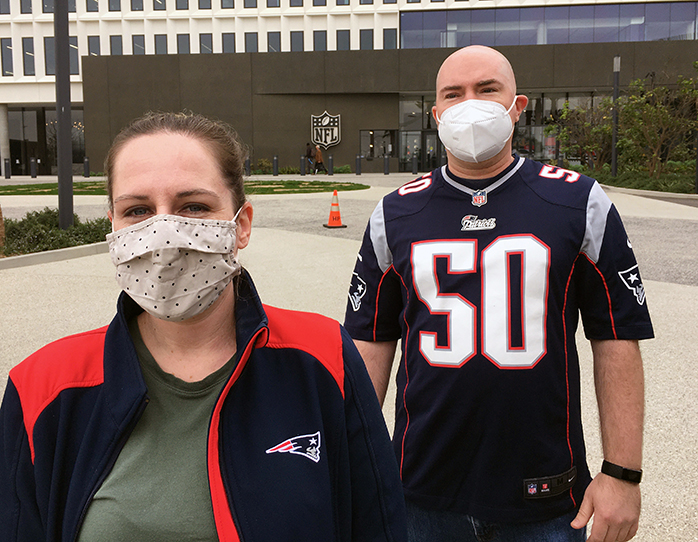
Parking at the stadium is sold out, so we went to a parking garage near LAX and took a bus to the stadium. Dillon was wearing a Patriots uniform top and he did not stand out among the several fans on the bus similarly attired. While we waited to board, Meredith chatted with, of course, someone who had moved out here from New Hampshire and also in a Pats jersey.
The stadium was constructed with the field 100 feet below grade and the roof rising to 253 feet, so it is sunken to accommodate the overhead flights paths to and from LAX.
It’s a pretty awesome entrance.
Getting to our seats was a trip. They were literally in the last row. And the section was very steep. I was quite winded getting to them and Meredith experienced some dizziness from the experience. She stayed there for the entire game. When Dillon and I went to get food at halftime, I returned to our seats in “phases.”
Fans of opposing teams nearly always (maybe always) outnumber Chargers fans at home games. Certainly this game was no exception, as Patriots fans were substantially present. In a county with 10 million residents (more than 39 states, including New Jersey, Virginia, and Massachusetts), there are going to be lots of fans of other teams.
When the Chargers took the field, there were loud cheers. When the Patriots appeared, there were very loud cheers.
This video will give you a sense of the difference in grade between external and internal.
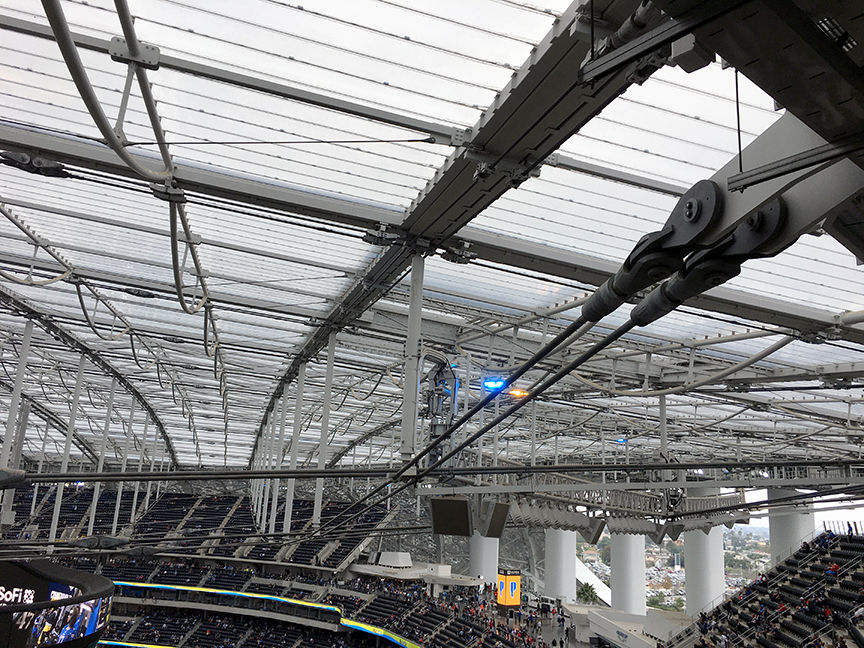
Our seats, with only the ceiling above us, did give us a good view of the stadium’s superstructure and the heavy cables.
The game (oh yeah, the game) was very close, with the Chargers ahead by one point entering the fourth quarter. A pick-six interception and two-point conversion put the Pats up by seven. They added a field goal to lead by 10. A late drive led by Justin Herbert added a touchdown and extra point with 40 seconds to go, but an onside kick was recovered by the Patriots who then ran out the clock.
Overall, the tone of the game, perhaps surprisingly, was defensive. The Patriots gained 352 yards, 210 passing, while the Chargers passed for 206 yards and rushed for an average of eight yards per carry for 163 yards. New England possessed the ball for more than 10 minutes longer than the Chargers and ran 75 plays, compared to 58 by the Chargers.
LA County regulations required wearing masks throughout the game, except when eating and drinking, and on transportation. Many if not most fans dumped the masks during the game.
I’m glad we went to the game, but I have no interest in attending another. Costs too much, everything is too loud, and the fans are too drunk. Professional and major college sports are operated as entertainment more than sport. The only times when there is not very loud sound is when an actual play takes place, but that is comparatively minuscule and the crowd is loud.
The huge screen was helpful, because we could view play and replays closer than from our seats. But it was more an irritant in that it carried ads and promos as well. Also seemed odd that the statistics presented were not of the game, but of fantasy football stats throughout the league. I can’t imagine something more inane than the announcer screaming SECONNNNDDDD DOWNNNNNNNNNN! every time the Chargers made one. The scream came after every down, but that just seemed more inane.
SoFi is to be surrounded by a 300-acre mixed-use development currently under construction. Plans are for up to five million square feet of office space, a retail district of up to 890,000 square feet, 6,000-seat performance venue, 300-room hotel, and up to 2,500 residences. They will border a six-acre artificial lake and 25 acres of public parks and plazas.
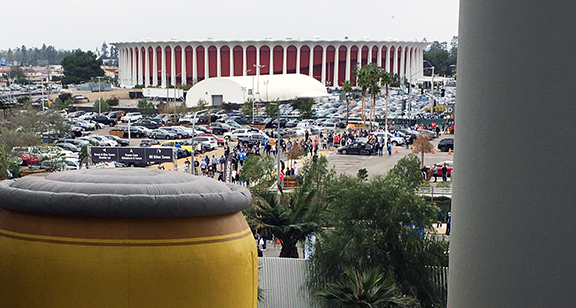
The Forum was once the home of the LA Lakers and the NHL Kings, a sports mecca. They left in 1999 and there are plans to renovate the structure into a concert arena. Opened in late 1967, the structure was also regarded at the time as futuristic. Looks like that not so much in this shot from SoFi. Guess 50+ years will do that to you, says the person who had just turned 21 when the Forum opened.
SoFi Stadium itself contains 3.1 million square feet and can seat 70,240. For events such as a Super Bowl (2022), Olympics, and similar scale events, it can accommodate up to 100,000 fans.
Walking to the stadium, we saw one building already in place — the West Coast headquarters of the National Football League.
Screenshot from opening of NBC telecast of US Open Golf Championship at Torrey Pines. La Jolla in background, left.
Dorothy Parker, one of the great wits and writers of the mid-20th century, is quoted as saying that, while she hated writing, “I loved having written.”
Regarding my time as a hole captain at the US Open Golf Championship June 14-20 at Torrey Pines, I can say, “I loved having been hole captain.”
Let me cut to the quick, though, before I tell you why and share other info about the Open.
On Friday afternoon, June 18, during the second round of the tournament, I received a text from one of the marshals with whom I had worked earlier saying I was “very photogenic.” Thanks, but what brought that up? Shortly thereafter, got a text from classmate and old friend Kevin O’Malley about my “amazing cameo.” I didn’t know to what they referred until I got home that evening and looked at the telecast. This was it.
I was assisting the two marshals assigned to the green when popular players were at the hole. Crowds just made it more difficult, especially when tee shots went awry. Thus I was there when Phil Mickelson teed off. This screen shot from the telecast shows just how offline his tee shot was.
When shots such as this happen, marshals move to locate and protect the ball from fans, requesting them to provide space around it. When the player and caddy arrive, they may ask marshals to remove crowd control ropes and poles. Television, I knew, was likely showing Mickelson in his predicament, following him as he considered how to play his next shot. At one point, the director switched cameras to one behind the hole, putting me briefly within camera view.
Some people said I looked “angry.” I prefer the description offered by classmate and friend Ed Hattauer, who said I had a look of “fierce concentration.” I think I was just tired.
Mickelson pondering, with me in the background.Checking out his shot. (Bill McDonald photo)
For several years, I had volunteered as a marshal and hole captain at the Farmers Insurance Open held at Torrey Pines each January. An added benefit to doing so, I thought, was that it might give me an advantage in being selected as a volunteer for the US Open. Maybe it did, but the coronavirus pandemic likely had much more of an effect in tamping down the number of potential volunteers from around the country.
In any case, I was invited to be a volunteer and then later invited to be a hole captain. Allowing the public to view the tournament, however, remained an open question for a long time. The Farmers tournament took place last January, but without fans. I was told that it was not until about three months before the US Open was to begin that a limited number of fans became possible.
Volunteers had been told that all would have to provide either proof of full vaccination or a negative test within 72 hours of the beginnings of their shifts. Shortly before the tournament began, the United States Golf Association (USGA), sponsor of the US Open, announced that a maximum of 10,000 fans could attend Thursday-Sunday. They also said everyone attending the tournament, including fans, had to show proof either of full vaccination or a negative test. The nearby University of California San Diego (UCSD) medical staff operated testing facilities adjacent to the tournament entrance.
We were required to wear masks at all times the first day. On Tuesday, June 15, a previously announced state-issued relaxation of COVID-related restrictions went into effect. We were then advised to wear masks when we were close to large groups of people, particularly standing close, facing them.
So, to the tournament.
My credentials.
I was assigned as hole captain for #11 on Torrey Pines, South Course. Compared to the North Course, the South is considered of greater “championship” quality. During the Farmers tournament, players play on alternate courses in the first two rounds, with the final two rounds played on the South.
Ironically, in each of my first two years as a volunteer at the Farmers, I worked on 11 North on Thursday/Friday and on 11 South on the weekend. So my assignment on 11 South for the US Open was something of a bookend moment.
Bill McDonald photo
11 South is a long par 3. For the practice rounds Monday-Wednesday, the tee was set back as far as it could go, creating a 225-yard hole. The first golfer on Monday morning, practicing as a single, with only his caddy along, stood at the tee and gazed out at the hole. Sighing, he said, “It’s so far.”
View of 11 from the farthest tee location. (Bill McDonald photo)View of 11 from the green, showing change in elevation, and the crosswalk.Overhead view of 11 green.
Later that morning, a larger group came to the tee. It included Phil Mickelson, Bryson DeChambeau, and teen protege Akshay Bhatia. Mickelson hit his tee shot beyond the pin, which was located on the front lower level of the green. The ball started to roll back toward the pin and was looking really good. “Oh no!,” said Mickelson. “Don’t be a 1. Not now!” The ball slid quite close by the pin, but ended up several feet past it.
No fans were on the course during the first two practice days. I was at the course, along with three marshals assigned on those days. I still don’t understand why we were there. The issue, in terms of marshals, at 11S is the crosswalk, shown in the view from the green (above). With no fans, the only traffic on the crosswalk was carts. On those first days, lots of “stuff” was being transported by electric and gas carts. I had a marshal at each end of the crosswalk to place and remove a rope barrier when carts sought to cross, depending on whether players were on the tee or walking toward the hole.
Golfers practice on Monday/Tuesday at the Farmers, too, with no marshals and somehow that works. Most of the cart drivers have worked at previous tournaments and know to look at the tee before using the crosswalk. With a marshal at the tee and green, in addition to the two at the crosswalk, that used up the four assigned. It meant there was no one to relieve a marshal for a bathroom break or lunch.
I had been surprised to learn a few days before the tournament that there were 29 marshals assigned to 11S. That was far more than I expected. At the Farmers, when I had been hole captain at the 615-yard par 5, I never had more than 20. Whereas marshals at the Farmers received day-long assignments, however, the USGA had two shifts — morning (7-noon) and afternoon (noon-8 pm). (The 8 pm was in case there was a delay.) I dealt, therefore, with two groups of marshals each day, which added to the complexity.
To help in planning marshal assignments, I downloaded an app. Well, I brought a tablet, a small pad of paper, and a writing instrument, a pen. Drawing a sophisticated representation of the space, I would indicate placement of personnel on each shift. Here’s an example from one of the shifts during the tournament itself.
My planning app.
Wednesday didn’t feature a pro-am, as the Farmers and most other tournaments do, but the course was open to active duty members of the military and veterans, and their families. There were more people to manage, but far fewer than during the tournament itself.
I mentioned the marshals being assigned to shifts. Most were assigned to one shift on multiple days, a few did consecutive shifts on the same day. Pretty much all of them were assigned to no more than three or four shifts total. I should point out at this time, however, one exception. For the privilege of being hole captain, I was assigned to each shift, each day. That meant, counting driving time, 12 to 14-hour days Monday-Wednesday. At least, in June, I didn’t leave and arrive back at home in the dark, which was often the case in January at the Farmers. A small consolation, however. It still meant getting home, grabbing something to eat, and then pretty quickly going to bed to get at least some sleep before getting up at 4:30 to start over.
I came home really tired those first few days. According to my steps app, I started off on Monday of tournament week doing 11,928 steps and six “flights climbed.” That’s a little more than six miles. There is also a fair amount of elevation change on 11S. The tee is significantly elevated. Walking back and forth on the hole, which was what I did much of every day, was taxing for me, who had probably averaged a couple of miles a day, and that’s from mostly walking the dog. After a few days, however, I realized that those early days were getting me more fit to handle the rest of the week. I actually felt better as the week went on.
Overall, Monday-Sunday, I walked 89,228 steps and 56 flights. That’s about 45 miles, an average of 6+ miles a day. My highest totals came on Thursday, day of the opening round. That was the first day we had a full complement of marshals, 9-10 each shift, so I was more than usually active and mobile. The totals on Thursday were 16,129 steps and 12 flights.
The entrance on Thursday, early. A hint in the background. (Bill McDonald photo)Marine-layered green on Thursday. (Bill McDonald photo)Where’s the tee? (Bill McDonald photo)
Thursday, the day of the first official round, got off to a slow start. Morning fog, the “marine layer,” covered sections of the course, including the area around 11. Start of play was delayed 90 minutes and I didn’t get to leave to go home until 7:30 pm. Several groups didn’t finish before dark, so play was also delayed on Friday morning for them to complete the last few holes. (In 2013, my first year volunteering at the Farmers, I spent my first day on 11S on that Saturday. I sat at the tee as fog came and went, and the tournament was delayed again and again. Finally, in mid-afternoon, the PGA called it a day. I had sat there for eight-plus hours, watching the 11th green appear, disappear, appear . . . . Sure was worried that might happen again.)
As with previous tournaments, my attention was focused on one hole and, even then, not on the golf played there, per se. The focus was on managing the situation, i.e., the marshals, fans, players, caddies, and their interaction. I might see the leader board on occasion, and notice who was leading, but it had little relevance to my job. Interestingly, besides the Mickelson event noted earlier, there was not a lot of action on 11S until the last day, and the last few groups.
When the leaders began to come to 11S on Sunday, there was quite a number of them near the top. It seemed at the time logical to expect a playoff among players tied for the lead after 18.
American Express had been handing out devices that carried on-course live audio coverage of the tournament. It was limited to the event and the location. You needed an American Express card to get one. American Express and I had a troubled relationship years back, so I didn’t have an AmEx card. Walking around on Saturday, I believe, I saw one of the device boxes lying on the fairway. I picked it up to dispose of it, expecting it to be empty. It felt heaver than empty, though. I opened it and found a device, which helped me keep track of things going on in the tournament.
DeChambeau teeshot on 8.
Listening to reports, I learned then that holes 11-13 had been the most difficult on the course during the tournament, with 11 being the hardest. Well, those holes were where some of the leaders started to fall off the pace on Sunday. Starting with Bryson DeChambeau. Missing a hole-in-one on 8 by, literally, an inch, he was leading the tournament when he came to the 11th tee. He pushed his tee shot into the rough to the right of the green. Chipping onto the green, he two-putted for a bogey. DeChambeau followed that with another bogey on 12 and a double bogey on 13. He had 44 strokes on the back nine and finished at +3, tied for 26th.
DeChambeau hitting his second shot on 11.
The last twosome — South African Louis Oosthuizen and Canadian Mackenzie Hughes — provided an exciting finish for 11S. Oosthuizen hit a shot similar to Dechambeau, to the right of the green. Hughes hit a major hook.
Hughes’ tee shot on 11, final day.
His ball struck the cart path to the left of the green, bounced up . . . and never came down. The crowd — by now, it was a crowd following the last twosome — gathered around where the ball had bounced and some started looking up. Then someone, and then someone else, saw the ball, caught among the branches of a tree.
As Hughes, his caddy, and tournament officials got to the scene, and saw the ball, the crowd began to chant “Shake the tree! Shake the tree!” I became increasingly concerned that some of them would, indeed, try to shake the tree to loosen the ball.
One of the media photographers was able to get a closeup of the ball, and Hughes was able to confirm it was indeed his. The original ball stayed where it was and a USGA official permitted a free drop for a replacement ball on the cart path. A drop to the grass next to the cart path, however, was a stroke penalty. Hughes ended up with a double bogey on the hole, while Oosthuizen, who hit his tee shot to about the same place as DeChambeau, shot a bogey 4.
The average score on 11S during the tournament was 3.39, 13 percent over par, the highest percentage over par of any hole.
When Oosthuizen and Hughes finished at 11S, my job was pretty much done. A bunch of the marshals at 11S volunteered to go to 18 for the conclusion. The USGA wanted to avoid what had happened a month before at the PGA Championship, when fans moved onto the fairway of the last hole, almost surrounding winner Phil Mickelson and Brooks Koepka and creating a potentially dangerous situation. Marshals lined the fairway to prevent something similar from happening at Torrey Pines.
There wasn’t the drama that day, however. Three groups ahead of the last twosome, Jon Rahm had made two long putts on 17 and 18 to finish at six-under-par. Oosthuizen had bogied 17 and needed an eagle on 18 to tie Rahm. He shot a birdie 4, but lost by one.
By that time, I might have gotten home. All I wanted to do when I did get home was . . . nothing.
As I said at the top, I was and am glad to have finished my job at the US Open. I met new people, including lots of great marshals assigned to 11S. That’s likely my last volunteer stint at a US Open Golf Championship. The marshals committee chair for the 2022 Farmers Insurance Open has gotten in touch to see if I’m interested in volunteering again. I answered in the affirmative. I contemplate a pleasant time as hole captain at 3S, one of the prettiest golf holes I’ve seen. Hope it comes to pass.
Confident young golfer
On Wednesday, I believe, I noticed a young girl, maybe 12-13, wearing an “Amherst” sweatshirt. Amherst College is located in Western Massachusetts, the region where I was born and grew up. Later, I saw her and her mother, I figured, near the tee at 11. I approached them and asked the girl, “So, who went to Amherst?” Her mother answered, “I did.” “And,” she added, “I went to Amherst High.” “Wow, a townie!,” I said. “And Croatian,” she said. Yes, she certainly realized how distinctive she was at tony Amherst.
I asked the girl if she intended to go to Amherst. “Oh, yes,” she said. Short pause. “And I’m going to be on the golf team there.” I praised her confidence. I also asked if she would consider attending Williams College, Amherst’s historic and intense rival. “Williams is my backup school,” she said. Ooooookay.
Logistics
In the version of Maslow’s “hierarchy of needs” for golf tournament marshals, near the top are the location of the nearest bathroom facilities and how/where do I get lunch.
Interestingly, for us at 11, those were both at about the same place, and not particularly close. To visit a porta potty, we had to walk a couple of hundred yards past the grandstand on 11 that was at the rear of the green. Not terrible, but another elevation change, and significantly farther if you were at the crosswalks or, especially, the tee.
Because we were never flush with marshals, it was especially difficult to release people to go to get lunch and sit down to eat it. I encouraged marshals who had afternoon shifts to get lunch before reporting, and asked morning shift marshals to wait for their relief. Too often, however, it was not always possible. I tried to take people’s places to allow them to get their lunch and bring it back to their post. That meant that almost every day I was able to get to the lunch stand only near the end of the time slot (11 am-2 pm). I had the ham and Swiss once. I almost had the tarragon chicken salad once, but I realized the mayo-laden chicken salad had been sitting out in the heat for quite a while. The hummus options were usually the only ones available, so I concentrated on the chips and cookies.
At least for the fans, alcohol was available more readily.
Bill McDonald photo
Close call
On Friday, I was assisting at the green and moved to its right side when a shot landed among the fans there. As I motioned people to move back, I heard people yelling, “Watch out!” A ball then plopped down very close to me and rolled to within a foot of the previous ball. That’s when I learned you can mark your ball on the fairway, or rough in this case, not just on the green. Each of the players, who were not going to make the cut, got up-and-down for pars.
Bill McDonald photo
Swag
For the ~$150 I paid to volunteer at the US Open, I got a ball cap, two polo shirts, and a rain jacket. The shirts and jacket were Ralph Lauren Polo. Some of the marshals assigned to 11S who had also worked the previous US Open at Torrey Pines in 2008 didn’t think the quality of the shirts was as good as at the previous Open. I wasn’t a fan of the “look,” but I think the jacket is pretty nice.
Rest are all Bill McDonald photos
To identify me as hole captain, I was provided an armband. When I started to put it on, I realized how large it was in circumference. The average size of biceps for men my age is 12.9 inches. As a smaller-than-average guy, mine may well be even smaller. The USGA armband was 15-1/4 inches in circumference, so maybe they intended it for Bryson DeChambeau or Brooks Koepka, not me. There was also no velcro option to make it smaller. Poor design. I was advised by a USGA rep to just hang it around the lanyard that held my credentials.
The armband was mine to keep, so that’s a nice memento. I would have dearly liked to have the US Open hole flag that flew on 11, but I assume that graces the den of a major donor to the USGA.
Post-tournament, the USGA sent me, and I assume all volunteers, a replica of a poster of appreciation signed by all the players. That was a nice touch.
Sunday at the US Open Golf Championship traditionally falls on Fathers’ Day. USGA reps handed out a button acknowledging the day to likely dads, both volunteers and fans.
And, to mark the circumstance that has had impacts on all our lives, we were provided US Open face masks. I hope it is a one-off and none will be necessary at future tournaments. I expect this may be a curiosity item in years to come. “Why did great-grandpa have a mask for the golf tournament?”
Elementary colors and a hang glider. Bill McDonald photo
No, I’m not talking about weird agriculturists. The topic here is the 2021 Farmers Insurance Open held at Torrey Pines in the midst of the coronavirus pandemic. Players, caddies, marshals, TV, but no fans. Really quiet surroundings. A different, somewhat freaky, experience.
For the record, the winner of the tournament was Patrick Reed. He tied for the lead after the first round, fell one stroke behind to second on Friday, was tied for the lead after three, and forged ahead on Sunday to a five-stroke win, 14 under par.
As a marshal/hole captain, I spent my days on one hole and that narrow focus pretty much excludes having a good sense of the flow of the tournament, who’s moving up and down, etc. This was especially true this year due to the absence of scoreboard bearers accompanying each group.
Besides all the changes to the tournament as a result of the pandemic, the biggest change for me personally was a change in the hole to which I was assigned. A few months before the tournament began, I was offered the opportunity to move from the par-5, 615-yard, 9th hole on the South Course to the par-3 3rd hole on South. There was somewhat of the sense of going out to pasture, moving from managing 16-30 marshals to overseeing 2-3 and dealing with a hole with farfewer complexities. But I was ready for that and 3 South is iconic at Torrey Pines.
Official photo
Reportedly the most-photographed hole on the course (it’s the cover photo on the official course map), the hole features an elevated tee and a green on the edge of a bluff over the Pacific. From the tee, where the elevation adds to the view, one sees the community of La Jolla on the horizon to the southwest. The hole was featured continually on the Golf Channel and CBS telecasts, with drones and the Goodyear blimp offering dramatic aerial views. This is a drone-eye view, copied from the telecast (if a small image appears, click on it).
Equipment means a lot to golfers. Keeping up with new developments and trends fuels the golf economy. Equipment for marshals is pretty basic: your tournament hat, shirt, and jacket. This year, a new addition — masks — which were required for all marshals all the time and for other officials as well. Players did not wear masks and only some caddies did.
My getup was a double mask. I wore a KF94, the Korean version of the N95, underneath a silicone mask that contained a filter of similar efficacy. I had not worn masks for such an extended period (5-7 hours each day for 5 days) as during the tournament. They were not uncomfortable. I could breathe easily, even climbing up rather steep terrain. Breathing into them that long, however, sometimes created quite a bit of humidity and the atmosphere in there turned a bit “funky.” I became certainly more empathetic about health care and other essential workers who must wear masks for extended periods, day after day.
We were also checked out before entering the course. We had to pass through temperature and security screenings. On Thursday, they had switched to a scanner used at airports, which didn’t require someone putting a sensor up to your forehead. It went off, however, when I passed by. The young woman monitoring the device took an individual reading of my temperature with a handheld sensor, and I was fine. She said I might have had “cap warmth.” I had worn my cap in from the car, only taking it off as I passed the scanner. From then on, I removed my cap on the walk from my car to the screening tent and never had another problem.
The first day of a tournament is the pro-am on Wednesday, when non-professionals pay tons to play a round with a pro. No TV, very few fans outside of family and friends and usually a really long day for marshals and other volunteers. With two waves of participants teeing off on holes 1 and 10 in the morning and afternoon, it has always been a dawn-to-dusk assignment. Until this year. For me, with a 45-minute drive to Torrey Pines (without traffic), it was still a 3:30 am wakeup and a pre-dawn drive. First tee-off was 6:40 am, essentially dawn. But the pandemic brought participation way down and there was only one wave, and that smaller than usual. The last group went by hole #3 shortly after noon and we were out of there by 1:30.
Richy Werenski, to left of his caddy, on the weekend. Bill McDonald photo
The first round of the tournament, on Thursday, featured a distinctive special moment. When I had posted on Facebook about my first day at the course, a high school classmate messaged me, asking me to convey regards to Richy Werenski, a young golfer from South Hadley, near where we had grown up in Springfield, in Western Massachusetts. I saw that Werenski was in the fifth group. When he entered the tee box, I said, “Go Western Mass.!” He glanced over at me, seemingly surprised, smiled, and said “Yeah. Thanks.”
Other friends had said earlier they hoped that, being on a par-3 hole, I might have the chance to see a hole-in-one. Done. Richy Werenski, buoyed, I think, by my “hometown encouragement,” hit a hole-in-one. I didn’t see it occur. I heard people around the green clap and cheer. Werenski didn’t see it either. He looked around and asked, “Did it go in?” It did.
Thing is, it was early in the first round and Werenski was with a like group of golf non-superstars. There was no TV and no video to share on social media. Thus, it was recorded officially as a hole-in-one, but, in many respects, it never happened, except for the several people who literally saw it. The next morning, I reported to the marshals’ office to pick up my radio and stuff and told the above anecdote. No one there had heard about a hole-in-one. There was also no mention in media coverage of the day, at least that I saw. (After shooting 6 under par for the first two rounds, Werenski was 8 over par on the final two rounds, finishing 2 over and tied for 60th.)
Ready for rain.
There were forecasts for Friday that predicted steady rain of 1-2 inches in La Jolla throughout the day. That’s a lot for this area. I had prepared, purchasing rain pants and waterproof socks to go with my waterproof hiking boots and waterproof shell. My outfit, seen at right, ended up being effective, though it was not needed as extensively as expected.
When I left Fallbrook that morning, it was raining. When I got to Torrey Pines, the sky was clear and sunny. It had rained hard overnight, but the morning on Friday was pleasant. Skies to the east and north contained lots of clouds and the expectation was that inclement weather would happen there.
Late morning, however, skies to the west started to look threatening. Forecasts online called for rain and wind to come around midday. The forecasts were accurate. I’ve learned that rain around here often comes in cells and/or bands. Brief intense rain and wind, a bit of a respite, then another intense band, and so on. That was generally what happened on Friday. At one point, I heard the 15 South hole captain on the radio reporting hail. Here is a gallery of weather-related images from Friday. (Click on the image and you can advance through larger images.)
Five years ago, the 3rd hole had been something of a bad-weather TV star. The last round of the tournament then was suspended because of weather. The course was evacuated and the round was completed on Monday, without fans or marshals, because damage to trees on the course had made it dangerous. Before play was called, however, it continued in very difficult conditions. Colt Knost was in a threesome playing on 3S, trying to convince a PGA official that conditions were just too difficult for him to attempt his putt. The PGA official was stoic and urged Knost on. Colt putted and the ball went left of the hole. Then, however, the wind caught it and pushed it back toward the hole, and into the hole for a birdie. Hilarity ensued, as you can see in this clip, and the video received wide exposure.
Saturday was crisp and sunny, but Sunday was warm enough that, for the first time during the tournament, I removed my jacket. Still with a cold weather layer underneath, I should emphasize. At one point on the tee, I saw a cameraman come up to the tee and put himself directly opposite from me, with the golfers teeing off between us. Hmmm, I thought, I could end up on TV. Done. Here’s the screenshot from Golf Channel, with golfer Sam Burns also in the picture. The camera was there for all three golfers, but this was the only view of me that made the telecast.
It’s probably the best screen capture of me at Torrey on TV that I’ve seen, except, of course, for the mask thing. On the other hand, the one at left is pretty good, too. Certainly, the “other person” in the shot is even more notable than Sam Burns. This was in 2014 and Tiger was picking up his ball on 9 North at the conclusion of his round. He failed to make the cut that year and skipped the Farmers for a few years. It was my first year as a marshal at the tournament.
When your horizon for almost 180 degrees is at sea level, indeed is the sea, skies become quite big. I enjoyed watching the changing skies during the day and as the days changed. Here is a gallery of such views. (Click on the image and you can advance through larger images.)
While I have enjoyed watching excellent golf shots over the years, I always have considered people-watching the more fun part of being a marshal. People in tiger outfits, other outrageous clothing, inebriated, happy, loud. Their absence this year was profound. There were some people on the course, probably connected with Farmers Insurance or the Century Club, the local philanthropic group that puts on the tournament, but even the leaders or most popular groups of golfers attracted maybe a dozen spectators at most. Instead of the constant medium-level din of thousands of people attempting to stay quiet, punctuated on occasion by roars of appreciation at a particularly great shot, there was often deep quiet.
The absence of ambient sound greatly heightened the perception of singular sound. Caddies hushed marshals 50+ yards away who were chatting. Not talking loudly, just chatting. Twice, I was called out from 20+ yards away for folding a piece of paper and then handling, not opening, a bag of potato chips. It made one a little paranoid that some caddy or player somewhere in the radius of activity that constituted the cone of silence would single you out for what normally would have been lost in the ambience.
Torrey Pines is to host the US Open in June. I have applied to be a volunteer and have been accepted, though I don’t know what particular role I will fill. I hope conditions at the time will permit at least some fans. People are watching on TV, of course, but the absence of fans on the golf course made it seem as if you were on the sound stage of a television production, not at a golf tournament.
Another unusual experience in these most unusual 11 months.
Distanced (l-r): Bill, Winter, Meredith (with Alice 5 and Adeline 8), Julia and Sam, Dillon.
This annus horribilis started off pretty nice, actually. In late January, I was a hole captain once again at the Farmers Insurance Open. Oversaw 15-25 marshals on the 9th hole, South Course, 615 yards. Except for my sightseeing days in Berlin in 2019, my personal records for steps had always been set on 9S. You can see more at the full post.
After the tournament, I settled back into my then relatively new routine at home. Drive Alice to pre-school midday, hold her hand as we walk in from the parking lot. Back at home, waited for my next task — walk the few hundred yards to the school bus stop, with Baxter my companion, to meet Adeline coming home. On Fridays, when Alice had no preschool, she accompanied me on our regular shopping stops — first to Costco (she loved the samples) and then the Commissary on Camp Pendleton.
In late February, a really fun event. Long-time dear friends Marcy and Larry Kenah took advantage of a family wedding in Oregon to stay on the West Coast a little longer and visit us in Fallbrook. With my guest quarters sharply reduced, they stayed in an Airbnb unit just up the hill from our house.
Marcy was especially interested in visiting Anza-Borrego Desert State Park, which Larry had seen on his trip here in 2013. (They were both to come then, to attend the BC-USC game, but Marcy chose to help out with the family’s new grandchild in Georgia.) We rendezvoused with Betty and Wayne White, long-time friends of the Kenahs who live in San Juan Capistrano. Spent most of the day seeing the sights in the desert. Then we traveled to Julian for its eponymous apple pie and on to Stone Brewery in Escondido, traditional end point of my county tours.
Larry and a sea bird, Oceanside, in _February_.
Next day started with really good corned-beef hash at Beach Break Cafe in Oceanside. After a stroll along the Oceanside Pier, I took them on a brief tour of Camp Pendleton and we closed out their visit with lunch in “downtown” Fallbrook. They traveled north to stay with the Whites for the remainder of their SoCal visit. Little did we know, of course, that the coronavirus was already around. More at full post.
March 11 was the last time Field Medical Training Battalion-West held a public graduation of classes that produce Navy personnel qualified to be Fleet Marine Force Hospital Corpsmen. For several years, I’ve represented the Navy League in recognizing the honor graduate of each class. Alice joined me in attending that March graduation and my first/last presentation of the year.
For a few weeks after that initial lockdown, there was a lot of uncertainty. Schools closed. When would they re-open? Would Meredith and Winter continue to work? My “income” is quite modest, but it is secure. Winter’s work in auto repair has been considered essential from the beginning. Meredith’s work at the local Boys & Girls Club, which continues to provide lots of services to local school children, is mostly from home. Economically, at least, our situation has been pretty much unaffected.
Mid-summer, I noted in my blog about serving in the Navy 50 years ago that I left USS Biddle (DLG-34) and reported as ordered to Naval Special Warfare Group, Pacific, on Naval Amphibious Base, Coronado, Calif. My first time in San Diego. I was able to get in touch with two officers of similar rank who served there with me — Fred Palmore in Midlothian, Va., and Randy Middleton, Normal, Ill. They’ve helped me add to recollections of the year we served together.
By fall, the girls were “going to school” online. Alice in kindergarten, Addy in a combo 3rd/4th grade. They still also attend ballet lessons, with students and instructors distanced and wearing masks.
Except for a single trip to get products curbside at the IKEA in San Diego (roundtrip 100.6 miles, single time in triple digits), my only “excursions” have been Sundays to the Post Office to get mail, followed by a 20-minute+ drive around the area to charge my car’s battery.
There have been no BC football game watches with San Diego Eagles. I have not been out to the desert since the Kenah visit. I fulfill my duties as Vice President of the Anza-Borrego Foundation through email, phone, and Zoom.
I have not had a haircut since February. At least not one by a trained barber. I looked a little like I did in the ’70s, hair-wise . . . except for the color and the amount on top. I finally just took scissors and hacked away at the back and used a hair clipper to work on the sides. Shorter, but quite uneven.
We’ve seen Dillon a few times, e.g., Alice’s birthday, his birthday, Thanksgiving. Distanced and masked. He’s working from home through 2021. I haven’t seen Julia in person since the end of our trip to Europe in June 2019 and Sam for a couple of years. I am thankful I am not alone at home (though I sometimes really miss silence).
We’ve become pretty adept at curbside pickup and delivery. While our house is relatively distant from others, we live in easy range of at least two Costcos, a couple of Walmarts and Targets, and maybe 50 miles from a large Amazon distribution center. In a few instances, I’ve ordered something on Amazon in late afternoon and it is sitting on our doorstep when I take the dog out the next morning. Can’t imagine how we’d do if we didn’t have those options.
In last year’s Christmas letter, I referred to 2020 as “hindsight.” You know, “Hindsight is 20/20.” I am so glad 2020 will soon and forever be in hindsight.
Merry Christmas to you and may 2021 be filled with fun . . . and be no re-run!